
What Does a State Do When Its Streets Are Patrolled by an Army of Federal Agents?
Question
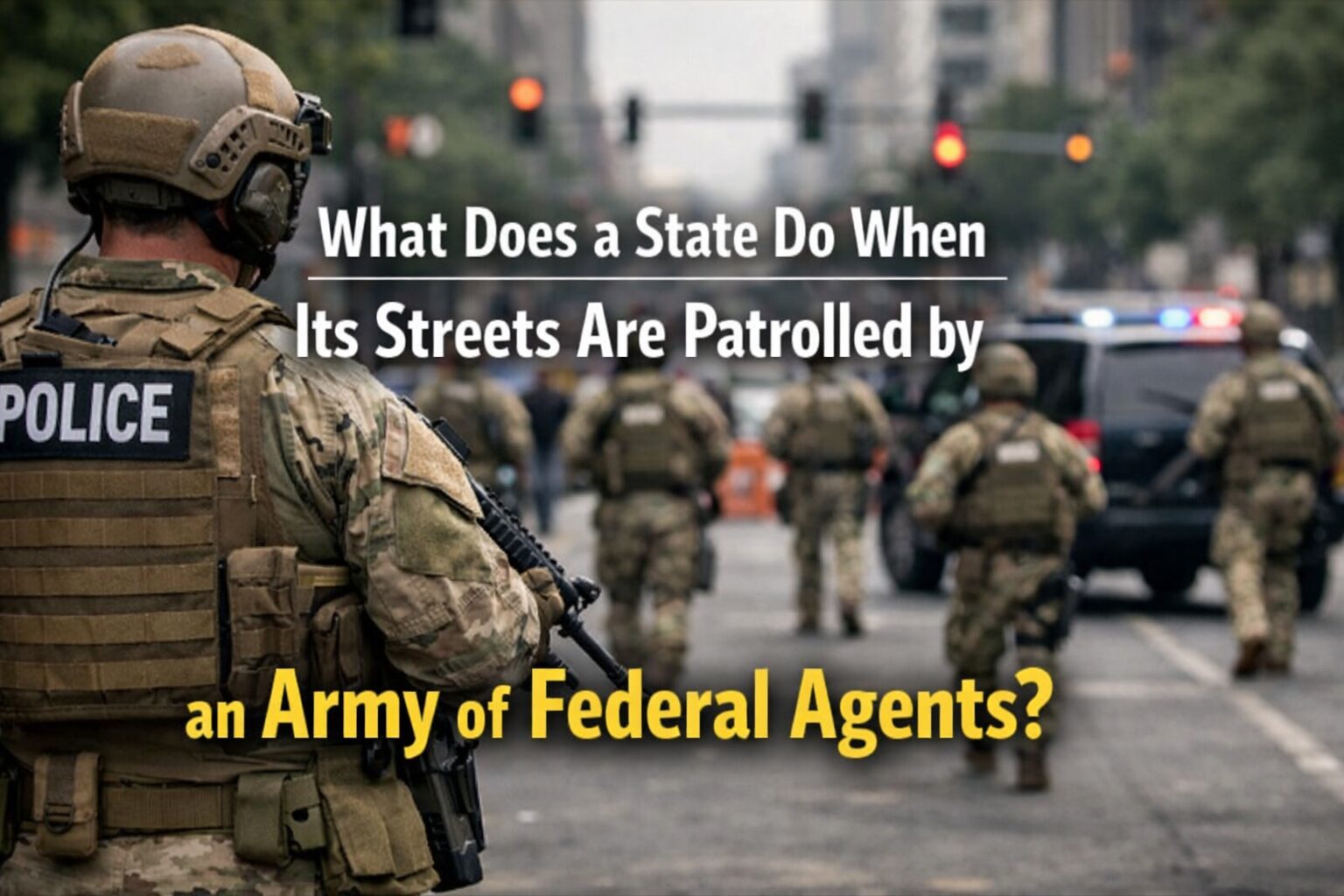
Imagine opening your door not to a neighbor, but to an armed federal officer. Imagine driving to work past military vehicles staged in a parking lot. This is not a scene from a dystopian novel; it is the current reality for many Minnesotans. So the question becomes: How does a community fight back when it feels under siege by its own government?
This Friday, Minnesota delivered a stunning, frozen answer. With wind chills plunging to 20 degrees below zero, the state staged a near-total civic shutdown—no work, no school, no shopping. They called it a “Day of Truth & Freedom,” but the world watched as a historic act of collective defiance unfolded. The target? An unprecedented surge of Immigration and Customs Enforcement (ICE) activity and the recent killing of an unarmed woman, Renee Good, by a federal immigration officer.
But the real story is in the “how.” How do you organize a general strike in the dead of a polar vortex? How do you convince an entire ecosystem of a city—from corporate offices to local daycares—to voluntarily halt? The mechanics of this protest reveal a community pushed to its limit, yet profoundly unified.
Consider the daycare worker who chose to close, but only after consulting every family she serves, including immigrants living in fear. “They all stood up for it,” she said. Or the labor unions, representing over 1,000 local chapters, who endorsed the action not as a symbolic gesture, but as a necessary disruption. “What can we meaningfully do to stop it?” one union leader asked, pointing to a perceived lack of protection from state leaders.
The scale of the federal operation is staggering. The Department of Homeland Security reports 3,000 arrests in six weeks, supported by 3,000 dispatched immigration officers and 1,500 U.S. Army soldiers on standby. A DHS spokesperson framed the strike as protection of criminals, but does that narrative hold when nationwide, most detained immigrants have no criminal record? When the protest includes city councilmembers, faith leaders, and lifelong residents braving lethal cold?
So we must ask: Is this just a protest, or is it something more? Is it the birth of a new blueprint for resistance? Minnesota didn’t just march; it disappeared. It created a vacuum where commerce and routine should be, making its absence louder than any chant.
The ultimate question, however, hangs in the frigid air: When a community declares, through silent streets and shuttered stores, that it will not participate in a system it views as oppressive, who is really being frozen out?


Leave an answer