
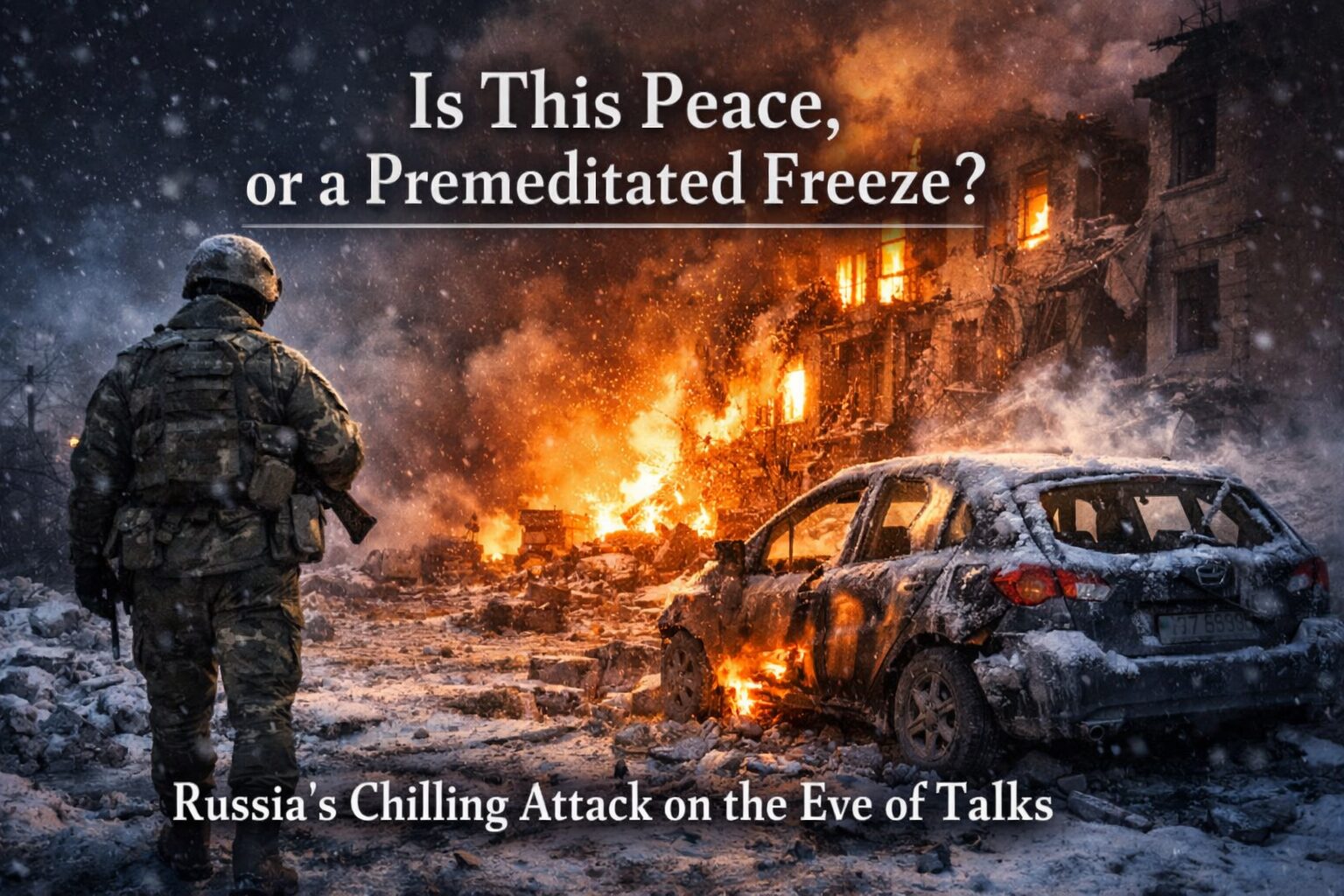
Is This Peace, or a Premeditated Freeze? Russia’s Chilling Attack on the Eve of Talks
Question
What do you call a peace overture that begins with a calculated act of cruelty?
On the very eve of the first face-to-face negotiations in months—talks slated for the neutral ground of Abu Dhabi and backed by significant international pressure—Russia answered that question with a volley of missiles. As temperatures in Kyiv plunged to a bone-shattering -25°C (-13°F), the skies over Ukraine ignited, not with the promise of diplomacy, but with one of the largest bombardments of the war. Seventy missiles and hundreds of drones systematically targeted power plants and heating infrastructure across the country.
The assault was not random. It was surgical in its objective: to weaponize winter itself. Districts in the capital went dark and cold. In the eastern city of Kharkiv, officials warned that over 800 apartment buildings could lose heat entirely, risking frozen and burst pipes in a catastrophic domino effect. The targets, as Ukraine’s Energy Minister stated, were “purely civilian.” This was not a battle for territory, but a battle for morale, an attempt to freeze a nation into despair on the coldest nights of the year.
All of this unfolded just days after a fragile, informal truce on energy infrastructure—a pause requested by global leaders and framed as a goodwill gesture ahead of these very talks. That pause expired on Sunday. The timing of this renewed offensive is therefore not a coincidence; it is a statement. It raises a corrosive question for the diplomats gathering in Abu Dhabi: Are we witnessing a partner in peace, or a negotiator who believes that terror at the bargaining table’s doorstep strengthens their hand?
President Zelensky, whose delegation was traveling to the talks as the attacks raged, framed it starkly: “Taking advantage of the coldest days of winter to terrorize people is more important to Russia than turning to diplomacy.” The message from the Kremlin seems chillingly clear. The language of force and suffering, it believes, speaks louder than the language of compromise.
So, as representatives from Ukraine, Russia, and the United States prepare to sit down, the most urgent question isn’t merely on the agenda. It hangs in the frozen air over millions of Ukrainian homes: Can you negotiate with a winter that wears a uniform?


Leave an answer