
“Is South Carolina’s Measles Outbreak a Wake-Up Call? Experts Answer Your Urgent Questions About Vaccines, Quarantines, and Community Safety”
Question
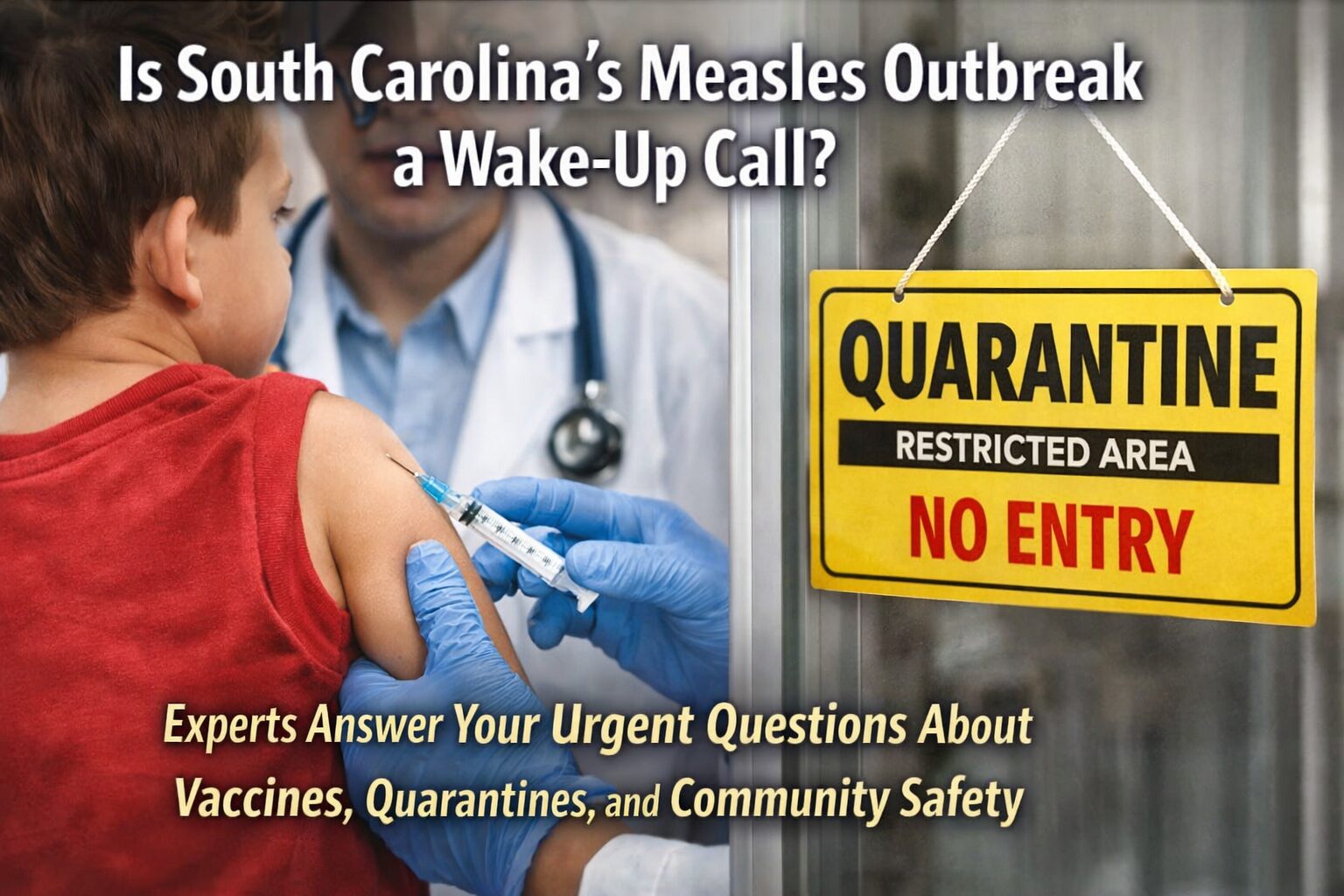
With South Carolina reporting 114 measles cases since July 9, 2025, and numbers climbing daily, residents are flooding health officials with questions. Why is this happening? Who’s at risk? And how can families protect themselves? We’ve compiled answers to the most pressing queries, drawing insights from the South Carolina Department of Public Health (DPH), epidemiologists, and frontline workers.
Q1: How Did the Outbreak Start, and Why Is Spartanburg County the Epicenter?
The first case was detected on July 9, but the outbreak wasn’t declared until October 2, after three or more linked cases met the CDC’s definition of an outbreak. Spartanburg County’s 111 cases (97% of the total) stem from multiple exposure sites, including a church, schools, and households. Dr. Linda Bell, South Carolina’s state epidemiologist, explains:
“Measles thrives in unvaccinated pockets. Holiday travel and gatherings accelerated spread, but community transmission is now self-sustaining.”
Q2: What Are the Symptoms, and How Contagious Is Measles?
Measles begins with fever, cough, runny nose, and red eyes, followed by a rash spreading from the face downward. Patients are contagious four days before and after the rash appears, and the virus lingers in the air for up to two hours after an infected person leaves.
“You can catch measles just by being in a room where someone with the virus was hours earlier,” warns Dr. Bell.
Q3: Who’s Most Vulnerable, and What Complications Can Occur?
Unvaccinated children under 5 and adults with weakened immune systems face the highest risk. Severe complications include:
- Pneumonia (the most common cause of measles-related deaths)
- Brain swelling (encephalitis)
- Lifelong disabilities like deafness or intellectual impairment
- Three deaths have been reported nationwide in 2025, all in unvaccinated individuals.
Q4: Why Are Vaccination Rates So Low, and Are Mobile Clinics Helping?
State data shows 88.9% of toddlers (19–35 months) received at least one MMR dose, while 92.1% of kindergarteners completed two doses in 2023–24—down from 95% pre-pandemic.
Despite free mobile clinics, turnout has been sluggish. “We administered relatively few doses at each site,” Dr. Bell admits. Experts blame misinformation and complacency, urging parents to check immunization records via the DPH’s online portal.
Q5: What’s Happening with Schools and Quarantines?
Unvaccinated students exposed to measles face 21-day quarantines, with some enduring multiple quarantines this school year. While Dr. Bell couldn’t share exact numbers, she stressed:
“Even one unvaccinated child can shut down a classroom. Vaccination isn’t just personal—it’s community protection.”
Q6: How Does South Carolina’s Outbreak Compare Nationally?
The U.S. has logged 1,912 measles cases in 2025, with most in unvaccinated children. South Carolina’s outbreak is part of a broader resurgence fueled by gaps in immunization and global travel. The CDC emphasizes:
“Measles was eliminated in the U.S. in 2000, but it’s back because vaccination rates slipped. This is a preventable crisis.”
Q7: What Should I Do If I Think I’ve Been Exposed?
- Isolate immediately: Avoid public places, especially if you’re unvaccinated.
- Call your doctor: Do not visit clinics in person to avoid spreading the virus.
- Monitor symptoms: Fever, cough, or rash warrant urgent care.
- Get vaccinated: If unprotected, the MMR vaccine can still reduce severity if given within 72 hours of exposure.


Leave an answer