
Could This Be the Weirdest Christmas Arrest Ever? Inside the Drunk Grinch Heist That Broke the Internet
Question
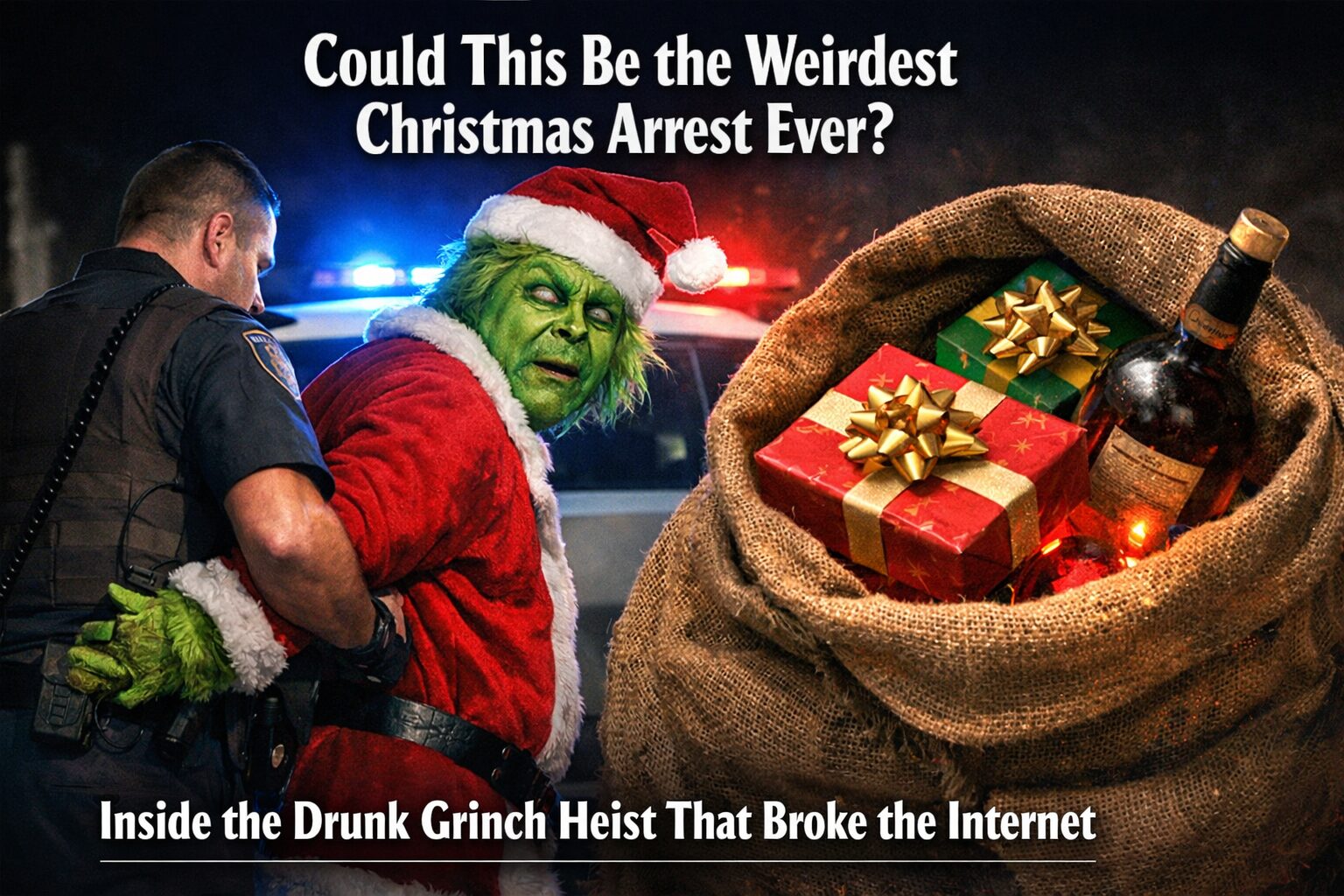
What happens when a children’s book villain comes to life, downs a vat of eggnog, and terrorizes a West Virginia grocery store? The answer involves felony charges, a Salvation Army kettle, and bail priced in peppermint currency.
Why Was a Man Dressed as the Grinch Tackled Outside a Piggly Wiggly?
It started with the 911 call every dispatcher dreads: “There’s a drunk green thing trying to steal the charity bucket.” When Mason County deputies rolled up to the Point Pleasant grocery store at 1 p.m. last Christmas Eve, they didn’t expect to find a fully-furred, whiskey-breathed Grinch mid-heist. Yet there he was—allegedly attempting to snatch a Salvation Army donation kettle while slurring lines from the 1965 cartoon. How did officers respond? They gave chase, which ended when the suspect tripped over his own costume and face-planted into a yam display. No injuries were reported, though the produce section may never recover.
Who Is the Person Behind the Green Fur?
Court documents identify the perpetrator only as “Grinch, Resident of Mount Crumpit,” which raises obvious questions about legal names and whether Dr. Seuss characters can be booked into the Western Regional Jail. What authorities did confirm is this wasn’t his first sleigh ride through the justice system. Active warrants already existed for prior holiday mayhem: porch piracy of wrapped gifts, the theft of 47 glass ornaments from a hardware store, and the felony disappearance of a 10-gallon eggnog vat from a church basement. Was this a cosplay gone wrong, or had someone methodically built a criminal empire around a fictional character? The overconsumption of dairy-based alcohol may have obscured the answer.
Can You Actually Charge Someone With ‘Overconsumption of Eggnog’?
Here’s where legal scholars started paying attention. The official charge sheet lists “overconsumption of eggnog” alongside fleeing justice and resisting arrest. Is that even a real law? While West Virginia doesn’t have a specific “eggnog statute,” intoxication in public is prosecutable, and deputies cited the festive beverage as the contributing factor. Bodycam footage—leaked by 3 p.m. and viewed 4 million times by sunset—shows the suspect failing a field sobriety test by attempting to recite How the Grinch Stole Christmas backward while pocketing an officer’s flashlight. Could this be the first case where a holiday drink becomes evidence? Prosecutors seem to think so.
How Do You Price Bail in Candy Canes?
In a move that broke the internet, a magistrate set bail at exactly 1,000 candy canes—sugar-free, as specified in court papers. Why candy? The sheriff’s office called it “proportional to the spirit of the charges,” but legal analysts wonder: Is this a publicity stunt or a legitimate pre-trial condition? Defendants can’t actually post confectionery payment, meaning the Grinch would need a bondsman to convert the peppermint into $5,000 cash. More bizarre are the release terms: absolute house confinement to his Mount Crumpit cave, a GPS monitor bedazzled with jingle bells, and a restraining order banning him from all Salvation Army kettles within 500 yards. What happens if he violates it? Alvin and the Chipmunks Christmas music, on loop, indefinitely.
Why Did America Make This Man a Folk Hero?
Within six hours, #FreeTheGrinch trended nationwide. A TikTok of the arrest racked up 12 million views. Memes compared the mugshot to a “hot felon” Christmas edition. Someone launched a GoFundMe that raised $22,000—not for the perpetrator, but for the Salvation Army kettle he targeted. So why are we celebrating this? Psychologists suggest it’s cognitive dissonance: The Grinch is a beloved antihero, and seeing him in handcuffs scratches a weird cultural itch. But here’s the uncomfortable question: Are we glorifying theft because the thief committed to the bit? Law enforcement insists no. “Stolen donations feed families,” Sheriff Karen Powell stated flatly. “The costume doesn’t make it cute.” Yet the public can’t look away. Is that the real crime—our own desensitization, packaged in viral content?
What Does This Mean for Holiday Crime?
Holiday theft jumps 22% nationally between Thanksgiving and New Year’s, with charity kettle robberies up 40% since 2020. Criminals exploit seasonal generosity, knowing cash flows freely and witnesses are distracted. So is the Grinch case a warning disguised as comedy? Absolutely. The sheriff’s department used the virality to launch a #ProtectYourPorch campaign. Still, the absurdity overshadows the reality: A man in a costume allegedly stole from charities, fled police, and endangered drivers while intoxicated. Does the green fur make it less serious, or more troubling because it trivializes actual victims? Community response was split. “I laughed until I remembered my kid’s gift was on that porch,” one resident commented.
What’s Next for the Grinch of Mount Crumpit?
He remains in custody, placed in administrative segregation after reportedly trying to trade jail slippers for a “Whoville disguise.” His arraignment is scheduled for December 26th, and courtroom sketch artists are already preparing for the most surreal hearing in West Virginia history. Could this become a federal case if the Salvation Army claims interstate commerce violations? Might Dr. Seuss Enterprises sue for character defamation? And most importantly—will Hollywood option the story before his trial concludes?
The eggnog has been returned, slightly fermented. The presents were anonymously dropped back on porches, re-wrapped with notes reading, “Method acting gone too far.” The Salvation Army bucket? It’s now overflowing, thanks to viral publicity.
So what’s the takeaway? Maybe it’s that America loves a holiday villain more than a holiday hero. Or that in 2024, any crime committed in a meme-worthy outfit becomes content first, case law second. Or perhaps it’s simpler: If you’re going to steal Christmas, don’t do it drunk outside a Piggly Wiggly in a state where deputies have Twitter accounts and a sense of timing.
What do you think? Should festive crimes get lighter sentences, or is the Grinch getting exactly what he deserves? And who’s really responsible when a fictional character becomes a felony inspiration?


Leave an answer