
Would You Let a 5-Year-Old Be Used as ‘Bait’ in His Own Driveway?
Question
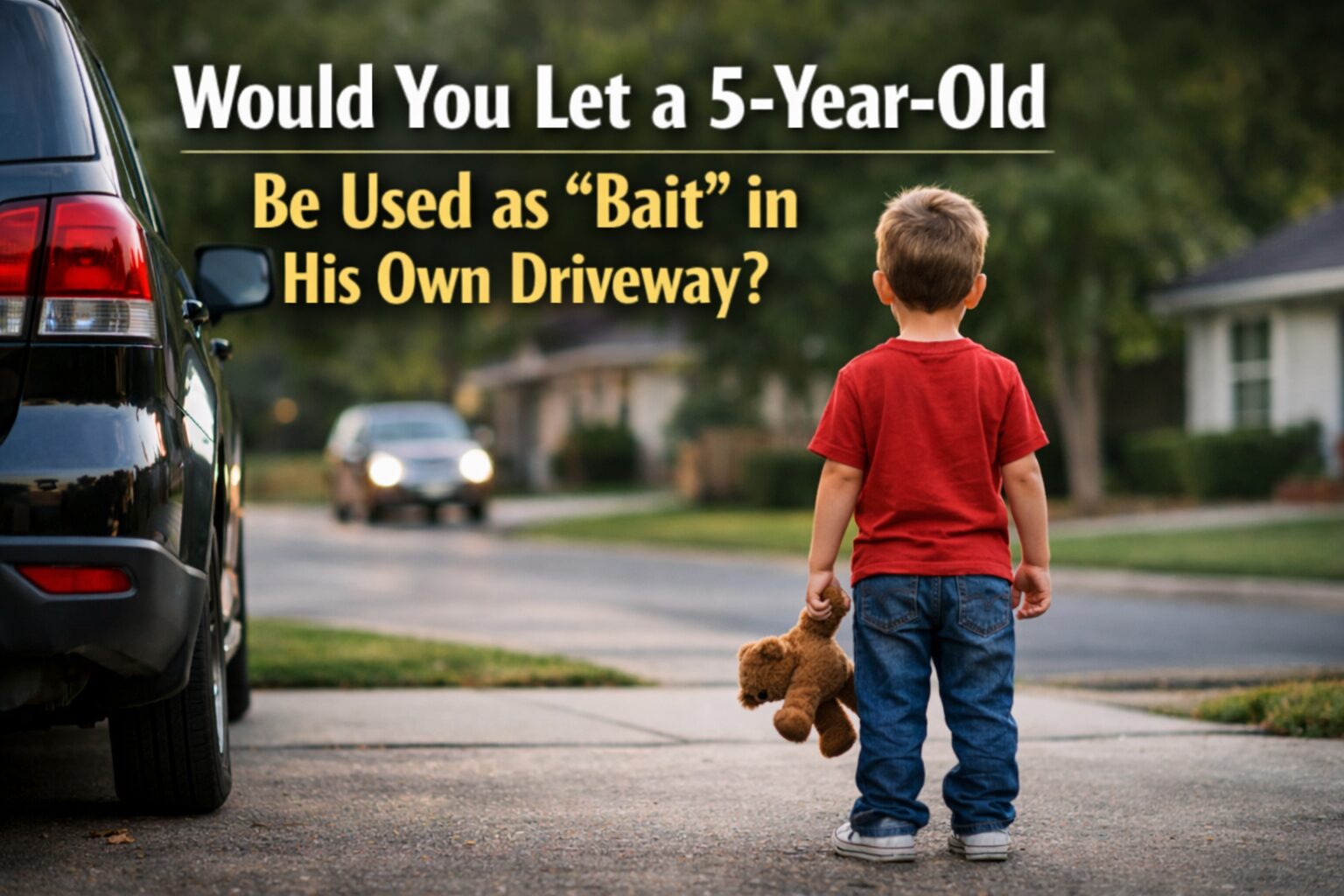
Imagine it’s an ordinary Tuesday. A father pulls into his driveway, his five-year-old son chattering in the backseat after preschool. This is the safe, familiar end to the day. Now, imagine armed federal agents moving in. The father is detained. What happens next to the child?
What if an agent led that little boy—still in his coat and backpack—to his own front door and told him to knock? Would you call that a safety procedure, or would you agree with the school superintendent who witnessed it and called it “essentially using a five-year-old as bait”?
This is not a hypothetical scenario. It happened this week in Columbia Heights, Minnesota. The boy, Liam Ramos, and his father were taken, later ending up in a Texas detention center. But the question isn’t just about one boy. It’s about what we accept as a society. When the government’s enforcement tactics involve using a kindergartener as a tool in an arrest, have the lines of decency been crossed?
The official statement from the Department of Homeland Security says the father was the target, that he “abandoned his child” by fleeing, and that the agent stayed with Liam for his “safety.” It states clearly: “ICE did NOT target a child.” But what does it mean when a child becomes a necessary, collateral instrument in an arrest? Does intent matter more than the traumatic impact on the boy who was told to knock on his own door?
And what is our responsibility to the other children? Liam is the fourth student in this small school district to be detained by ICE in just two weeks. A 17-year-old taken from a car. A teenage girl and her mother apprehended in their apartment. A 10-year-old scooped up on her way to elementary school.
When a 10-year-old’s classmates, or a 5-year-old’s preschool friends, learn that the government took them away, what lesson does that teach? The family’s attorney warns of “secondary trauma” rippling through entire classrooms. If the goal is security, does terrorizing a community of children actually make anyone safer?
The school superintendent, Zena Stenvik, poses the central, gut-wrenching question: “Why detain a five-year-old? You cannot tell me that this child is going to be classified as a violent criminal.” So we must ask: Does our system have no mechanism, no discretion, to protect the most vulnerable from becoming pawns?
Liam’s teacher describes a boy who “brightens the room.” His desk is now empty. His classmates are confused and scared. Other families are so fearful they are staying home. The school’s core purpose—to provide a safe space for learning—has been shattered.
So we are left with a series of uncomfortable, necessary questions. At what point does enforcement become cruelty? Who protects the childhood of a boy following an agent’s orders on his own doorstep? And when the story is told, will we dismiss it as a legal nuance, or will we see it for what it is: a five-year-old, used as bait, asking a nation what it stands for?


Leave an answer