
What Secrets Lie Beneath This Louisiana Bridge? The Question Every Angler Is Now Asking
Question
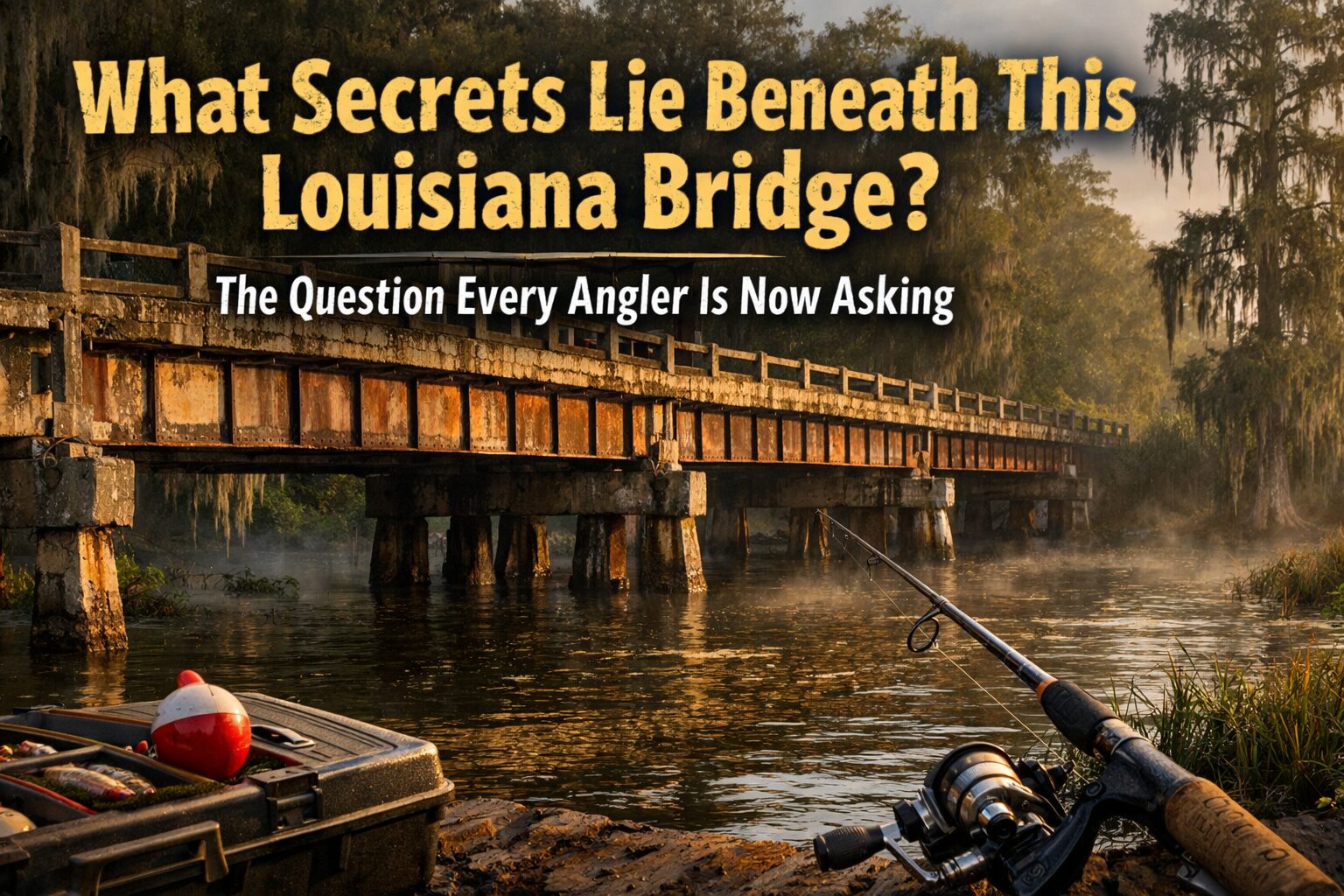
Two fishermen cast their lines into paradise—so how did they reel in a nightmare that now has an entire parish demanding answers?
The sun-drenched waters of South Caddo Parish shimmered like liquid amber last Sunday afternoon, luring two local anglers to their favorite spot beneath the Ellerbe Road bridge. It promised to be another perfect December day of solitude and sport—until their eyes adjusted to the shadows. What they found tucked beneath that weathered concrete span wasn’t catfish or tackle lost to the current.
It was a body.
And now, three days later, the question echoing from Shreveport’s bayous to its backroads is simple yet profound: Who died beneath our bridge, and what are authorities not telling us?
3:15 PM, December 21: What Transformed a Routine Call Into a Full-Scale Death Investigation?
When dispatchers at the Caddo Parish Sheriff’s Office answered that fateful call at 3:15 p.m., did they immediately sense this wasn’t a routine recovery? Did the fishermen’s voices crack with the kind of terror that signals something worse than drowning?
What we know is this: within minutes, patrol deputies became first responders to a scene that would consume their entire afternoon. Caddo Parish Fire District 5 arrived with lights flashing, transforming the rural crossing into a theater of emergency. They found an adult individual—gender, age, identity locked away behind investigation protocol.
But here’s what they won’t say: Was the body clothed? Were there visible injuries? How long had it been there? These aren’t morbid curiosities—they’re the very details that determine whether this was tragedy or atrocity.
Why Won’t They Tell Us What Killed Them?
Sheriff’s officials released a statement so carefully worded it raises more questions than it answers: “The cause and manner of death have not yet been determined.”
Really? Or is this the institutional silence that precedes a bombshell?
In an era of instant information, this strategic vacuum feels deliberate. No mention of foul play. No reassurance that residents are safe. No description of the body’s condition that might help someone recognize a missing loved one.
Are investigators protecting a family from grief before facts, or are they guarding details only a killer would know? Could that bridge be an active crime scene where evidence is still speaking, and any public statement might cause the killer to flee or cover their tracks?
How Does a Fishing Paradise Become Ground Zero for Fear?
Ellerbe Road near Gayle Red Bluff Road isn’t just coordinates on a map—it’s where fathers teach sons to tie hooks, where retirees escape the noise, where teenagers steal kisses in parked cars. Now, every ripple in that water carries a shadow of dread.
What does it do to a community when the place you seek peace becomes a forensic puzzle? When every footprint in the mud might be evidence, and every beer can littered in the weeds could hold DNA?
Neighbors watched from porches as detectives measured, photographed, and collected. That bridge they’d crossed 10,000 times without a glance suddenly became monstrous—its concrete belly hiding secrets, its shadowy underbelly a character in a horror story they never auditioned for.
What Is the Autopsy Revealing Right Now?
While we go about our days, behind closed doors a forensic pathologist is asking the body silent questions that scream for answers:
- What do your bones reveal about how you died?
- Did water fill your lungs, or were you placed here after death?
- What chemicals coursed through your veins—poison, prescription, or recreational?
- Can decomposition tell us if you’ve been here for days or weeks?
Toxicology testing takes weeks. Fingerprint matches could be instant or infinite. Dental records might be the key—if anyone is missing to match them against.
Why Is Everyone Online Already Playing Detective?
Before the sheriff’s press release even hit inboxes, Facebook groups exploded with theories. Did you see that truck parked weirdly Tuesday? My cousin heard a scream. Someone’s nephew is missing.
Why do we do this? Because uncertainty is more terrifying than even the darkest answer. A community with a known killer can lock doors. A community with a phantom threat sees killers in every shadow.
This parallel investigation—amateur, unchecked, dangerous—could destroy innocent lives. But it could also shake loose the one memory someone didn’t realize mattered. Which begs the question: Is social media poisoning the case, or is it the crowdsourcing tool that modern justice requires?
Do You Unknowingly Hold the Answer?
This is where the story pivots from mystery to mission. Investigators aren’t just asking who killed this person—they’re asking who saw something.
Did your dashcam capture a vehicle parked near that bridge between December 15-21? Did your doorbell camera record a pedestrian walking alone at night? Did you notice a car that seemed out of place, or a person who looked like they didn’t want to be seen?
The Caddo Parish Sheriff’s Office has created anonymous tip lines through Crime Stoppers for a reason. They’re not looking for speculation—they’re hunting for that one concrete detail: a license plate, a face, a time stamp.
When Can We Feel Safe Again?
This is the question parents are asking as they tuck children into beds near Ellerbe Road. It’s what commuters wonder as they cross that bridge, glancing nervously at the water below.
Law enforcement has purposefully limited the secured area to the immediate vicinity beneath the span—does that mean the threat is isolated? Or are they simply following protocol while a predator walks free among us?
The paradox of public safety is this: too little information breeds panic, but too much can compromise justice.
What Will Justice Look Like When It Finally Arrives?
The case remains “open and active”—a phrase that offers both hope and frustration. Updates will come, officials promise, “as confirmed information becomes available.”
But when? After next-of-kin notification, after medical examiner findings, after some bureaucratic clock runs out?
Or will this become another cold case folder, stacked in a windowless room, waiting for a future sheriff to reopen and wonder: What did we miss beneath that bridge?
For now, the water flows. The fishermen have returned to other spots, but their eyes scan differently now. The community waits, watches, and wrestles with the most haunting question of all:
Who among us knows the truth, and what will it take for them to finally speak?


Leave an answer