
What Happens When the Final Whistle Brings Death?
Question
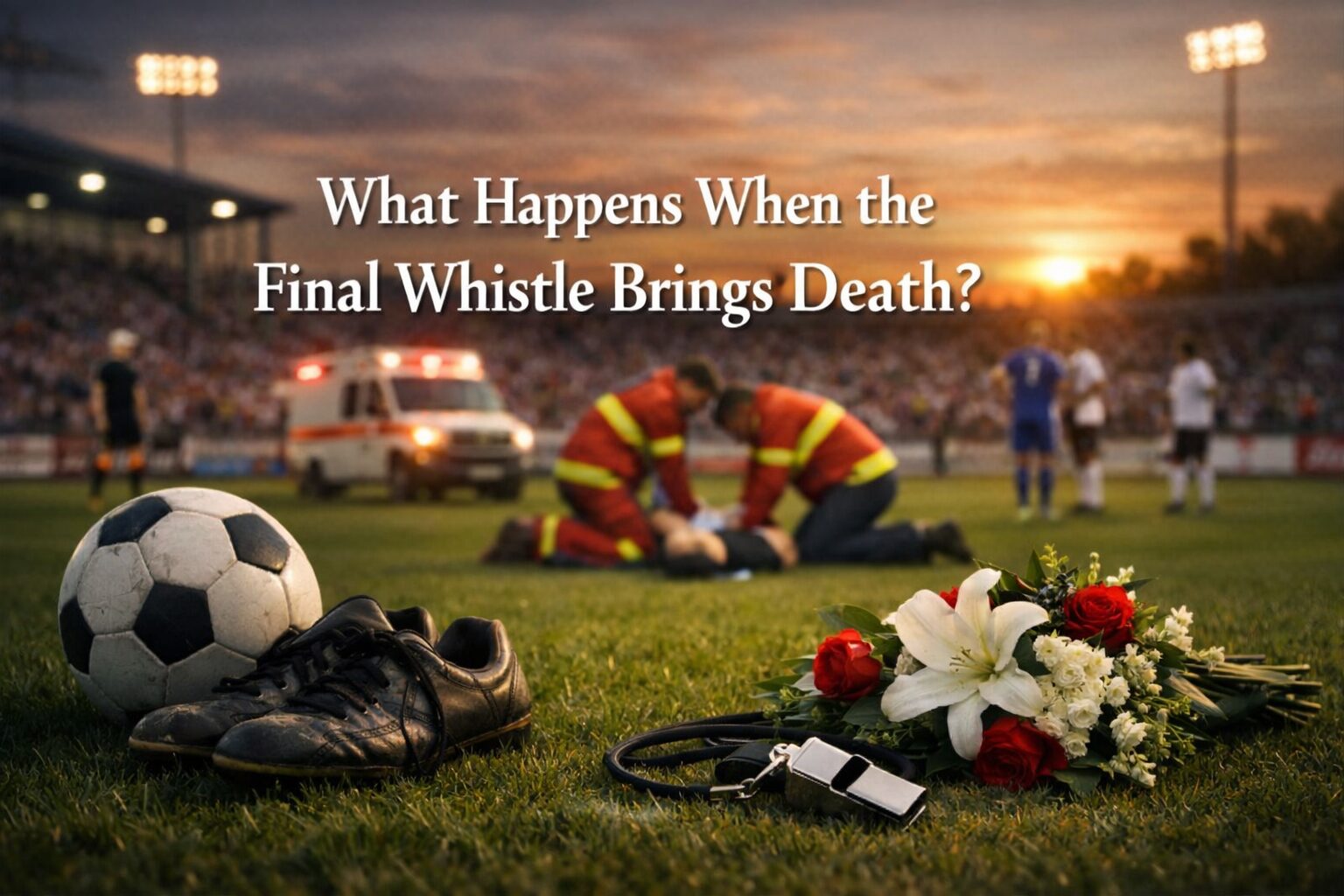
Could you have imagined that staying to cheer for your local team might cost you your life? What if the greatest danger on a football pitch wasn’t a rogue tackle or a bad referee call, but the sudden arrival of armed men in multiple vehicles, unloading over 100 rounds of ammunition into crowds of families?
Who could have warned the mothers socializing near the sidelines, the children playing tag behind the goals, or the fathers debating the match’s outcome that their Sunday routine in Salamanca’s Loma de Flores neighborhood would transform into one of the bloodiest afternoons in Guanajuato’s recent history?
Where does safety exist when gunmen can open fire indiscriminately on a community gathering, leaving at least eleven bodies scattered across the Cabañas pitch—among them, a woman and a child, their only crime being present at the wrong place at the wrong time? How many more must join the dozen injured, bleeding on the dirt where minutes earlier athletes had celebrated goals, before we acknowledge that no space remains sacred?
Why does Guanajuato, the very heartland of Mexico, continue to register the highest murder counts nationwide? Is it coincidence that Salamanca hosts a major Pemex refinery, making it ground zero for the industrial-scale fuel theft that funds armies? Who profits when pipelines are tapped and tanker trucks hijacked, and who pays the price when rival cartels turn residential neighborhoods into battlegrounds?
Do you know the difference between the CJNG and the CSRL, or does it matter when both organizations treat civilian casualties as acceptable messaging tools? What does it mean when analysts trace Sunday’s massacre not to random violence, but to the calculated brutality of cartels fighting over stolen oil and drug routes—groups so emboldened that they strike during daylight, in public, without fear of consequences?
How does a community process horror when the violence isn’t isolated? Can residents find comfort knowing that just twenty-four hours earlier, five men were executed across the same city, another kidnapped, making the football pitch massacre merely the latest punctuation in an ongoing sentence of terror? Where do neighbors turn for justice when local and federal investigators arrive to find shell casings strewn among water bottles and discarded jerseys?
When did cartel violence cease being a border issue and become a hemispheric threat demanding foreign intervention? Why has the United States designated the Jalisco New Generation Cartel as terrorists, and what message did Washington send by sanctioning the Santa Rosa de Lima Cartel shortly after? How should we interpret President Donald Trump’s threats of “land strikes” against “narco-terrorists” on Mexican soil, and what precedent is set when 36 maritime strikes have already killed 125 alleged drug traffickers before a single boot touches foreign ground?
Is Mexican President Claudia Sheinbaum’s handover of 37 “high-impact” suspects to U.S. authorities last week a genuine act of cooperation, or a desperate gambit to forestall unilateral military action? What sovereignty remains when a nation must offer prisoners to its neighbor to prevent invasion? If the Mexican state possessed true control over its territory, would armed men feel comfortable firing 100 shots at a crowded football ground?
Can we call this a drug war anymore, or has it evolved into something more sinister—an asymmetric conflict where criminal organizations wield de facto state power, and civilian spaces dissolve into hunting grounds? When a Sunday afternoon match becomes a mass execution, haven’t we crossed into an era where neutrality itself is extinct?
Who will remember the names of the eleven dead, or will they blur into statistics of Guanajuato’s spiraling body count? How many children in Loma de Flores will ever kick a ball again without scanning the perimeter for exits? What future can communities build when the sound of a referee’s whistle might signal the start of a firefight?
If we accept football pitches as killing fields, what refuge remains for the human spirit? When the gunmen drove away from Cabañas pitch, what exactly did they leave behind—and what, if anything, did they take from the rest of us?


Leave an answer