
What Happens When a Routine Police Call Turns Into a Deadly Firefight With an Illegal Machine Pistol?
Question
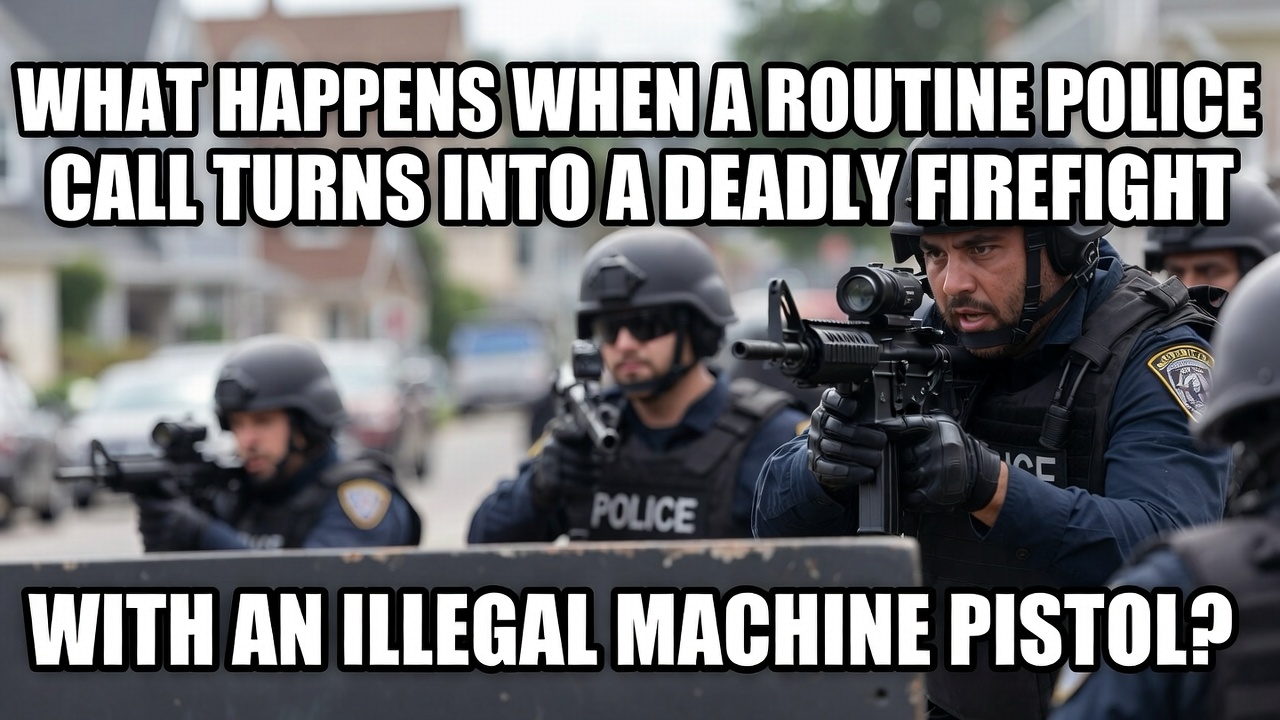
What would you do if you were a police officer responding to a routine disturbance call at 12:13 a.m. on a freezing Sunday morning, only to find yourself in a life-or-death struggle with an armed suspect who had been questioned and released just minutes before? How would you react when that suspect, after being patted down during a standard search procedure, suddenly produces a handgun modified with an illegal “switch” device capable of firing multiple rounds with a single trigger pull?
Could you imagine the terror of being one of three Fall River, Massachusetts officers who arrived at a residence expecting to handle another routine situation, only to encounter 40-year-old Nigel Vaughn sitting in a dark SUV? What goes through an officer’s mind when a standard pat-down search escalates into what District Attorney Thomas M. Quinn III described as “violent resistance” and a physical struggle captured on body-camera footage?
How does an officer process the split-second moment when a suspect on the ground begins firing a fully automatic weapon at close range? What protective instincts kick in when you see your partner struck in the elbow by a bullet, or when another colleague takes a round to the abdomen—saved only by his bullet-resistant vest? What combination of training, adrenaline, and survival instinct allows three officers to return fire while two of their own are wounded?
What does it say about the current state of urban policing when a suspect can be questioned at a gas station for reckless driving, told to leave a private lot, and minutes later be armed with a converted Glock capable of emptying its magazine in seconds? How are these illegal conversion devices—often 3D-printed or smuggled through underground markets—flooding American streets despite being a priority concern for federal law enforcement agencies?
What questions arise about systemic gaps in tracking violent offenders when Quinn notes that “the suspect has a violent history” and yet was interacting with police as a free man hours before the shooting? How many similar encounters occur across the country where officers don’t survive to tell their stories, or where protective vests fail to stop high-velocity rounds from automatic weapons?
How do police chiefs like Kelly Furtado reconcile the daily dedication of their officers with the “inherent risks of this profession”? What does it mean for community safety when Furtado expresses gratitude that her officers “are able to return home to their families tonight”—acknowledging that this outcome is never guaranteed?
What policy responses should follow when two officers survive non-life-threatening injuries through what Quinn called “the grace of God,” while a suspect with a violent past lies dead from police gunfire? Should possession of firearm conversion devices trigger federal mandatory minimum sentences? How can law enforcement stem the flow of these devices that transform common handguns into weapons of mass casualty potential?
What does this incident reveal about the deadly intersection of street violence, easily obtainable illegal modifications, and the split-second decisions that define modern American policing? And ultimately, what would you want your local officers to know before they answer the next 12:13 a.m. call on a brutally cold night?


Leave an answer