
What Happens When a Man in a Gryffindor Shirt Tests Fate in a Florida 7-Eleven?
Question
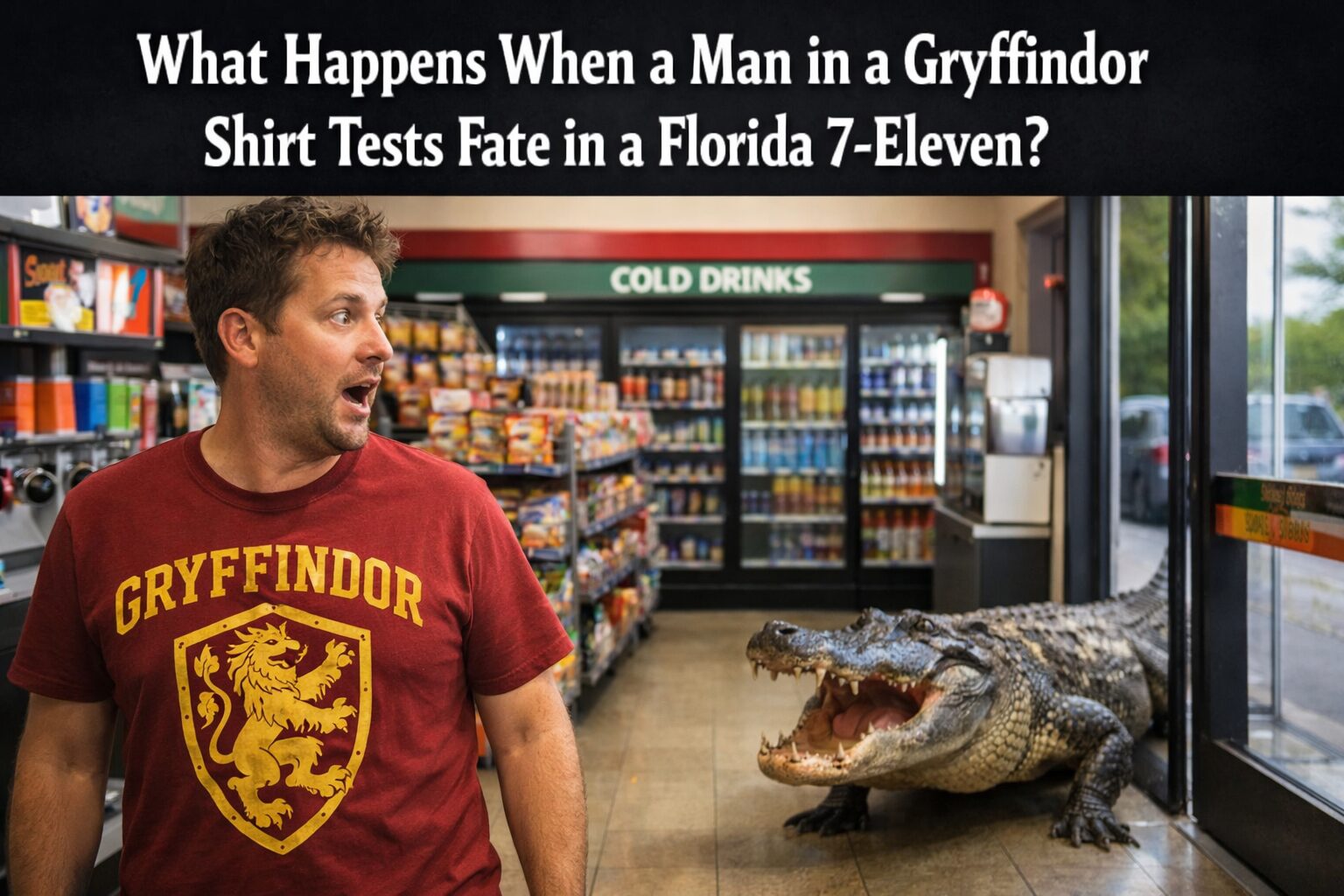
Would you risk viral infamy for a candy dispenser and a slur? What kind of person storms back into a convenience store, decked in Harry Potter house colors, to demand a stranger delete a video of his own bad behavior? How did we get here—where a Florida 7-Eleven became the unlikely stage for internet justice, and a racist tirade became a punchline about Hogwarts house points?
Picture this: It’s a regular Thursday night under the hum of fluorescent lights, where the only drama should be choosing between Cherry and Blue Raspberry Slurpee. But what if that peace shatters when a man—let’s call him the Gryffindor Gone Wrong—has already allegedly thrown merchandise and hurled racial slurs? Who would blame an employee for pulling out her phone to film him through the window as he retreats to the parking lot?
But wait—what happens when he notices? Does he slink away in shame? Or does he charge back inside with the chaotic energy of someone who’s just discovered their fanfiction got ratioed? How does he look those two Black women in the eye and demand, “Delete that right now,” as if they owe him anything but contempt?
What does true courage look like in that moment? Is it the employee’s unshakeable response—”You’re not going to touch me!”—or is it the man threatening her with a candy dispenser, then chucking it at the floor like a child denied dessert? Which is braver: standing your ground at minimum wage, or screaming a slur while running out the door?
And then—the coup de grâce—what possesses him to march up to that window, raise his hand, and slam it against the tempered glass? Did he expect it to shatter? Did he imagine the sound would be intimidating, rather than the wet thud of hubris meeting reality? How did that pane shaking become the perfect metaphor for his own fragile ego?
Why does the internet laugh? Is it the Gryffindor shirt—the ultimate irony, wearing the colors of “bravery and daring” while embodying pure cowardice? How many points should we deduct? Three? A million? When does a fandom disown its own? What makes the comment “It’s always the Harry Potter fans. Sad. Smh” so deliciously cutting?
But here’s the uncomfortable question we’re skating around: What if this hadn’t been funny? What if that candy dispenser hit flesh instead of floor? Did you know convenience store workers face violence at rates that would make an Auror’s job look cushy? How many employees absorb that “severe stress” the NIOSH warns about, just to keep America caffeinated at 2 AM? When these two women laugh, is it because it’s hilarious—or because survival sometimes sounds like defiance?
What does viral fame mean when you didn’t choose it? How does a man become an algorithm’s cautionary tale, his face beamed to millions as a living meme? Why do we call it “TikTok justice” when he wanted deletion and got immortality instead?
What’s the real spell cast here? Is it the employee’s unbreakable spirit? The internet’s collective roasting? Or is it the simple, powerful truth that aggression isn’t power, and testing someone’s resolve is the fastest way to become a footnote in your own public shaming?
So what happens when a Harry Potter fan has a muggle meltdown? The same thing that happens when anyone confuses cruelty for strength: they become a question we all answer with laughter, a caution wrapped in crimson and gold, a reminder that the bravest thing you can do is stand firm—and the stupidest is to test someone already filming.


Leave an answer