
What Does It Take for a Routine Delivery to Become a Viral Nightmare of Racism and Guns?
Question
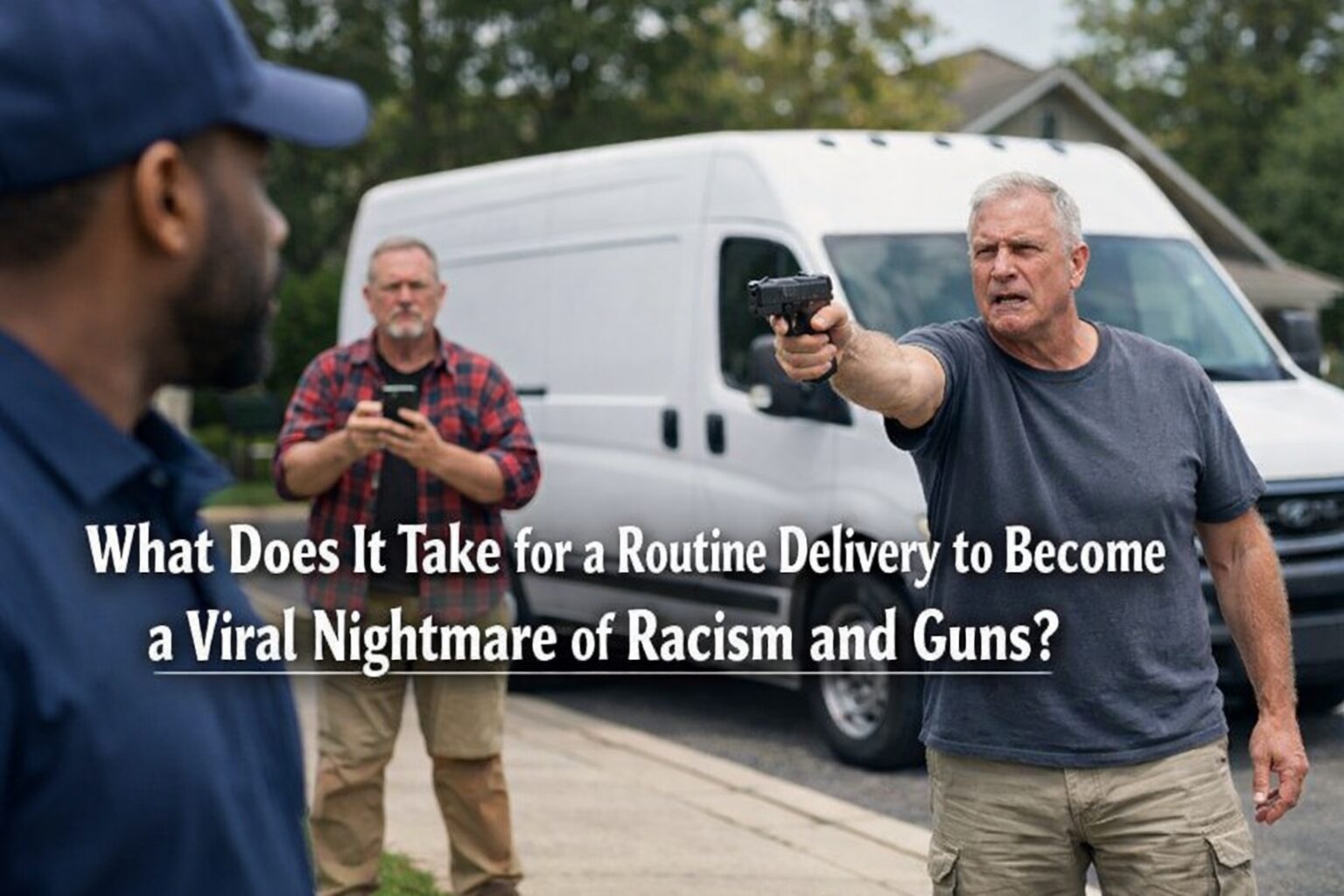
What happens when a Black FedEx driver simply double-parks for ninety seconds to deliver a package? In Atlanta, the answer is a 62-year-old white man with a gun and a slur.
The viral video from January 22nd forces us to ask: How did we reach a point where temporary inconvenience justifies lethal intimidation?
What Makes “Boy” Still a Weapon in 2025?
When the older man first approached the delivery truck, what was he really trying to accomplish? Was it about the blocked traffic, or was it about finding someone to dominate? Each time he spat out “boy”—that antiquated term designed to shrink a grown professional into something less-than—what story was he trying to tell himself?
Why does this word retain its venom decades after civil rights battles? And why did the driver’s unfazed response—”I got time today!”—seem to enrage him further?
Who Performs Violence for an Invisible Audience?
What drives someone to flash a middle finger and announce, “Put this on your Instagram” before threatening assault? Was this man auditioning for a role as tough guy, or had he simply never faced consequences for his aggression?
His theatrical feints and posturing suggest a deeper question: When did intimidation become a public performance art? And what does it reveal about our culture that he felt emboldened to stage his show in broad daylight?
What Happens When The Gun Appears?
Why did retreating to his vehicle suddenly become necessary? What clicked in that moment when verbal abuse failed to produce the desired fear? When he emerged waving a firearm, what message was he really sending: I own this street. I own this moment. I own you.
Georgia’s permissive gun laws make us wonder: At what point does ” Second Amendment freedom” become raw terror? And how is it that pointing a deadly weapon at someone doing their job carries a lighter potential sentence than many non-violent crimes?
Who Protects the Worker Just Trying to Work?
What about the woman in the robe, urging the driver to de-escalate? Why do bystanders so often misplace responsibility onto those being targeted? What would it take for the default question to shift from “Why didn’t you just comply?” to “Why did he bring a gun?”
As the video ends abruptly, we’re left asking: Did police respond? Has FedEx—which the internet has tagged relentlessly—issued any statement? Will this driver receive support, or just another route tomorrow?
What Makes This Story Refuse to Fade?
Why does this particular clip spread like wildfire while countless similar incidents don’t? Is it the driver’s impossible calm? The stark contrast between his professionalism and the gunman’s unhinged entitlement? Or is it that millions recognize this scenario: the mundane task, the disproportionate rage, the ever-present threat of violence while simply existing while Black?
What does it mean when the top comment calls this “attempted murder-level intimidation”? And what does it say about America that we need viral videos to validate what communities experience daily?
What Comes Next?
Will this be another moment of collective online outrage that dissipates by next week? Or will it force us to confront the harder questions: How do we protect workers from becoming targets? What policies would actually prevent this? When will composure stop being a survival requirement and justice become the default?
The driver delivered his package and kept his life. But what did it cost him? And what will it cost the rest of us if we stop asking these questions?


Leave an answer