
The American Economic Landscape: Trade Deficits and Congressional Deadlines
Question
Back in the United States, this week brought sobering economic news alongside familiar political drama—and both carry implications far beyond American shores.
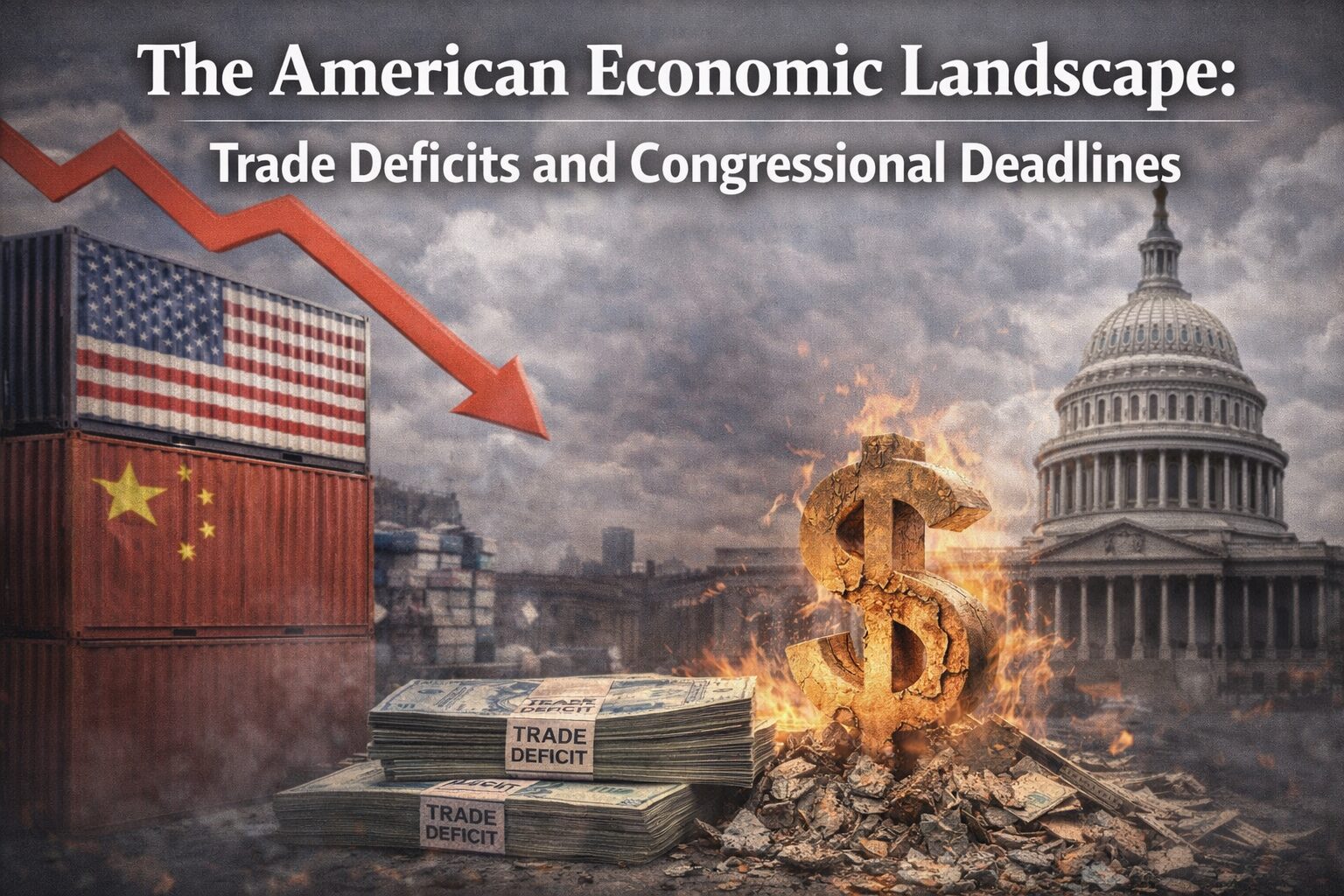
The US trade deficit in goods hit a record $1.24 trillion in 2025, according to data released Thursday by the Bureau of Economic Analysis . The 2.1 percent increase from the previous year reflects continued American appetite for imported goods even as export markets fluctuate.
Among major trading partners, the pattern defies simple characterization. The US trade deficit with the European Union actually dropped by $17.12 billion, suggesting European economic headwinds may be reducing American purchases . But deficits with Mexico and Vietnam surged—up $25.42 billion and $54.73 billion respectively—reflecting shifting supply chains and continued American dependence on manufactured goods from those countries .
On Capitol Hill, the clock is ticking toward a government shutdown deadline with just days remaining and negotiations stalled. The Hill reported this week that discussions between the White House and Democratic leaders on funding the Department of Homeland Security have “hit a wall,” with administration officials publicly accusing Democrats of refusing to make concessions .
The Homeland Security funding impasse carries particular significance given the department’s role in immigration enforcement—a flashpoint issue in American politics. White House deputy chief of staff James Blair framed the conflict in stark terms: “They’re saying right now, OK, we’re going to close DHS until you basically stop enforcing immigration law in this country. We’re not going to do that” .
Behind the immediate funding fight looms a larger fiscal picture that gives both parties reason for concern. The Congressional Budget Office projects that debt held by the public will balloon to more than $56 trillion by 2036, driven by increased spending on entitlement programs as the population ages and rising interest costs on the debt itself . By later this year, federal debt held by the public is expected to surpass the size of the entire US economy—a milestone that, while largely symbolic, carries psychological weight for markets and policymakers alike


Leave an answer