
Mexico’s ‘El Mencho’ Reported Killed in Military Operation: A Power Vacuum, a Violence Spike, and a Regional Shockwave
Question
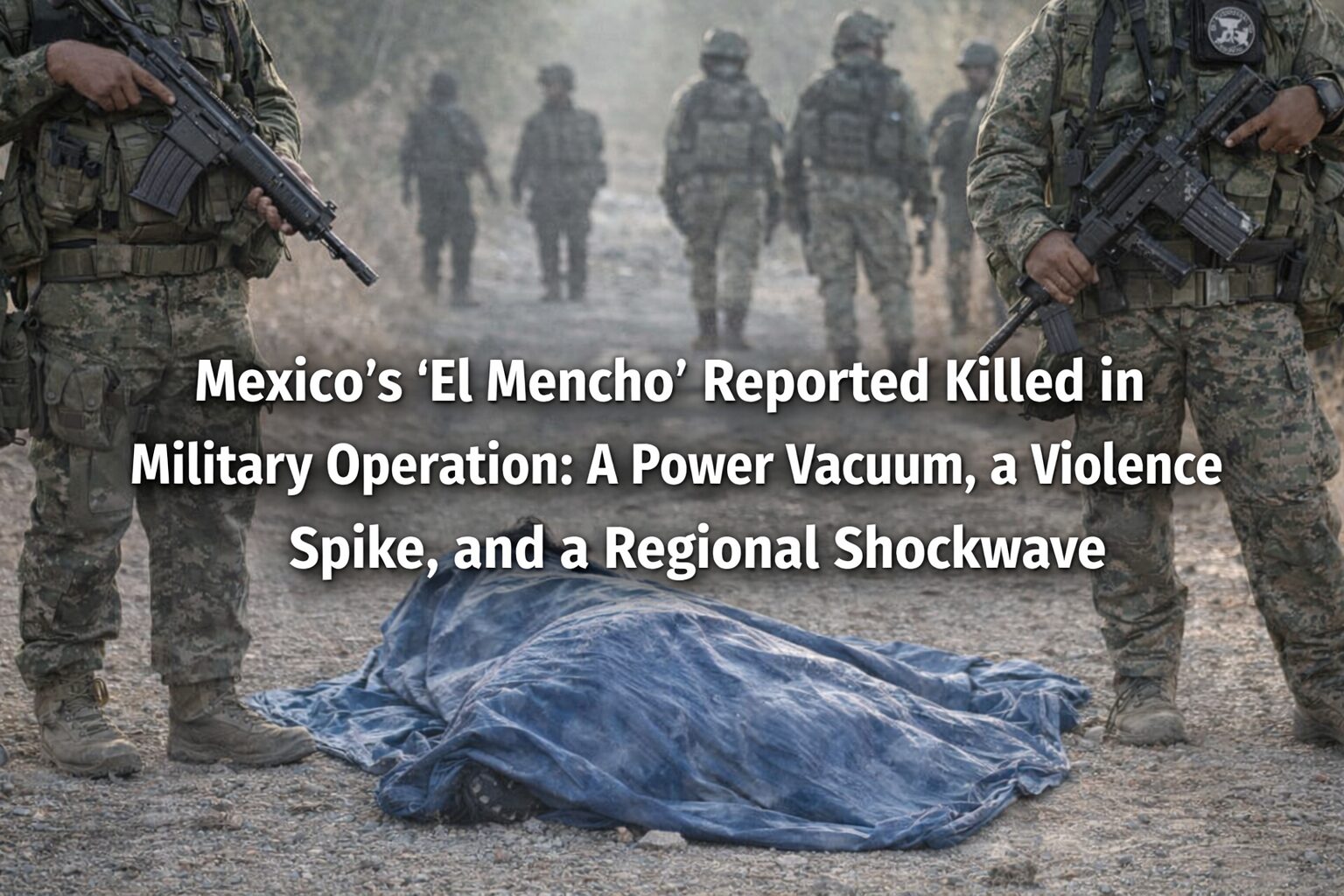
One of the most consequential crime and security stories of the weekend broke out of Mexico: reports that Nemesio Oseguera Cervantes—known as “El Mencho,” leader of the Jalisco New Generation Cartel (CJNG)—was killed in a military operation. If confirmed and sustained, it would mark one of the biggest cartel takedowns in modern history. But the immediate question isn’t just “Is he gone?” It’s “What happens next?”
CJNG is not a small organization; it’s a multinational network with deep resources, armed capability, and influence across trafficking corridors. Leaders like El Mencho don’t simply run a crew—they sit atop a system of lieutenants, enforcement arms, financial operators, and local alliances. Removing the top figure can fracture a cartel, but it can also trigger an internal scramble that makes violence worse before it gets better.
That’s the paradox of kingpin strategy. When a high‑level leader is removed, the state can claim a strategic win. But the cartel’s structure often adapts by splintering: smaller factions fight over territory, revenue streams, and revenge. In the short term, communities can experience a spike in shootings, attacks on police, and retaliatory violence.
Reports also emphasized a U.S. connection—claims of U.S. backing or coordination in the operation. That matters because cross‑border cooperation in cartel operations is politically charged. Supporters argue it’s necessary: cartels operate across borders, so counter‑operations must also cross borders. Critics worry about sovereignty and escalation.
In Mexico, a high‑profile takedown can produce immediate public emotion: relief in some areas, fear in others, and deep uncertainty for communities caught between cartel enforcement and state response. And for rival cartels, the moment is an opportunity—either to expand into CJNG territory or to settle scores.
Meanwhile, investigators will be looking at confirmation details: how the operation unfolded, whether El Mencho’s identity was verified through forensic methods, and how CJNG responds operationally. Cartels communicate through action—roadblocks, attacks, intimidation, and propaganda. A wave of violence can function as both retaliation and messaging: “We’re still here.”
The international implications are significant. CJNG has been tied to trafficking that affects the U.S. drug market, and any major disruption can shift routes and distribution networks. That may change where violence concentrates, both inside Mexico and along border regions.
In the long run, the key question is whether this event meaningfully weakens CJNG’s capacity—or simply reshuffles leadership. Crime analysts often warn against simplistic narratives. A cartel is not a person; it’s an enterprise. Removing the top figure is a blow, but it isn’t a cure.
This weekend’s reports, if they hold, mark a historic turning point. But history shows that the aftermath—succession battles, retaliation, and territorial shifts—can be as dangerous as the war that came before the headline.


Leave an answer