
Is This the End of Nicolás Maduro—or the Beginning of America’s Most Politically Volatile Prison Saga?
Question
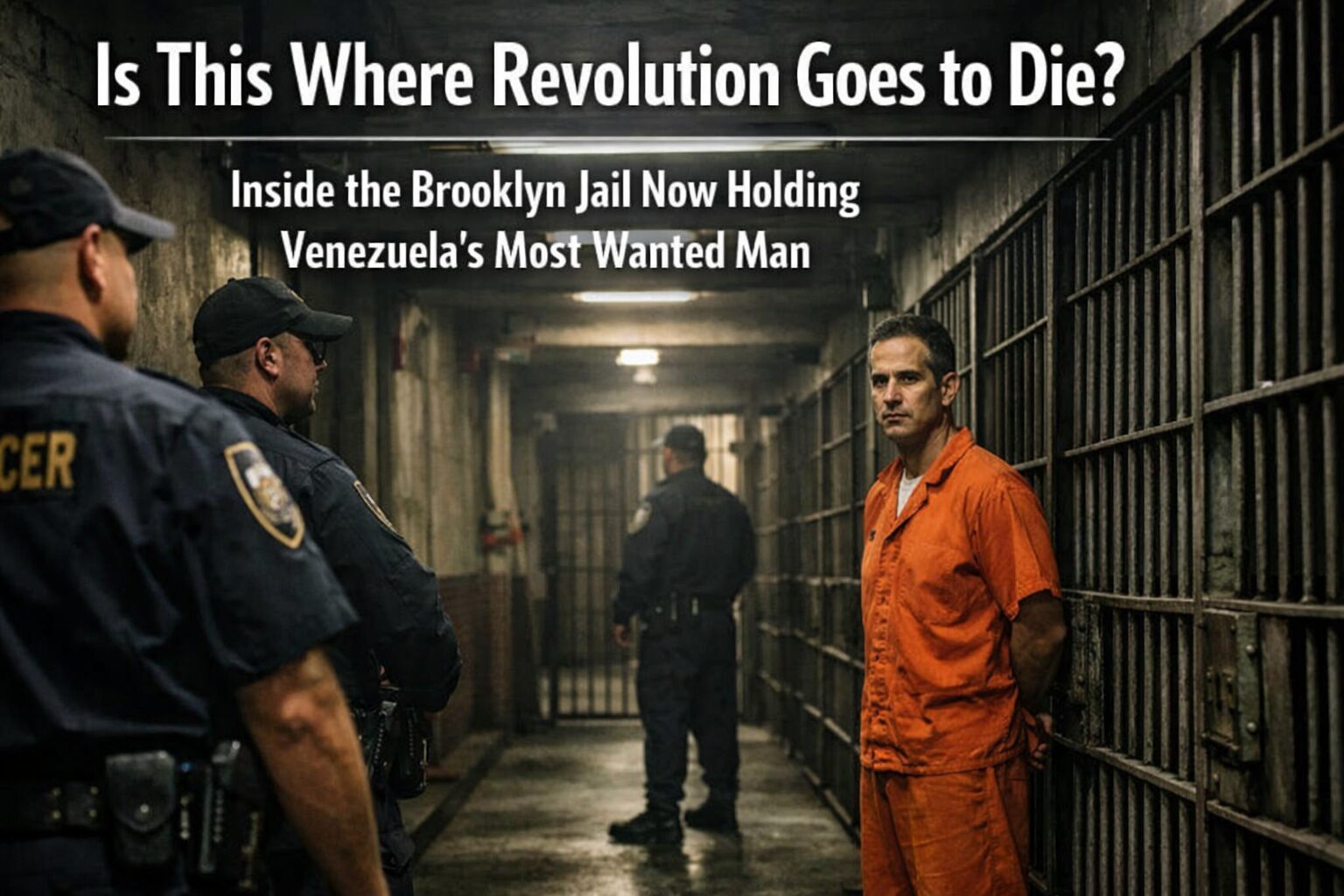
When a man who once commanded presidential palaces and military parades wakes up to the sound of correctional officers and steel doors, what does that say about the shifting sands of global power? This morning, that hypothetical became Venezuela’s reality as Nicolás Maduro, the disputed leader of a nation in crisis, began his third day of captivity inside a facility that has been called both a necessary evil and an “ongoing tragedy” by American judges.
The Metropolitan Detention Center in Brooklyn—more infamously known as MDC Brooklyn—has spent years building a reputation that no correctional facility wants. Yet now, it finds itself at the center of an international firestorm that raises uncomfortable questions about sovereignty, justice, and what happens when geopolitics collides with America’s penal system.
From Palace to Prison: How Did We Get Here?
The video clip that ricocheted across social media feeds overnight tells a story without words: a figure in civilian clothes, surrounded by armed personnel, walking through institutional hallways that have seen everything from alleged cartel leaders to disgraced music moguls. The White House release of this footage—showing Maduro apparently inside MDC Brooklyn’s corridors—represents an unprecedented act of public messaging in what President Donald Trump has framed as a strategic move to position the United States as Venezuela’s de facto administrator.
“This sets us up to run that country,” Trump’s statement declared, words that sent diplomats scrambling and constitutional scholars into heated debate. Was this a criminal prosecution or a precursor to nation-building through incarceration? The ambiguity itself has become the story.
Attorney General Pam Bondi’s confirmation that prosecution will move forward adds legal weight to what many view as a political spectacle. Yet the absence of a judicial appearance—even preliminary—creates a limbo that benefits no one: not the defendant, not the justice system, and certainly not the already strained relationship between Washington and Caracas.
“Hell on Earth” With a View of Freedom
What makes this story impossible to ignore is the brutal irony of geography. MDC Brooklyn squats in a waterfront industrial zone, its bland architectural brutality positioned almost poetically within sight of the Statue of Liberty. For the roughly 1,300 souls inside—including, reportedly, Maduro’s wife Cilia Flores—that symbol of American freedom remains a taunting silhouette on the horizon, visible but unreachable.
This isn’t just any detention center. It’s the only federal jail in New York City, a pressure cooker where the Bureau of Prisons dumps everyone awaiting trial in the Eastern and Southern Districts of New York. The result is a demographic cocktail that defies categorization: alleged mafia captains share space with white-collar executives who cooked books; suspected terrorists walk the same hallways as hedge fund managers who crossed one regulatory line too many.
Former inmates and their advocates have spent years sounding alarms about conditions that one federal judge didn’t hesitate to label “barbaric.” The numbers from 2024 alone tell a grim story: two prisoner homicides carried out by other inmates, multiple correctional officers charged for accepting bribes and smuggling contraband, and a maintenance backlog that once exceeded 700 urgent requests.
The Gallery of Infamy: Who Else Has Called This Place Home?
To understand why MDC Brooklyn might be America’s most politically charged jail, look at its recent roster of celebrity inmates. Luigi Mangione—the 26-year-old suspect in the shocking daylight assassination of UnitedHealthcare CEO Brian Thompson—was housed here, his presence turning the facility into a media circus. Before him, hip-hop billionaire Sean “Diddy” Combs occupied a cell, fighting charges that have sent shockwaves through the entertainment industry. Ghislaine Maxwell, the socialite convicted of trafficking underage girls for Jeffrey Epstein, spent time behind these same walls.
Each high-profile arrival transforms MDC Brooklyn from a mere detention facility into a symbol of something larger: the fall of the powerful, the randomness of justice, or the machinery of state retribution. Now, with a foreign head of state joining this ignoble fraternity, the jail has transcended its physical boundaries to become a diplomatic flashpoint.
Violence, Corruption, and the Illusion of Reform
Bureau of Prisons officials released a statement in September claiming that MDC Brooklyn is now “safe for inmates and staff,” pointing to increased correctional and medical personnel, repaired infrastructure, and upgraded food and climate control systems. They highlight the population drop from 1,580 in January 2024 to today’s 1,300 as evidence that overcrowding—long blamed for the facility’s violence—has been addressed.
But here’s the question they’re not answering: Was the violence ever truly about numbers, or was it about culture? The March 2025 indictment of 23 inmates suggests that contraband—from weapons hidden in Doritos bags to the stabbing of a man convicted in hip-hop legend Jam Master Jay’s murder—remains rampant. When a facility’s underground economy can still flourish despite改革的 claims, what does that say about the depth of change?
The dual role of MDC Brooklyn as both a federal jail and an Immigration and Customs Enforcement detention center adds another layer of complexity. Immigration advocates report a “skyrocketing” population of ICE detainees in recent months, creating tensions between different inmate populations and stretching already thin resources. For someone like Maduro—whose own nation’s migration crisis has sent millions fleeing—this particular detail carries a poetic justice that no fiction writer would dare invent.
The Questions That Keep Diplomats Awake at Night
Perhaps the most viral-worthy element of this saga isn’t what’s happening, but what’s not happening. No clear timeline for a court appearance. No articulated legal strategy from either side. No international consensus on whether this arrest represents legitimate law enforcement or extraordinary rendition dressed in judicial robes.
If America’s justice system can hold a foreign leader indefinitely without immediate charges, what precedent does that set? If the goal is truly to “run” Venezuela, as Trump stated, does that make MDC Brooklyn the new administrative capital of a nation in exile? And perhaps most provocatively: Will the conditions that have plagued this facility for years suddenly improve with such a high-profile inmate—or will his presence expose the system to global scrutiny it can no longer withstand?
The Hashtag-Worthy Irony
This story contains multitudes, each one ripe for social media amplification. There’s the geographic cruelty of imprisoning leaders within sight of the Statue of Liberty. There’s the historical echo of strongmen falling from grace. There’s the bureaucratic absurdity of a jail attempting normal operations while housing individuals whose decisions once moved global markets.
The Metropolitan Detention Center Brooklyn has spent years trying to rehabilitate its image. Instead, it may have just become the most famous prison in the Western Hemisphere—not because it reformed, but because the world order itself has arrived at its gates, with questions that have no easy answers and implications that will outlast any single presidency.


Leave an answer