
Is the Air We Breathe Becoming a Silent Killer? Tens of Thousands Just Got Ordered to Stay Indoors Across Two Major US States
Question
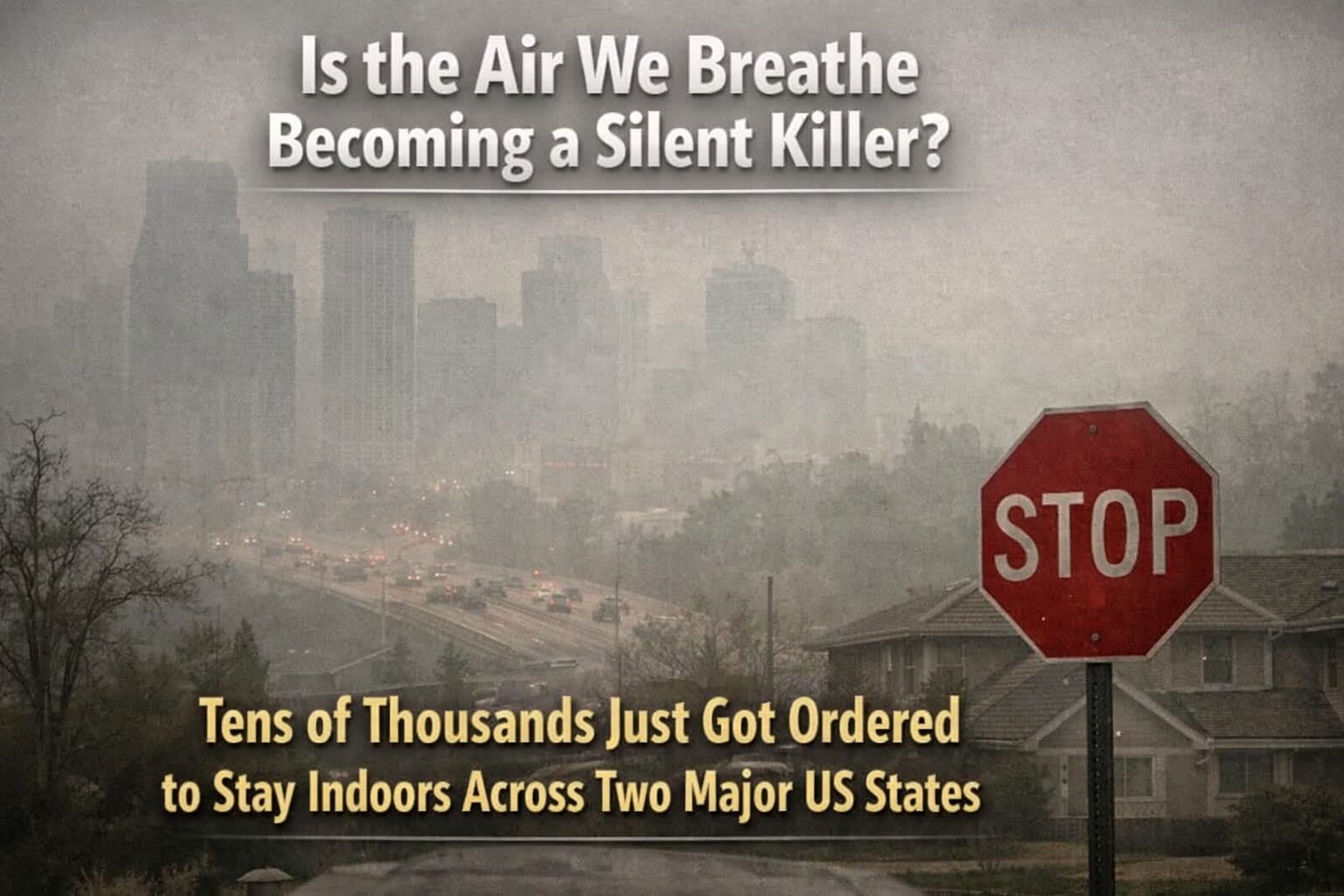
What happens when the simple act of stepping outside becomes a health hazard? For residents near two American metropolitan hubs, this isn’t a hypothetical scenario—it’s Tuesday morning’s terrifying reality. But how many people actually understand the invisible threat currently swirling around their homes?
Why did air quality monitors suddenly flash red across entire regions of Florida and Georgia? The US Environmental Protection Agency’s tracking systems began screaming warnings before dawn, capturing something deeply concerning in the atmosphere above Daytona Beach and Atlanta’s sprawling suburbs. But what exactly are these devices detecting that has health officials so alarmed?
Have you ever heard of particles so microscopic they can bypass your body’s natural defenses entirely? PM2.5—particulate matter measuring 2.5 micrometers or smaller—consists of toxic chemical compounds and heavy metals capable of penetrating deep into lung tissue. But did you know these invisible intruders don’t just irritate your respiratory system? How many Americans realize that breathing this polluted air can actually trigger cardiac events, including heart attacks?
What atmospheric phenomenon could transform typically pleasant coastal communities into hazardous zones? The culprit appears to be something meteorologists call “stagnant air”—a condition where high atmospheric pressure and minimal wind create a toxic dome, trapping pollutants at ground level where people actually breathe. But why are wildfires making this natural phenomenon exponentially more dangerous?
How bad is the air quality, really? In Daytona Beach—a Florida coastal city home to approximately 80,000 residents—monitoring equipment captured PM2.5 concentrations reaching 12.5 times beyond what the World Health Organization considers safe exposure limits. But what does that actually mean for someone taking their dog for a morning walk or children waiting at bus stops?
When both the EPA and independent tracking platform IQAir classify air as “unhealthy,” who exactly needs to worry? The answer, disturbingly, is everyone. Once the Air Quality Index surpasses 150, the risk extends beyond vulnerable populations to include healthy adults and children. But are people actually checking these indexes before heading out the door?
Why are Atlanta’s suburban communities registering even higher toxicity levels? Multiple monitoring stations across Dallas, Powder Springs, Roswell, and Vinings recorded readings exceeding 160 on the AQI scale. But how many residents in these bedroom communities even know what their local air quality reading was this morning?
Do you understand what the Air Quality Index numbers actually signify? The scale runs from 0 to 500, with “good” air (0-50) posing minimal risk and “moderate” conditions (51-100) potentially affecting sensitive individuals. But once readings hit 101-150, vulnerable groups face serious danger. When numbers climb to 151-200—declared “unhealthy”—everyone’s health is compromised, and outdoor activity should be strictly limited. So why are so many people still jogging in this?
What specific protective measures could mean the difference between safety and sickness? Health authorities are urgently advising affected populations to eliminate outdoor exercise entirely, don protective face coverings if venturing outside becomes absolutely necessary, seal all windows to prevent toxic infiltration, and activate air purification systems immediately. But how many households actually possess these protective tools?
What happens to your body during even brief exposure to these contaminated conditions? Immediate effects include significant irritation of the eyes, throat, and nasal passages. But for vulnerable individuals—those with preexisting cardiac conditions, respiratory ailments, or compromised immune systems—the consequences can be far more severe. How many people realize that inhaling these particles can trigger irregular heart rhythms, full-blown asthma attacks, persistent coughing, chest constriction, and dangerous shortness of breath?
Why was a major interstate highway shut down days before the air quality alerts intensified? Portions of I-95 south of Daytona Beach closed Sunday and Monday due to wildfire smoke obliterating visibility. But if conditions were dangerous enough to halt traffic two days ago, why did it take until Tuesday for comprehensive health warnings to reach residential areas?
What meteorological factor transformed these regions into atmospheric dead zones? Atmospheric pressure, measured in millibars, typically registers around 1,013 millibars at sea level under normal conditions. But when readings climb above 1,020 millibars—exactly what occurred across Georgia and Florida on Tuesday—the resulting high-pressure systems bring deceptively beautiful weather: calm skies, stable conditions, and gentle breezes. However, isn’t there a devastating hidden cost to this postcard-perfect weather?
How does this atmospheric stability become a health hazard? High-pressure systems effectively slam shut the ventilation system that normally disperses airborne contaminants. Without wind to scatter pollutants upward or push them elsewhere, everything in the air—wildfire smoke, industrial emissions, vehicle exhaust—accumulates exactly where humans live and breathe. But how long can communities survive under these toxic domes?
Which specific monitoring technologies first detected this crisis? The EPA’s AirNow platform and IQAir’s independent tracking systems simultaneously identified multiple zones experiencing hazardous conditions. But why do we need redundant warning systems? Could government monitoring alone be trusted to alert citizens quickly enough?
How ironic is it that communities recently praised for clean air are now choking on toxic pollution? In 2025, the American Lung Association awarded Daytona Beach’s Volusia County a ‘B’ grade for particle pollution, noting it possessed some of Florida’s cleanest atmospheric conditions. Similarly, Georgia’s Cobb and Fulton counties, encompassing Atlanta’s core, also earned respectable ‘B’ ratings. But what does this rapid deterioration tell us about the fragility of air quality?
Why did one Georgia county escape grading entirely, only to become a worst-case scenario? Paulding County—containing Dallas and Pickett’s Mill—received no evaluation from the American Lung Association in 2025. Yet on Tuesday, this ungraded region experienced PM2.5 levels soaring fifteen times beyond WHO safety recommendations. Should monitoring organizations be required to assess all communities, or are gaps in coverage creating dangerous blind spots?
What human activities are exacerbating this natural disaster? Approximately seventy-five miles west of Atlanta’s affected suburbs, officials are currently conducting six “prescribed fires” within Alabama’s Talladega National Forest. But what are controlled burns, and why would anyone intentionally ignite forests during an air quality crisis?
Are prescribed fires actually making the situation worse? These carefully planned intentional burns serve legitimate purposes: reducing future wildfire risk by clearing excess brush and dead vegetation, improving wildlife habitats, and restoring ecosystem health. But when atmospheric conditions trap resulting smoke exactly where populations breathe, do the benefits still outweigh the immediate public health costs?
Who bears responsibility when intentional land management creates uninhabitable air conditions? Federal agencies coordinate prescribed burns with weather forecasts, but can any prediction account for the interaction between controlled fires and naturally occurring stagnant air events? How do we balance long-term forest health against immediate respiratory emergencies?
When will residents be able to breathe freely again? Meteorological forecasts suggest the high-pressure systems maintaining these stagnant conditions will eventually dissipate, allowing winds to resume their natural cleansing role. But how many days of exposure will communities endure before relief arrives? And what permanent health damage might occur in the interim?
Are these events becoming more frequent, or does improved monitoring simply reveal what was always present? Climate scientists have long predicted increased wildfire activity and altered atmospheric patterns. But are we witnessing the normalization of “stay indoors” warnings as standard seasonal occurrences? What does it mean for American life when breathing outdoor air requires daily risk assessment?
What infrastructure investments could prevent future air quality emergencies? Enhanced air purification systems in schools and public buildings? Real-time alert networks reaching every smartphone? Stricter regulations on prescribed burning during high-pressure weather systems? But who will prioritize these protections before the next crisis strikes?
How many Americans currently live without access to air quality information, protective equipment, or climate-controlled safe spaces? While affluent households can seal windows and activate purifiers, what about elderly residents in poorly insulated homes, outdoor workers dependent on daily wages, or families unable to afford protective gear? Does our emergency response account for these inequalities?
When the next “stay indoors” order arrives—and meteorological patterns suggest it will—will you be prepared? Or will you, like thousands across Florida and Georgia today, wake up to discover that your morning routine has become a health gamble?


Leave an answer