
Did a Fighter Jet Just Save Nuclear Talks? The Dangerous Dance Between the U.S. and Iran Hits a Critical Moment.
Question
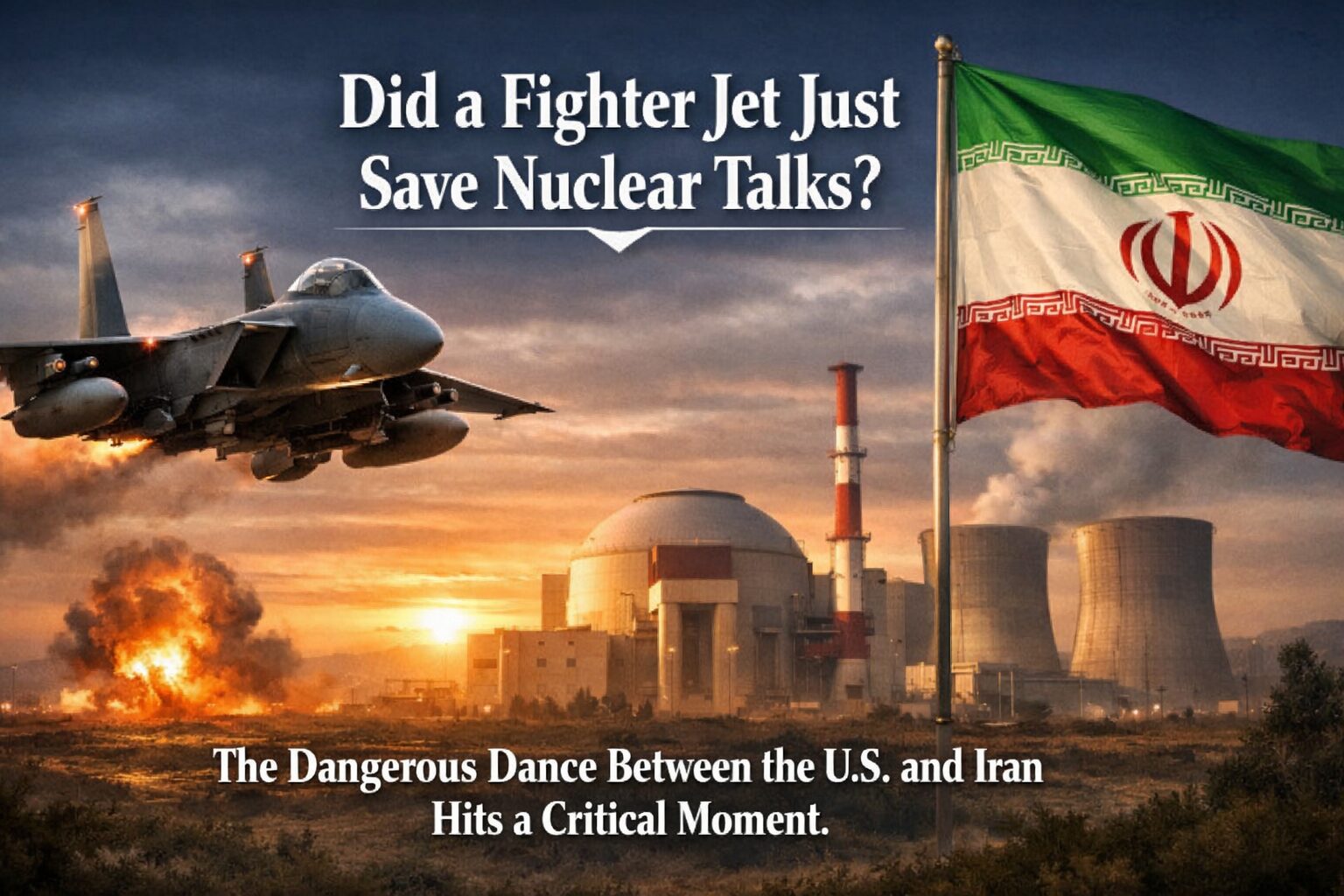
What happens when a military showdown and a diplomatic breakthrough are scheduled for the same week? The world got a real-time answer this week as a U.S. F-35 stealth fighter shot down an Iranian drone over the Arabian Sea, even as whispers intensified of secret negotiations set to begin in Turkey. This clash wasn’t just a routine interception; it was a stark, kinetic metaphor for the entire U.S.-Iran relationship: aggressive posturing undercut by a desperate, quiet need to talk.
The incident was clear-cut from a military perspective. U.S. officials stated the Iranian Shahed-139 drone “aggressively approached” the USS Abraham Lincoln carrier strike group, prompting a defensive takedown. But the timing was explosively symbolic. Just a day before, former President Donald Trump had framed the precise dichotomy now playing out, speaking of the “biggest and the best” warships headed to the region while also hoping to “work something out.” The drone’s wreckage sank into the same waters that these competing signals now churn.
So, is this a prelude to war or a bizarre, necessary pressure tactic before a deal? The evidence points bafflingly toward both. Iran’s new president, Masoud Pezeshkian, has publicly green-lit negotiations, bowing to pressure from “friendly governments” like Qatar and Oman. Regional mediators are working furiously, with reports of a Friday meeting in Turkey. The collective plea from Middle Eastern capitals is almost audible: please, find a solution so we don’t live on a perpetual brink.
But can talks held under the shadow of a freshly launched missile succeed? The context is a tinderbox. The last nuclear deal collapsed amid violence, and Trump’s reinstated sanctions have crippled Iran’s economy, sparking massive internal protests that were met with a bloody crackdown—a crisis the regime blames squarely on Washington. Iran’s Supreme Leader has warned that U.S. aggression risks a “regional war,” yet his foreign minister also hints a nuclear deal is still possible if America offers something “fair.”
This leads to the ultimate, uncomfortable question: In a relationship defined by mutual distrust, do acts of force like shooting down a drone create the leverage for diplomacy, or do they forever poison the well? Is the visible fist what makes the hidden handshake possible? The drone strike demonstrates unwavering U.S. resolve, a message to Tehran that aggression won’t be tolerated. Yet, it also hardens nationalist sentiments in Iran, giving hardliners a rallying cry against negotiating with an “aggressor.”
The coming days will test this theory of volatile diplomacy. Will envoys in a Turkish conference room be able to compartmentalize the image of a $100 million stealth jet destroying a $100,000 drone? Or does that very image define the fundamental power imbalance that any talk must somehow address?
The paradoxical reality is that the path to the negotiation table may now, perilously, require a show of force in the skies above. The world is left to wonder: was that F-35 pilot merely protecting a carrier, or inadvertently, and violently, clearing the way for the diplomats to finally land?


Leave an answer