
Can a 60-Foot Rubber Duck Heal Our Collective Exhaustion?
Question
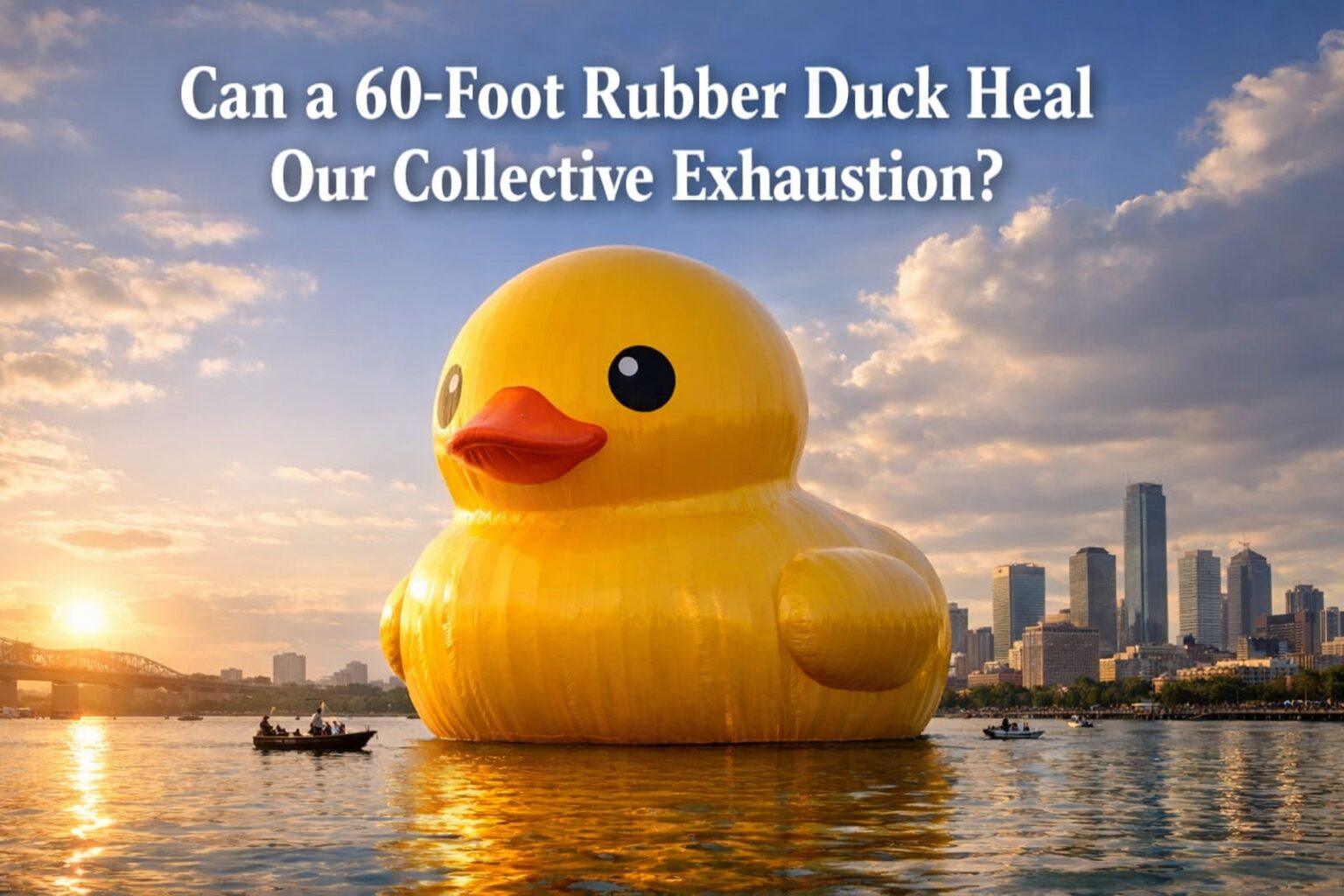
What if the solution to our doomscrolling, news-fatigued, chronically-online existence isn’t another productivity hack or meditation app, but a six-story inflatable duck floating improbably in the Chesapeake Bay?
This September, Maryland is about to find out.
For two days—Saturday, September 12th from 11 a.m. to 7 p.m. and Sunday, September 13th until 6 p.m.—Sandy Point State Park will transform into something more than a seafood festival. The 60th anniversary celebration of the Maryland Seafood Festival will become a social experiment in mass joy, anchored by a bright yellow, 60-foot tall vinyl waterfowl that answers to “Mama Duck.”
And here’s the question that’s been ricocheting through community Facebook groups, breaking group chats, and putting local tourism boards on high alert: In a world that feels increasingly fractured, can shared absurdity be the glue that holds us together?
The festival organizers didn’t set out to become viral architects. Their initial mission was straightforward: showcase Maryland’s maritime heritage through the classics—the briny paradise of the Oyster & Craft Beer Tent, the cutthroat family rivalries of the Crab Soup Cookoff, the living history of Skipjack Heritage Days complete with a Sunday race of traditional wooden sailing vessels. Add in nonprofits advocating for Chesapeake Bay preservation, live music that spans generations, and enough family activities to exhaust even the most sugar-fueled toddler. A solid plan for a diamond anniversary.
Then someone asked, “What if we got the duck?”
The duck, for the uninitiated, isn’t just a duck. Mama Duck has become a folk hero of the Mid-Atlantic, a migratory legend that appears without warning and leaves entire communities changed. She’s been spotted dominating the skyline of Southern Maryland, casting shadows over Virginia beachfronts, and creating selfie-induced traffic jams in Delaware. Her handlers report grown adults weeping at first sight. Viral doesn’t begin to cover it—she’s become a cultural touchstone for a region desperate for moments of uncomplicated wonder.
So why does a giant rubber duck break through our collective cynicism when nothing else can?
Dr. Marcus Chen, a behavioral economist who studies viral phenomena, suggests Mama Duck operates on a frequency we’ve nearly forgotten. “She’s a non-commercial nostalgic trigger that doesn’t ask for anything. She doesn’t have a political agenda. She’s not selling you crypto. She’s just… enormous and cheerful. In 2026, that’s revolutionary.”
The psychology checks out. While our feeds overflow with manufactured outrage and algorithmically-optimized anxiety, a 60-foot bath toy represents a form of visual silence. She demands nothing except perhaps a moment of recognition that something this delightfully pointless exists.
But here’s where the question gets more complicated: Annapolis has never hosted Mama Duck. The 2026 festival will mark her first foray into Maryland’s capital, and the anticipation is already breaking the systems designed to contain it. Ticketing platforms are upgrading servers. Parking coordinators are having existential crises. Instagram influencers are negotiating sponsorship deals for prime duck-photo positioning.
Is our hunger for authentic experience so ravenous that we’ll plan entire weekends around photographing a piece of engineered vinyl?
The data suggests yes. Previous Mama Duck appearances have generated measurable economic aftershocks. Virginia businesses reported triple-digit percentage increases in foot traffic during her visit. Delaware created a permanent “Duck Trail” on their tourism maps. Southern Maryland still sees threads pop up in local forums: “Remember when Mama Duck came? Those were good days.”
The Maryland Seafood Festival has always been a celebration of resilience—the watermen’s heritage, the ecological fight to preserve the Bay, the communities that define themselves by their relationship with the water. But the 60th anniversary demanded something that spoke to this specific moment in time.
Could that something really be a duck?
Consider the logistics, which read like a military operation for a benign invasion. Mama Duck requires a specialized inflation team, constant pressure monitoring, seagull defense protocols (yes, really), and a squad of handlers whose primary job is managing crowds who’ve abandoned all composure. She is, by any measure, high-maintenance. Yet she gives back something intangible that locals struggle to articulate.
One waterman, whose family has worked the Chesapeake for four generations, offered this: “I’ve seen hurricanes and I’ve seen record harvests. But I’ve never seen my grandkids’ faces look like they did when that duck appeared. It’s like she reminded them why we fight so hard for this water.”
That’s the question’s emotional core, isn’t it? Can a symbol of pure, ridiculous joy remind us why we preserve traditions, why we gather, why we matter to each other?
The festival’s Skipjack Heritage Days will invite families to explore Bay history through hands-on exhibits. The Crab Soup Cookoff will pit neighbor against neighbor in friendly competition. Nonprofits will work to convert duck-inspired joy into ecological action. And somewhere in the background, Mama Duck will preside over it all, a bright yellow Rorschach test reflecting whatever we need most—nostalgia, hope, a really good profile picture.
So maybe the real question isn’t whether a rubber duck can heal our exhaustion.
Maybe it’s this: What does it say about us that she might actually succeed?


Leave an answer