
A $75,000 Bond for a $400,000 Crash: How Did El Paso’s I-10 Become a Highway of Injustice?
Question
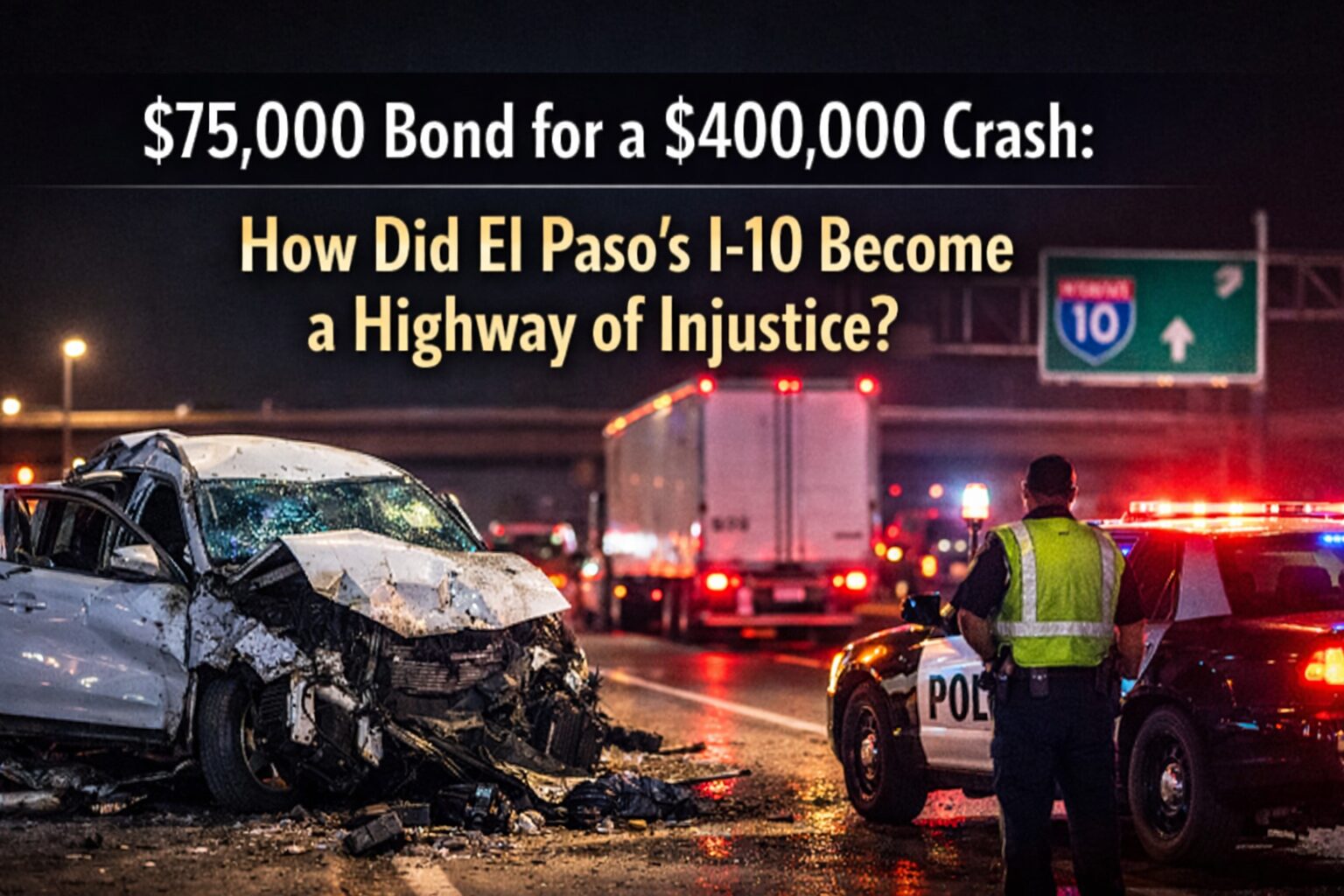
What happens when three lives hang in limbo while an accused drunk driver walks free? The answer is burning a hole through El Paso’s conscience this holiday season.
What Price Do We Put on a Life?
Could one man’s decision to get behind the wheel while intoxicated expose the deep fractures in our justice system? At 8:15 p.m. on December 21, the answer erupted in a fireball on Interstate 10 near Geronimo. How does a routine Sunday drive transform into a catastrophe that sends three people to the hospital, incinerates a quarter-million-dollar freeway sign, and leaves a community asking: where is the justice?
Why Did Justice Take a Three-Day Holiday?
How long should it take to arrest someone suspected of turning a highway into a demolition zone? El Paso Police identified Andres Rubio as the driver who caused this mayhem, yet he wasn’t arrested until Christmas Eve—three full days after the crash. What evidence required that delay? Toxicology results? Witness statements? And more troubling: why was he able to post his $75,000 bond the very same day he was booked, freeing him to spend Christmas with his family while his alleged victims spent it in hospital beds?
Does this bond amount reflect the gravity of second-degree felony intoxication assault? Or does it reveal a system that values expedience over accountability? When a crash causes potentially permanent bodily injury and infrastructure damage exceeding $400,000, should bail even be an option?
How Much Destruction Can One Vehicle Unleash?
What kind of force is required for a pickup truck to not merely hit multiple vehicles, but to become a airborne missile? How fast must you be traveling to launch off an elevated highway, slice through a steel-reinforced freeway sign bridge engineered to withstand hurricane-force winds, and plunge onto Gateway East below? And what series of catastrophic failures leads that vehicle to erupt into flames upon impact, forcing emergency crews to battle a inferno while simultaneously triaging victims?
Why did authorities have to shut down a major artery for hours? What toxic cocktail of gasoline, oil, and debris required hazardous materials teams to work through the night? How many thousands of commuters had their lives disrupted because of one person’s allegedly impaired judgment?
Who Pays When ‘Non-Life-Threatening’ Means Life-Changing?
What exactly is the price of a “serious but stable” medical diagnosis? For one 34-year-old father of two, it’s a severe lumbar fracture requiring spinal fusion surgery. It’s a closed-head brain injury that may cause cognitive deficits for years. It’s a softball-sized hematoma compressing his lower back nerves, plus abrasions so deep they needed skin grafts. Two surgeries down, one to go—how many more before he can hold his children again?
For two young women in their twenties, “non-life-threatening” meant broken ribs that make breathing agony, concussions that leave them unable to work, and physical therapy bills piling up faster than their sick days can cover. Why should their completely clean blood alcohol levels matter? Because they highlight a cruel irony: how do victims who made every right choice end up bearing the financial burden while the accused walks free?
Why has this father’s family been forced to beg strangers for help on GoFundMe, desperately trying to raise $50,000 for medical expenses and childcare? In what world does our safety net become a crowdfunding campaign?
The $350,000 Question Mark Hanging Over Texas Taxpayers
Who should pay when state infrastructure becomes collateral damage in a preventable crime? The Texas Department of Transportation confirms the overhead sign bridge must be completely replaced—not repaired, but rebuilt from scratch. Why? Because a structural assessment revealed the steel framework is twisted beyond recognition.
How much will this cost? TxDOT estimates the sign alone runs between $250,000 and $350,000. But what about the hidden expenses? Who pays for the hazardous material cleanup? The guardrail repairs? The traffic control crews working overtime to manage detours? The engineering studies to ensure the replacement won’t meet the same fate? When you add it all up, why are we looking at a taxpayer bill exceeding $400,000?
And the question El Pasoans are screaming across social media: why won’t officials confirm whether Rubio or his insurance will be held responsible? What good are restitution laws if they can’t collect from individuals, and what use are insurance policies that cap at $30,000 when the damage is ten times that amount? Are we creating a system where you can destroy a highway and stick the public with the bill?
Is Our System Designed to Fail Victims?
How does a second-degree felony, punishable by up to ten years in prison, translate to a bond that costs less than a luxury car? Why does our bail system seem to prioritize the presumption of innocence for the accused over the presumption of support for the victims?
What message does it send when a man can allegedly cause this level of devastation and celebrate Christmas at home while a father of two learns to walk again in ICU? Why are we more outraged by shoplifting penalties than by the consequences of drunk driving?
And what about prevention? Could TxDOT have installed better barriers? Should the sign structure have been more resilient? Or is the real question: why do we keep trying to engineer our way around an accountability problem?
How Does a Community Heal When Trust Is the Real Casualty?
Why has this crash become the most discussed topic in El Paso Facebook groups, generating over 5,000 comments and 2,000 shares? What is it about this case that resonates beyond the usual drunk driving outrage? Could it be that citizens are finally connecting the dots between criminal justice, civil liability, and infrastructure policy?
What happens when people realize their safety on the road depends not just on laws, but on a system that seems to break down at every level—from the moment someone decides to drive drunk, to the delayed arrest, to the low bail, to the uncertain financial recovery?
Why are we left with hashtags instead of answers?
The Question That Could Change Everything
Will you wait until it’s your spouse, your child, or your parent in that hospital bed before demanding reform? Or will you be the one to ask: why do we accept a system where three days of freedom for the accused means a lifetime of consequences for the innocent?
How many more GoFundMe campaigns must we share before we demand that restitution actually means restitution? When will we recognize that a $75,000 bond for a $400,000 crash isn’t just a math problem—it’s a moral failure?
What Can You Do Right Now?
Who holds the power to demand change? You do. Why not start by contacting the El Paso District Attorney’s office to ask how they’ll ensure victims receive full restitution? Why not demand your state representative close the insurance loophole that leaves taxpayers vulnerable?
And if you witnessed the crash, why haven’t you contacted the Special Traffic Investigations Unit at (915) 212-4000 yet? What piece of evidence might you hold that could tip the scales toward justice?
The Final Question We Must All Answer
When the next fiery crash lights up our highway, will we still be asking the same questions? Or will we finally have answers—backed by laws that protect victims, bonds that reflect severity, and a community that refuses to let one person’s choice become everyone’s burden?
How we respond will define us. What’s your answer?


Leave an answer