
Who Gets to Define the “American” Halftime Show? Bad Bunny’s Super Bowl Moment Sparks the Ultimate Debate
Question
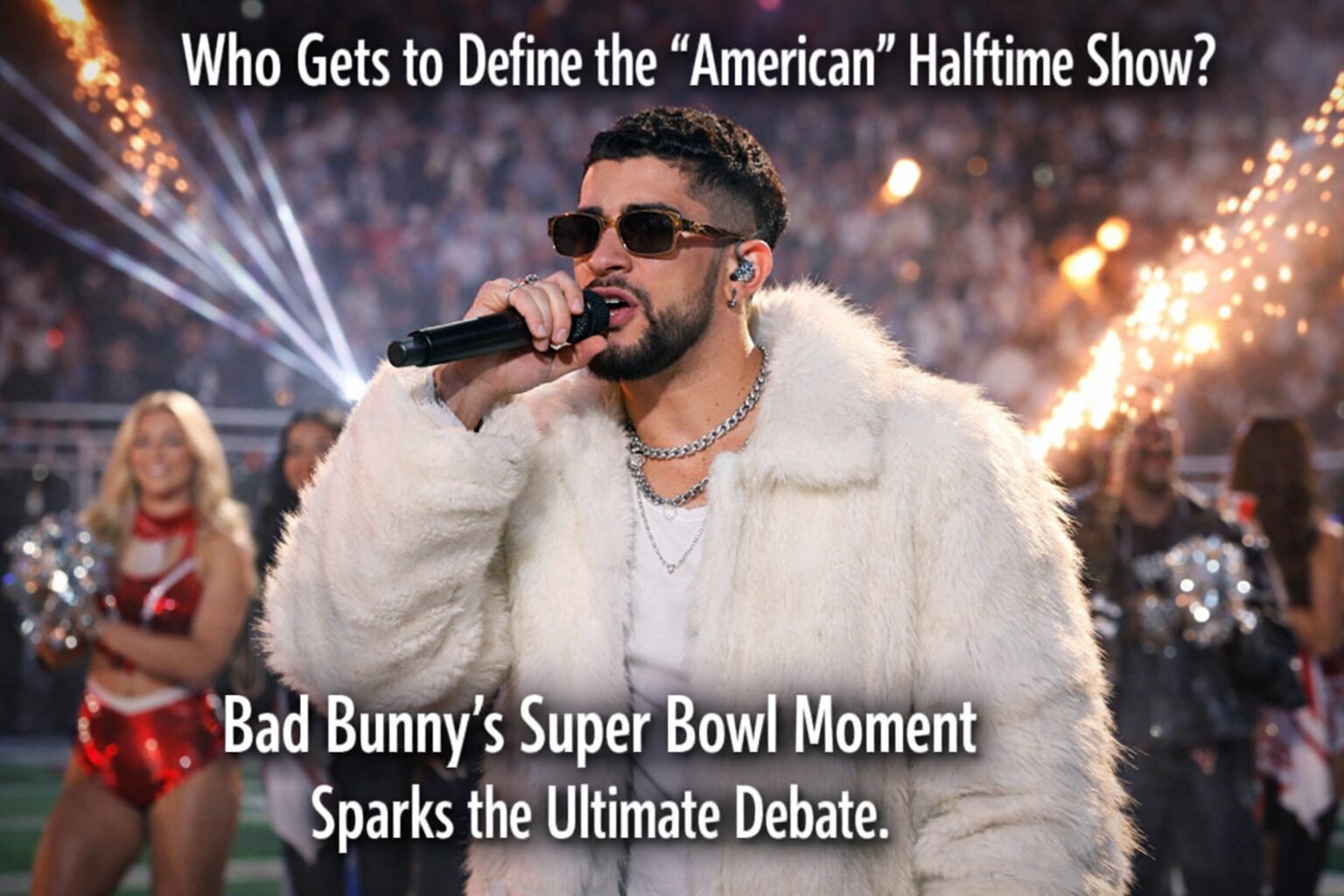
A fiery cultural clash has erupted from the 50-yard line. The dust has settled on Super Bowl LX, the trophy has been hoisted, but the most intense contest is now playing out in the court of public opinion. At its center is a simple, yet profoundly divisive question: When the world tunes in to America’s biggest spectacle, whose America is on display?
The debate was ignited when former President Donald Trump condemned Bad Bunny’s halftime performance as “absolutely terrible” and a “slap in the face to our country.” In his view, the show failed to meet “our standards of Success, Creativity, or Excellence,” criticizing its predominant use of Spanish and its visual spectacle as confusing and inappropriate for children. This critique frames a very specific ideal: a halftime show that reflects a monolithic, perhaps nostalgic, vision of American culture.
But does that vision match the America of today? To watch Bad Bunny’s performance is to witness a powerful counter-narrative.
What if the show wasn’t an affront to American greatness, but a demonstration of its modern reality? The Puerto Rican global superstar didn’t arrive on stage with marching bands and classic rock. He emerged in a set mimicking Caribbean sugar cane fields—a direct homage to the agricultural heritage and labor that shaped Puerto Rico and other Latino communities. His first spoken words, translated from Spanish, were a thesis statement for immigrant ambition: “It’s because I never, never stopped believing in myself.”
From there, he built a vibrant, living portrait of Latino life. He performed in front of a piragua cart, a beloved street vendor icon. He danced through a replica of “La Marqueta,” a classic market pulsing with community energy. In a quiet, potent moment, he handed a Grammy statuette to a young boy—a gesture that asked, Who gets to dream here? Who gets to be the next success story?
The culmination was a flag sequence that stretched from Chile to Canada, ending with the flag of Puerto Rico. Was this a rejection of the United States? Or was it a redefinition of “American” to encompass the entire hemisphere’s interconnected history and diaspora, asserting that these stories are also fundamentally American stories?
When surprise guests Lady Gaga (singing a salsa remix) and Ricky Martin joined, the message crystallized: Latin music is not a niche genre; it is a dominant, world-shaping force. Its place on the Super Bowl stage isn’t a concession—it’s a reflection.
So, we are left with two starkly different interpretations of the same 12-minute performance.
One sees a deviation from tradition. A confusing, linguistically foreign spectacle that alienates a core audience.
The other sees an expansion of tradition. A long-overdue, celebratory inclusion that finally mirrors the nation’s vibrant, multilingual tapestry.
The argument, therefore, transcends Bad Bunny’s dance moves or song selection. It forces us to ask: Is American culture a static monument to be preserved, or is it a living, breathing, and ever-evolving conversation? Is “American Excellence” a single, narrow standard, or can it be found in the success of a kid from Puerto Rico who broke every record to stand on that very stage?
Trump’s critique provides one answer. Bad Bunny’s performance provides another. The viral firestorm tells us the question is far from settled. In the end, the most American thing about the 2024 Super Bowl halftime show may not have been the music at all—but the fierce, freedom-of-expression debate it unleashed.


Leave an answer