
When Religious Language Enters the War Room
Question
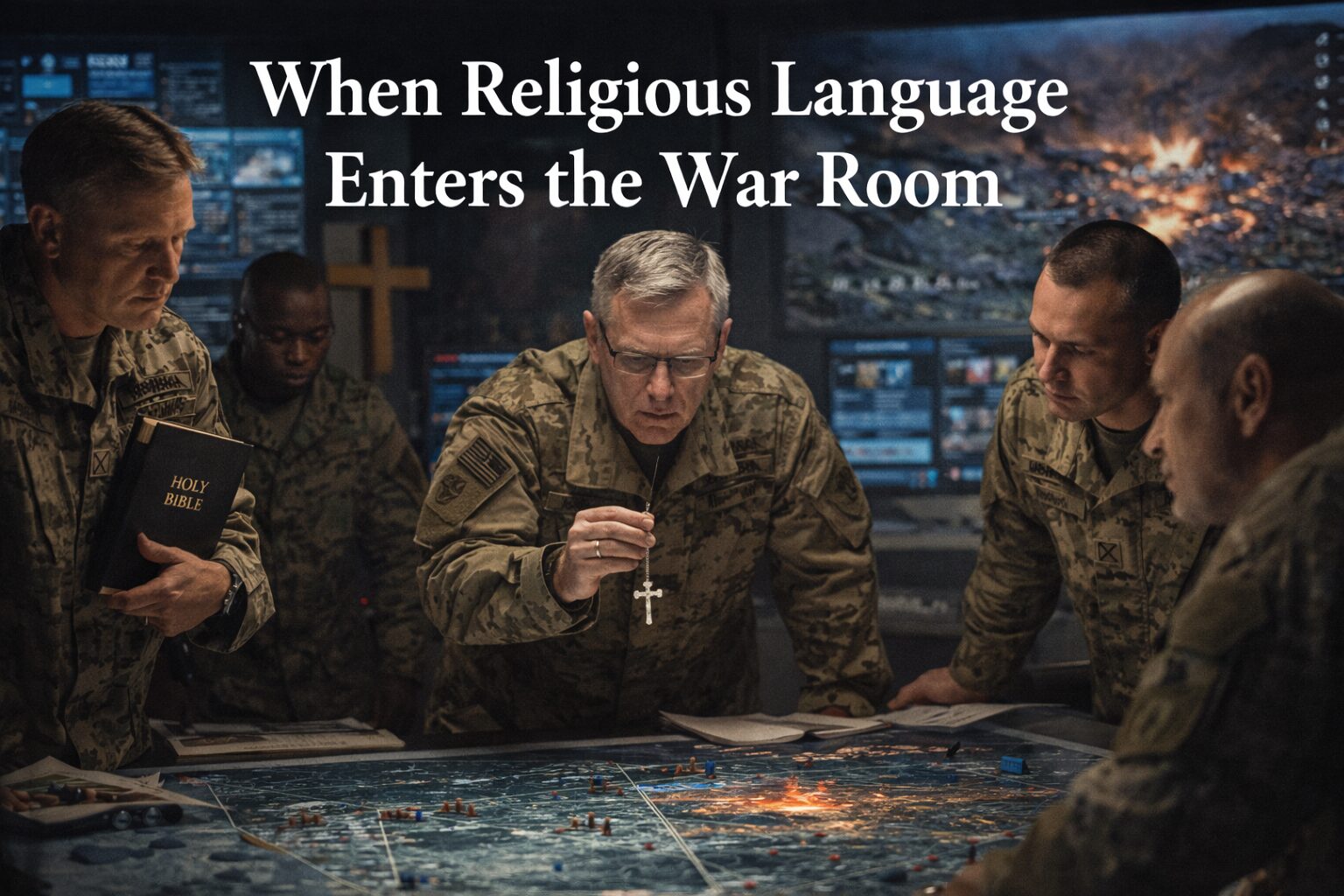
What are the implications when military leaders invoke divine mandate?
Reports from United States military commands involved in Middle Eastern operations have described a troubling pattern: senior officers framing strategic decisions in explicitly religious terms. References to “God’s divine plan,” descriptions of political leaders as “anointed by Jesus,” and biblical citations in operational briefings suggest a conflation of religious conviction and military authority that raises serious questions about constitutional boundaries and operational effectiveness.
The phenomenon is not entirely new. American military history includes numerous examples of religious rhetoric—chaplains offering comfort, commanders invoking providence, soldiers seeking spiritual meaning in combat. What distinguishes current reports is the apparent integration of specific theological claims into strategic decision-making, with suggestions that military outcomes are predetermined by divine will rather than subject to tactical analysis and contingency planning.
Civil-military relations theory emphasizes professional distance between armed forces and political leadership. When military commanders adopt the religious language of their civilian superiors, this distance collapses. Subordinates may perceive that questioning operational plans constitutes not merely professional disagreement but spiritual disobedience. The critical thinking essential to military effectiveness—devil’s advocacy, red-teaming, honest assessment of failure—becomes psychologically difficult when alternatives are framed as opposing God’s will.
The constitutional implications are equally serious. The First Amendment’s establishment clause prohibits government endorsement of religious belief; military officers are government actors bound by this constraint. When commanders use their authority to promote specific theological interpretations, they risk creating hostile environments for service members of different faiths or no faith. Unit cohesion depends on trust that professional evaluations are based on merit rather than religious conformity.
International perceptions matter as well. Military operations in Muslim-majority regions are already vulnerable to accusations of religious crusade. When American commanders employ Christian nationalist rhetoric, they provide propaganda material that undermines strategic communication efforts and potentially validates enemy recruitment narratives. The tactical gains of motivational religious language may be outweighed by strategic costs in legitimacy and alliance maintenance.
The appropriate response involves institutional reinforcement of professional norms. Military education must emphasize the distinction between personal faith and official duty; inspection protocols should identify and correct inappropriate religious expression in command contexts; promotion boards should evaluate whether officers maintain the secular professionalism that constitutional governance requires. The alternative—a military that understands itself as executing divine will rather than civilian policy—represents a fundamental transformation of American civil-military relations with unpredictable consequences for democratic stability.


Leave an answer