
What Happens When the Teacher Who Taught Your Kid Choir Gets Busted in a Kroger Parking Lot?
Question
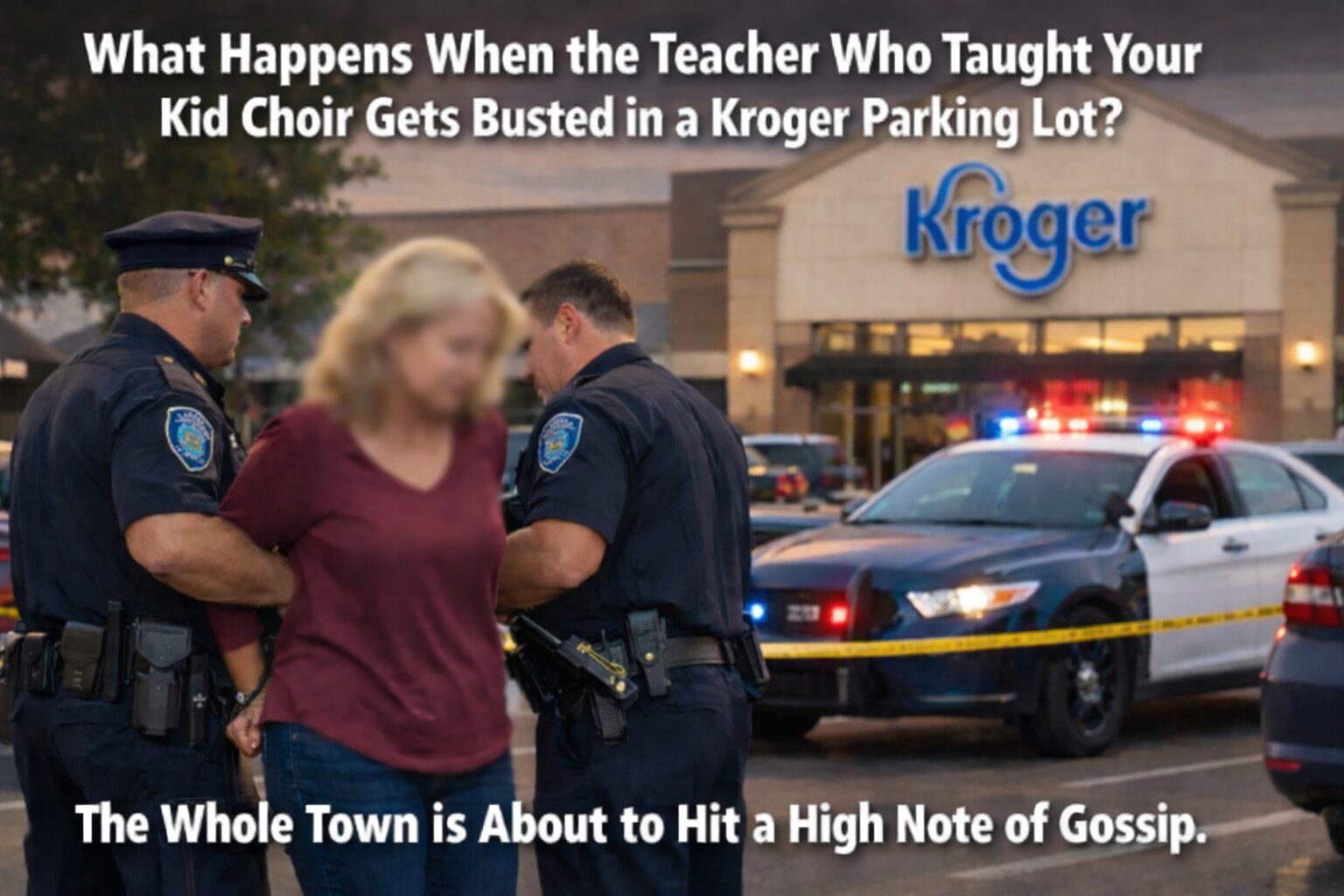
Who do we trust when the people shaping our children’s futures can’t shape their own?
What would you do if the off-duty deputy had been your brother? If he’d texted you from the lot: “Think I just saw something bad—lady in a Honda, two rows over, definitely using.” Would you tell him to mind his business? That everyone’s fighting battles we can’t see? Or would you whisper thank God someone’s paying attention?
How did Alisen Nicole Mooney, the 27-year-old chorus teacher who helped your daughter hit that impossible high note last Christmas, end up here? When did the parking lot become the only place she felt invisible enough to fall apart?
Was It Really “Suspicious Activity” or Just Life Caught in 4K?
An off-duty Hall County deputy needed groceries. That’s the mundane truth. But what exactly did he see through that window? Two millennials in broad daylight, hunched over a center console—was it desperation? Recklessness? The numbness that comes when you’ve stopped caring who sees?
Why did he call for backup instead of walking away? What training kicks in when you’re wearing civilian clothes but still carrying the weight of a badge in your pocket? And what does it say about our world that a moment of professional vigilance feels almost intrusive?
When the marked cruisers arrived, boxing in Mooney’s silver Honda like a scene from a TV drama, what raced through her mind? Was she relieved? Terrified? Or just numb?
What’s in a Purse? In This Case, a Career.
When deputies emptied the car, what story did the evidence tell? Five types of pills—including oxycodone, buprenorphine, tramadol, and tizanidine—scattered in baggies and loose containers. Does that sound like a pharmacy run gone wrong, or a carefully curated escape hatch from reality?
Two rolled-up dollar bills. We all know what that means, right? But here’s the question that haunts: How many times had she used them? In how many parking lots? And had any student ever seen her movements, wondered why Mrs. Mooney always seemed to need cash for “lunch”?
The empty Suboxone wrapper is where it gets complicated. Was she trying to get clean? Failing? Or is that just what we tell ourselves to soften the blow of a teacher caught in the opioid web? If you’re treating your addiction while allegedly carrying enough to distribute, which version of you is the real one?
Why Did She Get the Worse Charges?
Mooney: possession with intent to distribute amphetamine. Two controlled substance counts. Possession of drug objects. Her friend Robert Tyler McClain: simple possession. Simple. As if any of this is simple.
What made prosecutors decide she was the dealer? The quantities? Text messages they haven’t shown us yet? Or is it that teachers are held to a different arithmetic—where the same crime multiplies when you’re supposed to be a role model?
If she’s convicted, does that mean she was selling to students? To other teachers? Or just to friends, which somehow feels both better and worse? And if she’s innocent, how does she get her reputation back from the accusation alone?
What’s an $8,800 Bond Worth?
Mooney posted bond less than 24 hours after her arrest. Who scraped that together? Her family? A friend who still believes in the person underneath the perp walk? Or was it money she’d saved from a teacher’s salary—the same salary that had her searching for parking lot escapes in the first place?
By 2:15 p.m. the next day, she’d resigned from North Forsyth Middle School. Did the district push her, or did she jump before they could? When she typed “personal reasons” into the resignation portal, was she laughing? Crying? Or just mechanically ending a chapter she’d already killed?
The school district’s statement was three sentences long. Was that silence required by law, or by a desperate desire to make this disappear? When parents called demanding answers, what could officials possibly say except we had no idea?
How Many Parents Are Driving Past That Kroger Right Now?
It’s just a parking lot. Potholes near the garden center. Cart corrals that never quite line up. But how many Forsyth County moms are circling it today, remembering that day in March? How many are wondering if they saw her car and just didn’t look hard enough?
What do you tell your seventh grader who’s been practicing “Silent Night” for weeks, only to find out Mrs. Mooney won’t be at the winter concert? That she’s sick? That sometimes adults make mistakes? Or the truth: that the person who taught you to harmonize was apparently living a life so out of tune she needed chemical help to face it?
Is it worse if she was a good teacher? Because she was. Students loved her. She stayed after school. She remembered their names. Does that make the betrayal cut deeper, or does it prove that addiction doesn’t discriminate between saints and sinners?
When Did the Parking Lot Become Our Confessional?
Let’s zoom out. Why do we keep doing everything in our cars? Crying after therapy. Fighting with spouses. Using drugs. Is it because the car feels like the last truly private space in a surveillance world? Or because we’ve mistaken isolation for privacy?
If the deputy hadn’t been there, would Mooney have gotten help? Or would she have just moved to a different lot? And should we be grateful he was off the clock, or terrified that it took a random cop buying milk to intercept a crisis?
What does it say that we’re safer in our assumptions than in our observations? How many other “Mrs. Mooneys” are out there, one bad day away from a headline?
Can We Separate the Crime from the Crisis?
Here’s the moral thicket: If Mooney was addicted, does she deserve punishment or treatment? Does her role as a teacher obligate her to a higher standard, or deny her the compassion we’d extend to other sick people?
If she’s found guilty, should she ever teach again? Who decides—the courts, the licensing board, or the parents who’d never let their kid near her classroom? And if she’s innocent, what’s the cost of being accused in the age of screenshot justice?
Is the real story about one teacher’s fall, or about a system so broken that a 27-year-old with a master’s degree and a mortgage turned to a pharmacy of illegal pills to cope?
What Happens Next?
The case is winding through Hall County Superior Court. Will there be a trial? A plea? Will the evidence hold up, or will clever lawyers find the reasonable doubt in those rolled dollar bills?
Mooney’s teaching certificate hangs in limbo—suspended but not revoked. Is that mercy or bureaucracy? And what about the students? Who heals the trust they didn’t even know was fractured?
When the next North Forsyth Middle School chorus concert happens, and the new teacher raises their baton, will parents clap a little louder? Or will they just sit there, scanning the parking lot on their way out, wondering who else is hiding in plain sight?


Leave an answer