
What Happens When a Hotel Lets Bed Bugs Eat Your Children Alive? This Family’s Four-Month Nightmare Is Now a Legal Bombshell
Question
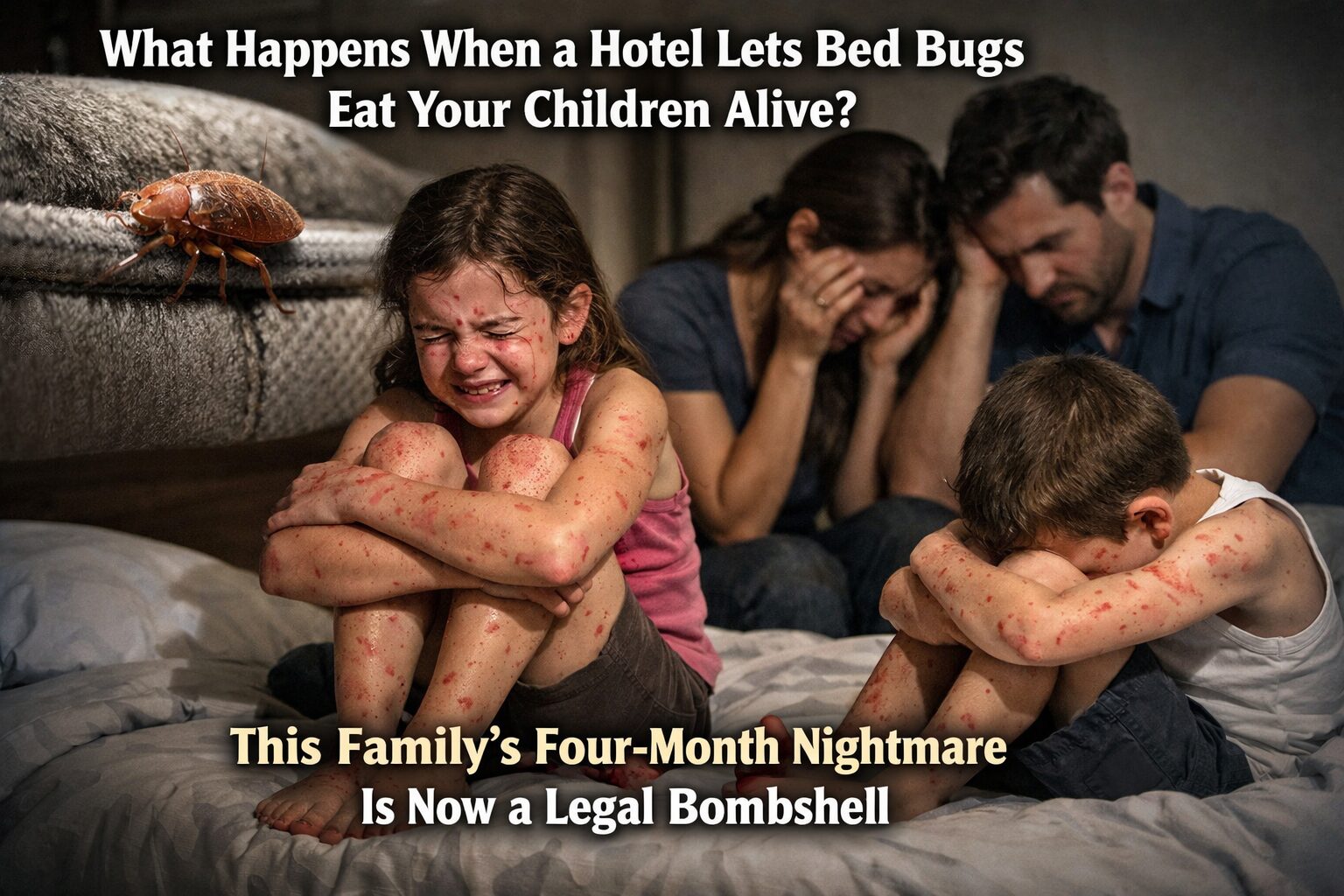
When six guests discovered they were sharing their beds with parasites, they asked management for help. The response? Radio silence. Now a landmark lawsuit is asking: is ignoring an infestation the same as inflicting trauma?
The photos are heartbreaking: a child’s arms and legs mapped with clusters of crimson welts, each bite a punctuation mark in a story of alleged neglect. For one family staying at a Myrtle Beach hotel, these weren’t souvenirs from beach mosquitoes—they were evidence of a secret they claim management chose to ignore. Their ordeal has now erupted into a lawsuit that’s forcing America to ask: what duty does a hotel truly owe its guests?
How Does a Beach Vacation Become a Four-Month Descent Into Hell?
It began as a winter refuge. On January 17, 2025, two adults and four children checked into the Diplomat Motel on North Ocean Boulevard, seeking affordable oceanfront living. But according to court documents, what they found was 98 days of torment that wouldn’t end until April 24.
The family’s attorney asks a critical question: when does a hotel stop being a temporary residence and start becoming a hazard? The complaint alleges the parasites had colonized not just mattresses, but bedding, carpet fibers—every space where a child plays or a parent seeks rest. Bites appeared within weeks, yet the true culprits remained hidden until the family discovered insects crawling where they slept.
Legal observers are now asking: if these allegations prove true, was this mere negligence, or something far more calculated?
Why Didn’t the Hotel Spend $500 to Fix This?
Here’s where public outrage begins boiling. Industry-standard bed bug protocols are straightforward: isolate, treat, document. So why, the lawsuit asks, did this family’s desperate complaints allegedly vanish into what their lawyer calls a “black hole of indifference”?
When journalists attempted contact, they uncovered a telling detail: the motel’s phone line didn’t even connect to voicemail—it simply rang into oblivion. Could this technological ghosting reflect a deeper pattern of evasion? Social media is already asking: what kind of business can’t be bothered to set up basic messaging?
Hospitality law specialists are questioning whether this silence reveals consciousness of guilt. “A hotel’s duty of care isn’t negotiable,” one expert notes. “So why would management allegedly choose inaction when solutions exist?”
What’s the Price Tag for Shattered Innocence?
The family isn’t just asking for medical reimbursement—they’re demanding accountability for what they describe as stolen childhoods. But here’s the question haunting legal analysts: how do you quantify the cost of a child who now flinches at bedtime?
Court documents detail “severe and permanent emotional distress, humiliation, mental anguish, indignity, loss of pleasures and enjoyment of life.” But what does that actually mean? It means a child asking nightly if “the bugs are coming back.” It means transforming sleep—a basic human need—into a source of terror.
Beyond trauma, the family faces concrete losses: mounting medical bills, wages lost to crisis management, and the destruction of contaminated belongings. But the deeper question is: when a business prioritizes profit over safety, who pays the real cost?
Is Ignoring a Problem the Same as Causing It?
Most hotel lawsuits stop at premises liability. This one asks a far more explosive question: can conscious inaction constitute intentional harm?
The complaint includes “intentional infliction of emotional distress”—a charge requiring proof of “extreme and outrageous conduct.” But what could be more extreme, the plaintiffs ask, than knowingly allowing four children to be bitten for months?
Legal experts are divided. One civil litigation attorney asks: “If discovery reveals prior complaints or internal warnings, does that transform this from mistake to malice?” The answer could fundamentally reshape hotel liability nationwide.
Could This Case Shut Down a Hotel?
Former guests are already asking: how many others suffered in silence? The viral potential lies in this very question. Within hours, #BedBugBombshell and #SleepAtYourOwnRisk trended locally. Travel forums are exploding with a simple query: “Has anyone else stayed at this property?”
The ingredients for viral combustion are clear:
- Vulnerable victims: Four children
- Corporate silence: Alleged ignored complaints
- Universal fear: Who hasn’t worried about bed bugs?
- Visual evidence: Injuries that provoke visceral reactions
- Economic injustice: A working-class family versus corporate indifference
But the bigger question is: why aren’t hotel inspections more transparent? South Carolina’s regulations lack the public scoring systems restaurants face. Shouldn’t consumers have the same right to know about lodging safety?
What’s Next: Will Internal Records Reveal a Pattern?
The Diplomat Motel hasn’t filed a public response, leaving one question hanging: what will their defense be? Meanwhile, the family’s attorney is seeking documents that could answer the most damning question of all: did management know?
If internal records show prior complaints, the question becomes criminal: can a hotel be shut down for becoming a public health threat? Local health departments have that authority. The real question is: will they use it?
For now, six victims await their day in court, their lives allegedly upended by creatures that feed while we dream. Their story asks a final, viral question: if a hotel won’t protect your children from being eaten alive in their sleep, what will they protect?
The internet is already answering: nothing. And that’s why this case may be unstoppable.


Leave an answer