
The Supreme Court Draws a Hard Line on Tariffs — and Washington Now Has a Refund Problem
Question
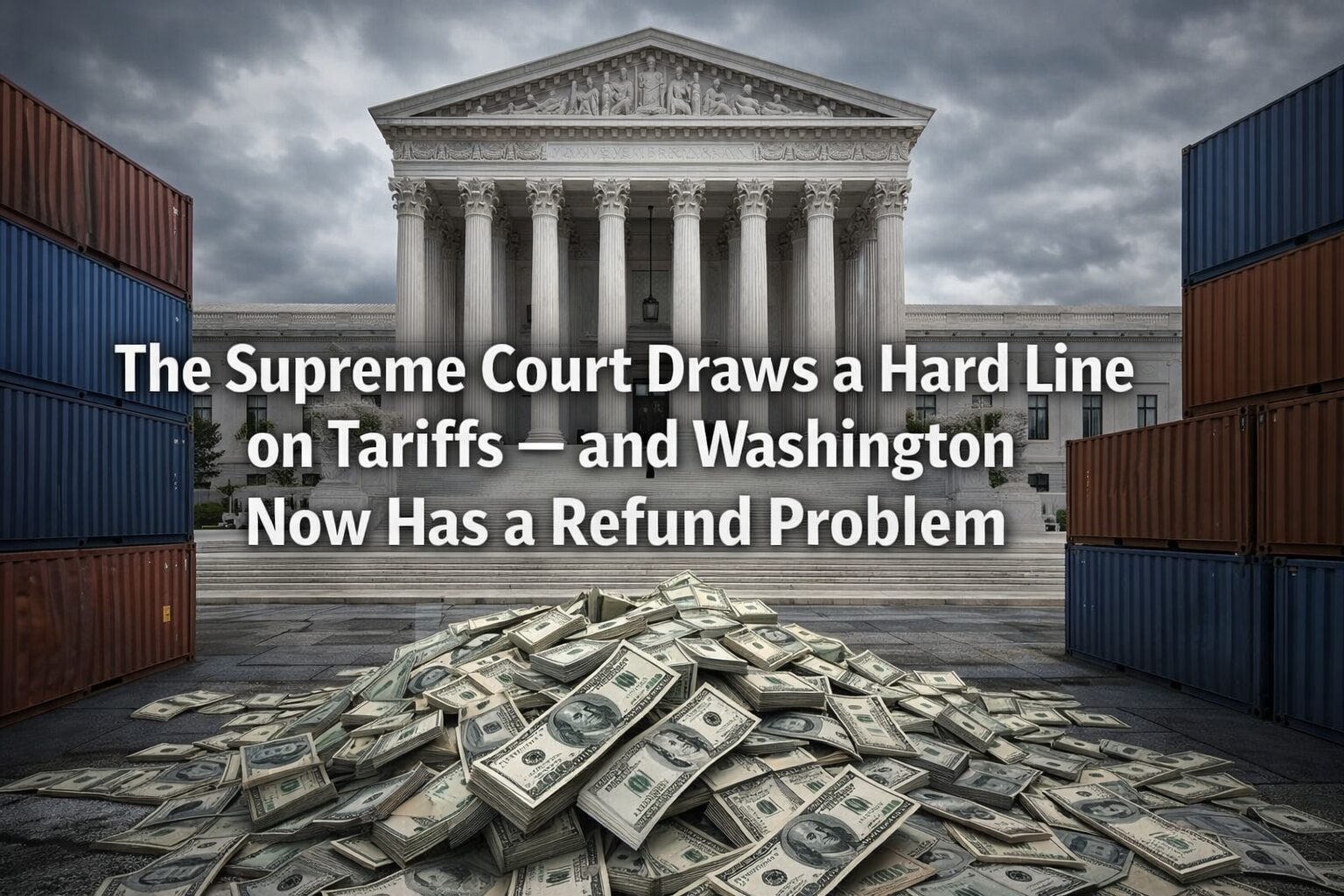
The Supreme Court didn’t just rule on trade. It ruled on power—specifically, whether the president can use the International Emergency Economic Powers Act (IEEPA) as a shortcut to impose broad tariffs without Congress. In a fractured decision, the Court said IEEPA doesn’t authorize tariffs, rejecting the administration’s argument that the law’s language about “regulat[ing]… importation” covers sweeping import taxes.
That sounds like legal inside-baseball—until you follow the money. If tariffs were collected under a theory the Court says is invalid, businesses will start asking: Do we get refunds? And if refunds are owed, the next question is bigger: Who pays, how fast, and under what process? Trade policy becomes budget policy overnight.
Politically, the decision tightens Congress’s grip on big tariff moves, but it doesn’t end tariff fights. It simply shifts the battlefield: to other statutory authorities, to narrower emergency claims, and to litigation over how far a ruling reaches into already-collected duties.
The deeper takeaway is strategic. In an era where tariffs are used not just for economics but for leverage—immigration, national security, diplomacy—the Court is signaling that “emergency” can’t be a blank check. That forces a choice: build durable coalitions in Congress, or accept that major tariff actions will remain legally fragile.


Leave an answer