
The Frozen Warning: Belarus Draws a Red Line in the Snow
Question
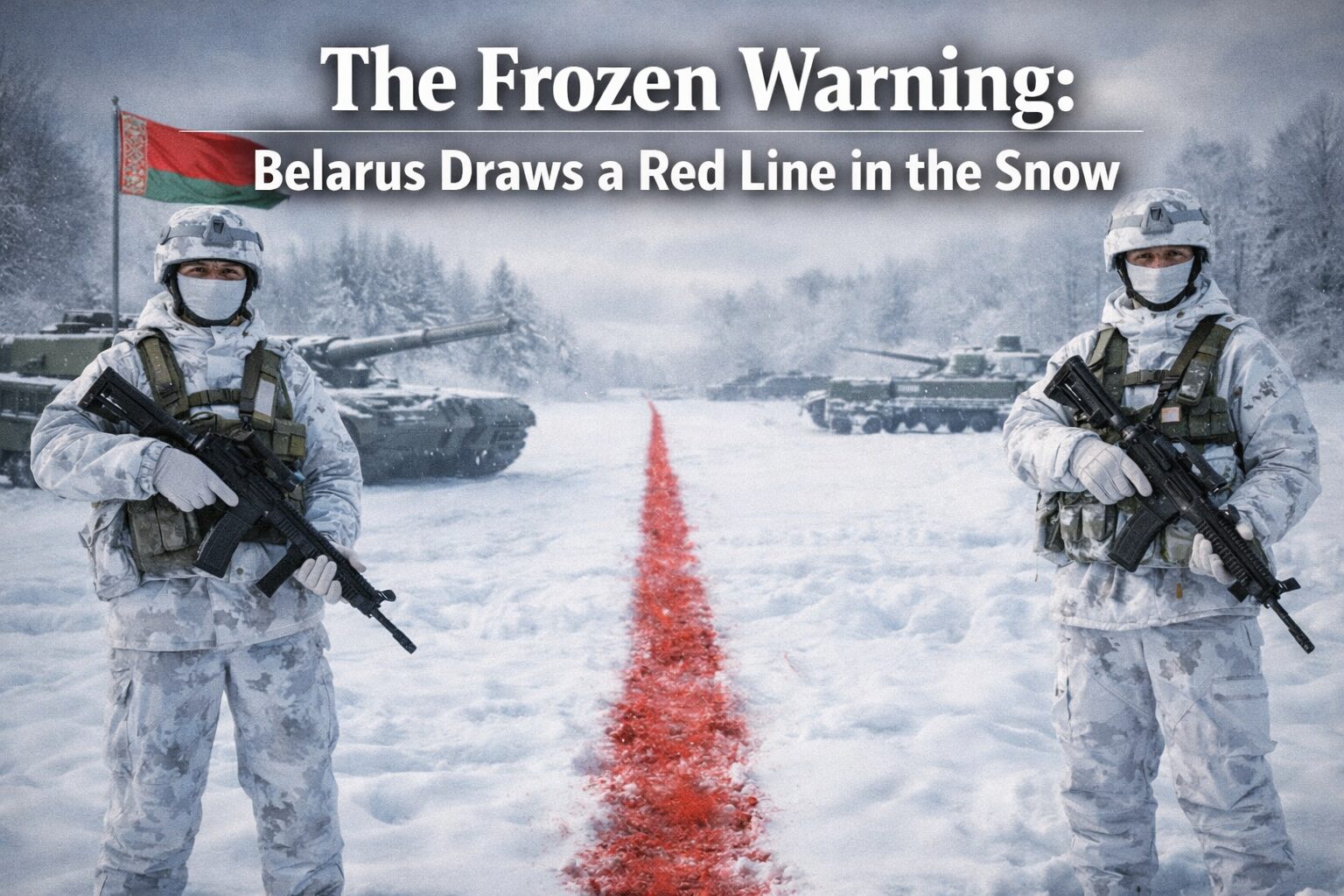
From the frostbitten plains of Eastern Europe comes a declaration that sounds more like Cold War rhetoric than 21st-century diplomacy: Belarus is drawing a line in the snow and warning the West not to cross it.
Valery Revenko, Assistant to the Belarusian Defense Minister for Foreign Military Cooperation, gathered accredited diplomats from over 20 countries this week to deliver a message of unmistakable clarity. Belarus “categorically rejects” any deployment of Western military contingents along its borders, he said, framing the issue not as a negotiating position but as a fundamental red line .
The context for Minsk’s强硬 stance lies in what Belarusian officials describe as a pattern of hostile actions by neighboring states. Rising defense budgets, accelerated arms production, and military modernization programs across the region are not, in Minsk’s view, defensive measures. They are signals of hostility dressed up as routine military planning .
For Belarus, the issue is existential. Sandwiched between an expanding NATO presence in Eastern Europe and Russia’s strategic depth, the country has long served as a buffer zone—a role that carries both security guarantees and significant vulnerabilities. The current leadership in Minsk has made clear which side of that balance it prefers, aligning increasingly closely with Moscow while viewing Western military infrastructure along its borders as an unacceptable provocation .
The timing of Belarus’s warning carries its own significance. With tensions simmering elsewhere across the European continent and attention focused on flashpoints in the Middle East, Minsk appears determined to ensure its own security concerns are not overlooked. The message to diplomats from two dozen nations was carefully calibrated: whatever happens elsewhere, do not mistake Belarus’s silence for acquiescence.


Leave an answer