
Mar‑a‑Lago Breach Ends in Fatal Shooting: What We Know, What’s Unclear, and Why It Matters
Question
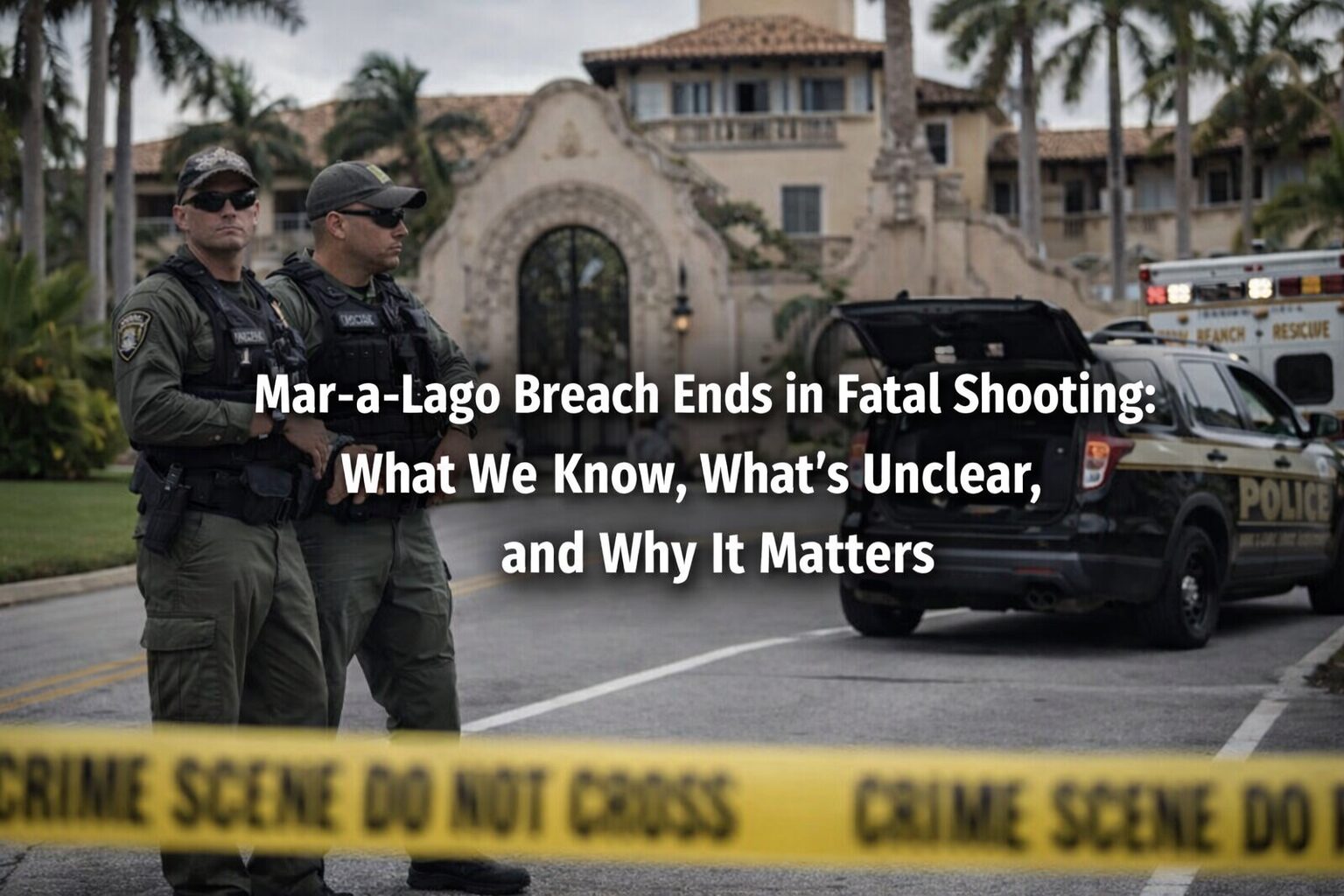
A quiet Florida night snapped into emergency mode when law enforcement confronted an armed intruder inside the secure perimeter of Mar‑a‑Lago. In the space of minutes, the incident turned into a fatal shooting—one that instantly became a national story because of the location, the security stakes, and the broader backdrop of political tension.
Authorities said a man drove into the secure perimeter around 1:30 a.m., carrying a shotgun and a gas canister. Officers issued commands to disarm. When the man raised the weapon, agents and a deputy opened fire. He was pronounced dead at the scene. Officials emphasized that President Donald Trump was in Washington, D.C., at the time, not at the property, and that no protectees were harmed.
On paper, that’s the basic timeline. But the details that follow are where the story widens—from “incident” to “national alarm.” The suspect was identified as 21‑year‑old Austin Tucker Martin from North Carolina. Reports indicated he had been reported missing by family shortly before the breach. That missing‑person detail doesn’t automatically explain motive, but it adds urgency to the investigative questions: Was this a targeted attempt? A confused and dangerous crisis? A copycat act fueled by online fixation? Or something else entirely?
Mar‑a‑Lago isn’t just a private estate; it’s a symbol. That means a breach there lands differently than a similar intrusion at a typical gated community. Federal investigators will be looking at how the suspect approached the perimeter, what he may have done in the hours before the incident, and whether anyone helped him get there—or whether he was truly acting alone.
There’s also the security question the public always asks after a breach: How did he get in? In protective environments, “in” is rarely one single failure. It’s usually a chain: timing, access, gate behavior, and quick human decisions. This is why the FBI and Secret Service investigations matter—because they don’t only determine motive; they also inform what changes come next.
The politics started immediately. Public officials and commentators used the incident to argue about rhetoric and safety. That debate may bring attention, but it can also blur the core issue: a lethal security confrontation happened at a high‑profile site, and the public deserves a factual accounting of how it unfolded.
What comes next is usually quiet: body‑camera review, forensic work, digital footprints, travel history, and interviews. But even in silence, the implications are loud. Every breach that ends with gunfire becomes a pressure test for protective standards—and a reminder that threats are often unpredictable, fast, and violent.
In the end, the story isn’t only about what happened at 1:30 a.m. It’s about what it signals: the continuing challenge of security in an era where notoriety is currency, conflict is amplified, and one person’s decision can force an entire system to respond in seconds.


Leave an answer