
Manila’s Monetary Pivot: Philippines Cuts Rates Amid Global Uncertainty
Question
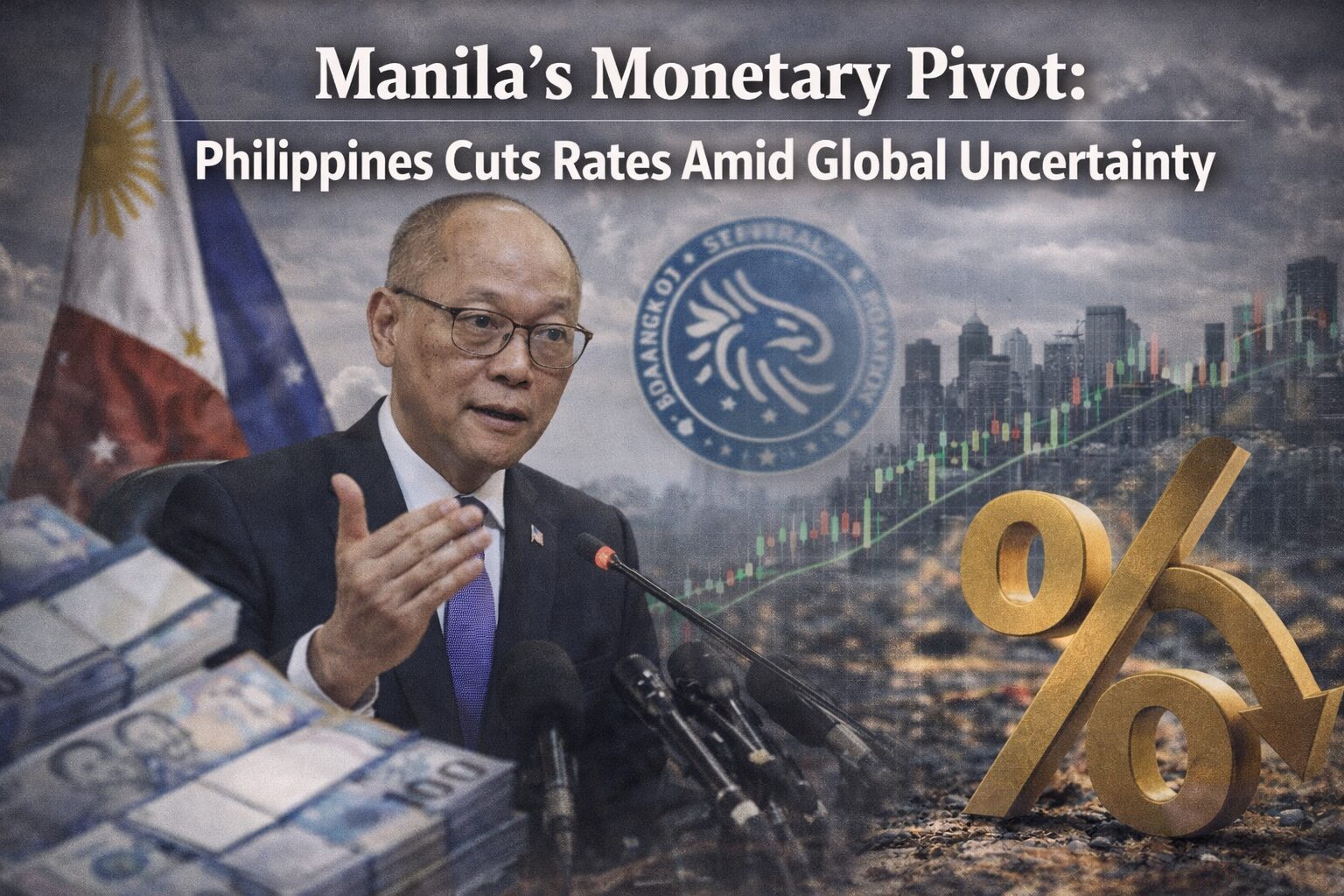
While central banks elsewhere debate whether to raise rates further, the Philippines has chosen a different path—and the decision offers clues about where emerging economies see their futures.
The Bangko Sentral ng Pilipinas announced Thursday that it would reduce its target reverse repurchase rate by 25 basis points to 4.25 percent, with corresponding adjustments to overnight deposit and lending facilities . The move, effective immediately, signals confidence that inflationary pressures are moderating sufficiently to allow for monetary easing.
In its press release explaining the decision, the Philippine central bank acknowledged that inflation forecasts for 2026 have risen slightly, but attributed the increase primarily to “supply-side pressures that are likely to be temporary” . Translation: we see the risks, but we believe they’ll pass without requiring sustained tight money.
The rate cut positions the Philippines differently from many developed economies, where central bankers continue to wrestle with stubborn inflation and debate whether additional rate hikes are necessary. Federal Reserve minutes released this week showed some policymakers concerned enough about inflation to consider including language about possible future rate hikes in their announcements—a subtle but significant shift in messaging .
For Philippine consumers and businesses, the rate cut translates into lower borrowing costs, potentially stimulating economic activity. For international investors, it signals confidence in the country’s economic trajectory. And for observers of global monetary policy, it provides a data point suggesting that emerging markets may diverge from developed economy patterns as they chart their own courses through post-pandemic economic adjustments.


Leave an answer