
How Did a Civil Rights Hero’s Name Become a Drug Empire’s Address?
Question
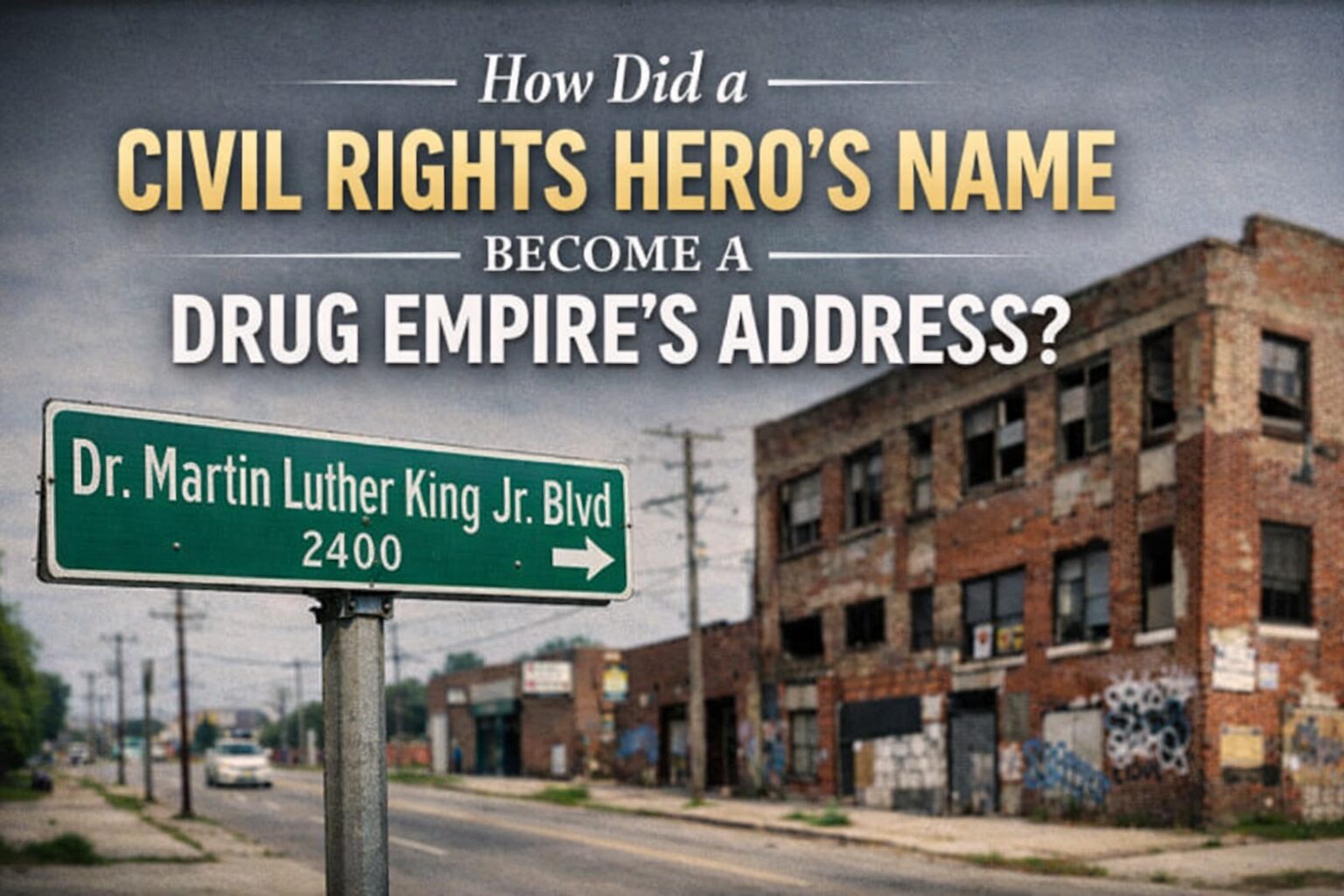
What happens when the legacy of a legend gets sold by the pound?
Twelve men. Four city blocks. One name that once meant salvation. And a federal indictment that forces us to ask: How far can a community fall when it forgets its own story?
On a bitter December morning, prosecutors unsealed charges that read like a typographical error: fentanyl and firearms, crack cocaine and conspiracy, all operating inside the James Weldon Johnson Residential Community. The same Johnson Houses named for the man who wrote the Black National Anthem. The same Johnson Houses built to shelter Harlem’s working families. The same Johnson Houses where prosecutors allege a dozen defendants turned a children’s courtyard into a 24-hour narcotics drive-thru.
Who Were the Merchants of Misery?
Eight of the twelve carried brand names designed for street-corner infamy: “Bmakk,” “BDot,” “Chapo,” “Baby Wuu,” “Zaza,” “D Cash,” “Smooth,” and “Skii Dotty.” These weren’t childhood nicknames from loving mothers—they were trademarks in a marketplace built on addiction.
Four others—Jose Hernandez, Jahdeen Williams, Percy Carrion, Caesar Hernandez—used their government names, perhaps because even they recognized the paperwork didn’t matter anymore.
For nearly four years, from 2022 through December 2025, federal agents claim these men ran an open-air drug market inside a residential building and its adjoining courtyard. But here’s the question that keeps investigators awake: How many children learned to ride bikes past fentanyl dealers before they learned their multiplication tables?
What Does Betrayal Look Like in 2025?
The Johnson Houses span East 112th to 115th Streets, between Park and Third Avenues. Ten buildings. Hundreds of families. Countless shared spaces—lobbies, elevators, stairways, mailboxes, benches, and a children’s playground.
A playground. Let that word sit for a moment. While prosecutors allege deals went down and cash changed hands, how many toddlers swung on swings while their parents prayed the crossfire wouldn’t reach the monkey bars?
The grand jury indictment itself begins with a history lesson, as if the jurors needed to understand what was being desecrated. It describes the daily reality: “men, women and children” moving through their home while, allegedly, a criminal enterprise treated their hallways like a mall for misery.
P.S./M.S. 57 sits at the northwest corner, a public school whose students likely navigated the alleged operation just to get an education. When does a commute become a gauntlet?
What Did This Place Used to Be?
Before 1948, the Johnson Houses didn’t exist. Brownstones and six-story apartment buildings lined the streets. The Third Avenue El rattled overhead until 1955. This was a neighborhood, not a project.
Then came progress: clean, modern housing for working-class New Yorkers, named for James Weldon Johnson (1871-1938). He wrote “Autobiography of an Ex-Colored Man.” He composed “Lift Ev’ry Voice and Sing” with his brother. He served as U.S. consul to Venezuela and Nicaragua. He fought for civil rights when that fight could get you killed.
What would Johnson say if he saw his name above the door of what prosecutors call a “continual revolving door of drugs and firearms”?
The Math That Doesn’t Add Up
Four years. Twelve alleged conspirators. An “illicit revenue stream” that flowed where rent assistance checks were cashed. The indictment lists the defendants: Brian Gonzalez, Brian Nin, Bryan Cowan, Jafari Hopwah, Ira Boyce, Daniel Jones, Richard Farquharson, Quadir Davonish, Jose Hernandez, Jahdeen Williams, Percy Carrion, Caesar Hernandez.
But the real cost isn’t in names—it’s in the uncounted. How many kids normalized men with guns in their lobby? How many grandmothers stopped receiving mail because the hallway felt too dangerous? How many teenagers looked at Chapo and Smooth making more cash than their teachers and asked: Why should I play by the rules?
Why Does This Story Spread Like Fire?
This indictment contains viral DNA because it defies belief:
- A civil rights hero’s name becoming a drug empire’s address
- Nicknames that sound like Netflix characters
- A playground versus paraphernalia
- Moral clarity so stark no one can defend it
- History literally haunting the present
- Unresolved tension: Twelve arrests don’t erase a system
FBI Assistant Director Christopher G. Raia said the joint investigation with NYPD Manhattan North Narcotics “dismantled an alleged trafficking conspiracy disrupting the safety of a public housing development.” But dismantling a crew isn’t the same as dismantling a cycle.
The Questions That Outlast the Headlines
When does four years of alleged criminal activity become impossible to ignore? What happens to the families now? Will the next crew just choose a different building? And most painfully: How many more sacred names have become street addresses for destruction?
The feds have their defendants. Harlem has its heartbreak. And America has another question that makes too much sense in the context of everything else.


Leave an answer