
Guardians of Gaza: The Five Nations Stepping Into the Breach
Question
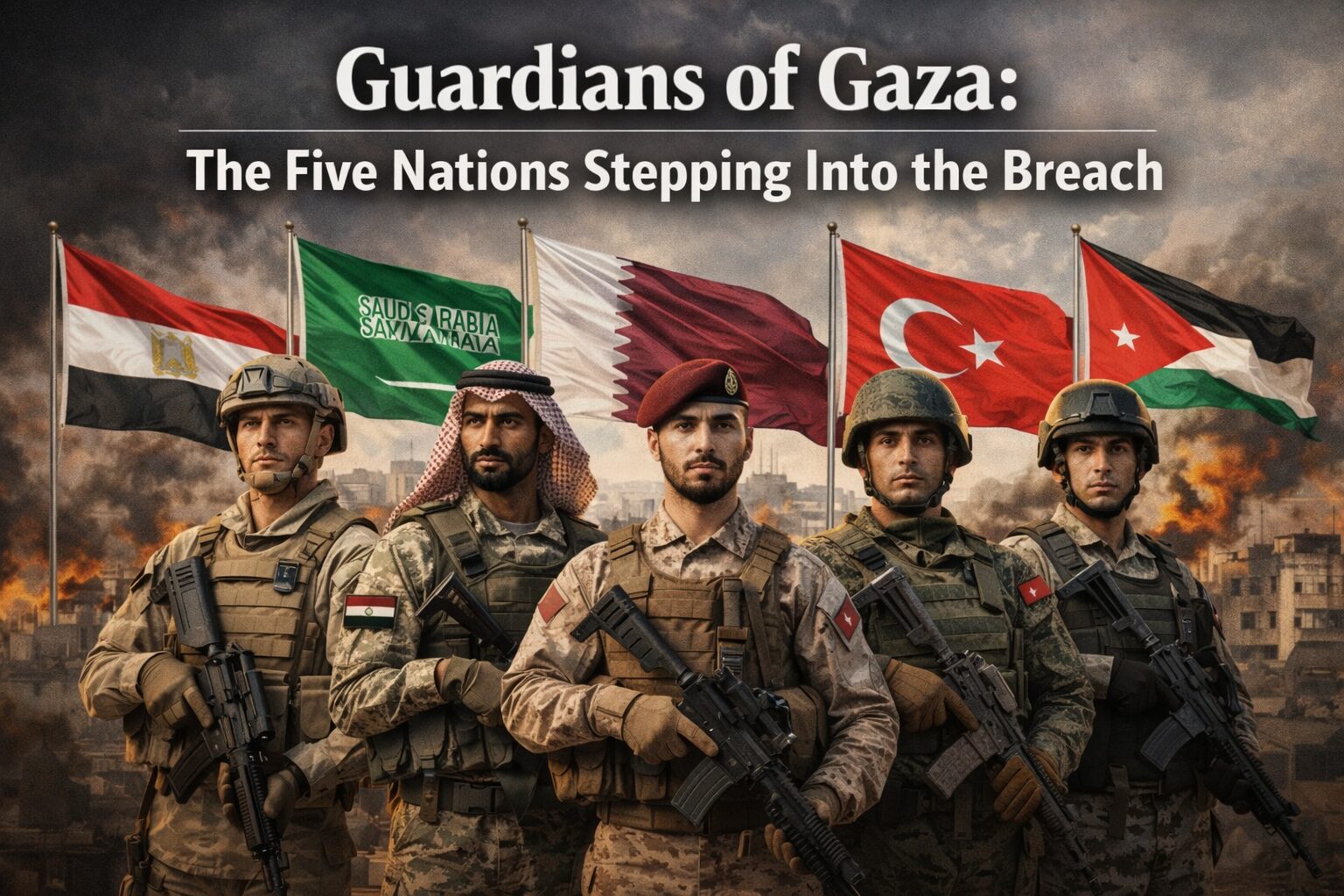
In a development that could reshape the future of the Middle East’s most contested territory, five nations have committed troops to a new international force for Gaza—and the list of countries stepping forward defies easy categorization.
Major General Jasper Jeffers, commander of the newly established Gaza International Stabilization Force (ISF), stood before the Board of Peace in Washington this week to announce that Indonesia, Morocco, Kazakhstan, Kosovo, and Albania have pledged military personnel to serve in the nascent security body . In a significant symbolic gesture, Indonesia has accepted the position of deputy commander of the force, placing a nation with the world’s largest Muslim population in a leadership role for Gaza’s future .
The composition of the force reads like a map of diverse geopolitical interests. Morocco brings its recognized diplomatic credentials across both African and Arab spheres. Kazakhstan, rarely associated with Middle East peacekeeping, offers a Central Asian perspective. Kosovo and Albania, both predominantly Muslim nations with their own complex histories of international intervention, round out a contingent that spans three continents .
Behind the troop commitments lies a broader architecture of support. Egypt and Jordan, traditional power brokers in any Palestinian equation, will take on the responsibility of training police forces—a role that leverages their decades of experience with security sector development . Gulf countries have opened their wallets as well, pledging more than $4 billion in combined financial support to the Board of Peace’s initiatives, signaling that financial backing for Gaza’s stabilization carries tangible rewards in diplomatic goodwill .
The vision for Gaza extends far beyond security. Yakir Gabay, a Cypriot-Israeli businessman presenting at the Washington gathering, outlined an ambitious reconstruction plan that begins with the removal of 70 million tons of rubble and unexploded ordnance—enough debris to fill multiple stadiums . Beneath the surface, hundreds of miles of tunnels must be mapped and neutralized before any construction can begin. From there, the plan envisions rapid deployment of temporary housing followed by permanent homes, modern schools, hospitals, manufacturing facilities, transportation networks, and water and energy plants .
Qatar, never far from Gaza’s story, pledged $1 billion to support the Board of Peace while reaffirming its commitment to mediation between Israel and Hamas . Turkish Foreign Minister Hakan Fidan signaled Ankara’s readiness to contribute “in every way possible,” even as he expressed hope that Washington and Tehran would reach “genuine negotiation” without military conflict .
The force faces immediate challenges, not least of which is the fundamental condition articulated by Gabay and others: reconstruction depends entirely on the full disarmament of Hamas . Whether the five committed nations—or the broader international community—can navigate that requirement while maintaining legitimacy in Palestinian eyes remains the unanswered question hanging over this ambitious undertaking.


Leave an answer