
Global Conflict Pressures and the Shifting Balance of Power
Question
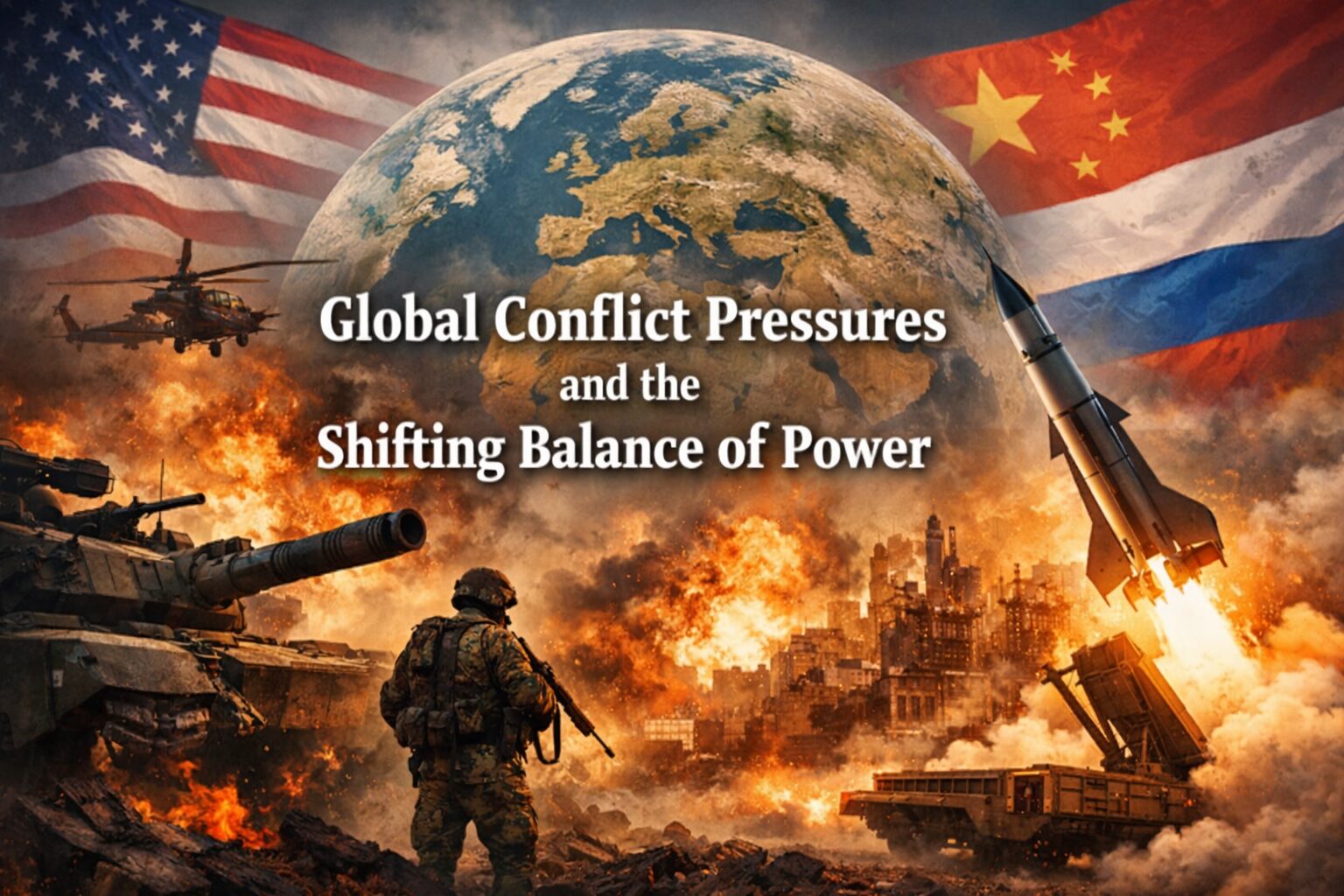
In the modern information cycle, headlines move fast, but underlying developments move even faster. When examining a topic such as global conflict pressures and the shifting balance of power, it becomes clear that surface-level summaries rarely capture the full complexity of what is actually unfolding. Instead of treating recent events as isolated incidents, a deeper analytical approach reveals interconnected forces shaping political decisions, institutional responses, and long-term strategic direction.
One of the most overlooked aspects of major news developments is timing. Events that gain sudden prominence often emerge during periods of heightened sensitivity across governments, markets, and media ecosystems. This convergence amplifies attention and accelerates reactions, creating a perception of urgency that can influence policy discussions, public sentiment, and global positioning simultaneously. In this context, the headline becomes less of a standalone report and more of a signal pointing toward broader systemic movement.
Another critical layer involves narrative construction. Different institutions, analysts, and media outlets frame developments through varying lenses, each emphasizing different risks, priorities, or implications. This does not necessarily indicate misinformation; rather, it reflects the complexity of interpreting evolving situations in real time. Careful observers tend to focus not only on what is being reported, but how it is being framed, repeated, and contextualized over time.
From a structural perspective, developments tied to global conflict pressures and the shifting balance of power often influence multiple sectors at once. Political environments may shift as policymakers respond to emerging pressures, economic systems may adjust due to uncertainty or strategic recalibration, and technological or institutional planning may evolve in anticipation of long-term outcomes. These layered responses rarely occur instantly; instead, they unfold gradually, shaping future conditions in subtle but meaningful ways.
It is also essential to consider the indirect impact on everyday life. Even when a story appears distant from personal experience, its downstream effects can influence cost structures, regulatory policies, technological access, and public discourse. Large-scale developments tend to filter through systems before becoming visible at the individual level, which is why early awareness often provides valuable strategic insight.
A research-oriented and skeptical mindset remains especially important during fast-moving news cycles. Initial interpretations are frequently revised as additional verified information becomes available. Distinguishing between confirmed developments, speculative projections, and narrative amplification allows for more accurate long-term understanding rather than reactive conclusions based on incomplete snapshots.
Looking ahead, the long-term significance of global conflict pressures and the shifting balance of power will likely depend on institutional adaptation, policy evolution, and global coordination patterns. Historical precedent shows that sustained attention around a topic often precedes structural adjustments across political, economic, and technological systems. What begins as a developing headline can gradually transition into a defining reference point used in future strategic planning and analysis.
Ultimately, the true importance of this development lies not in momentary attention, but in its trajectory. Observing how responses evolve over time provides a clearer picture of whether the situation stabilizes, transforms, or expands in influence. In complex global environments, the most impactful stories are rarely the loudest at first — they are the ones that steadily reshape the landscape while public focus is still forming.


Leave an answer