
France Summons the U.S. Ambassador: A Political Killing, a Diplomatic Flashpoint, and a Country on Edge
Question
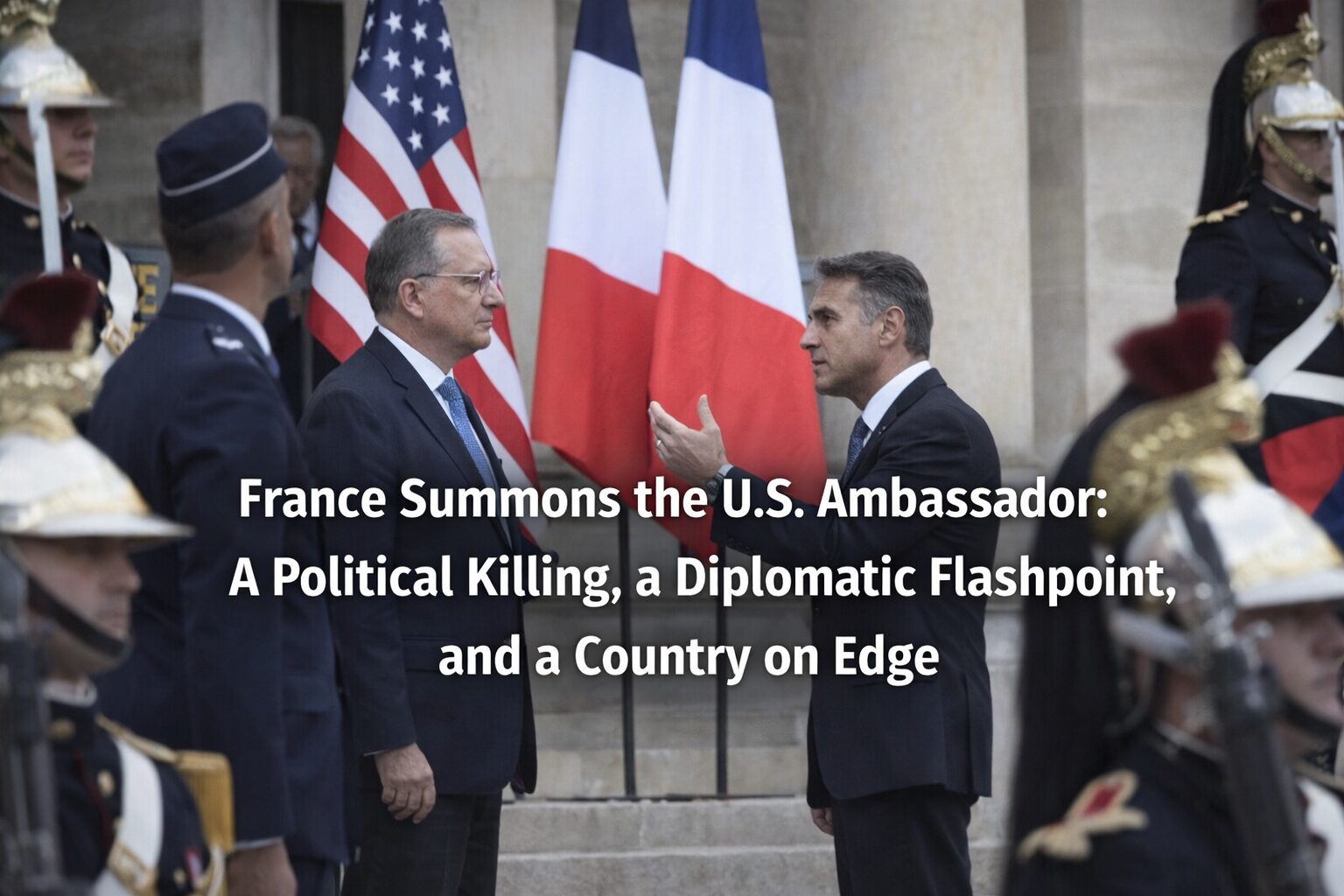
France moved to summon the U.S. ambassador after American comments about the killing of far-right activist Quentin Deranque triggered outrage in Paris. At first glance, it looks like diplomatic theater—one country scolding another over words. But the context is far heavier: a politically charged death, rising tension ahead of a presidential election cycle, and a fight over who gets to control the narrative.
Deranque died after suffering brain injuries from a beating in Lyon, reports said. The incident occurred in a volatile environment—on the margins of a student meeting where a far-left lawmaker was scheduled to speak. That detail matters because it places the violence inside a political ecosystem where rival ideologies are already primed for conflict.
French officials insisted the death should not be used for political purposes, and they objected to any outside commentary that might inflame tensions. Summoning an ambassador is not a casual move; it’s a signal that the government wants to set boundaries on international rhetoric—especially when internal politics are already inflamed.
The diplomatic tension illustrates a modern reality: political violence is no longer purely domestic. In a digital era, commentary crosses borders instantly. A death in one country becomes a talking point in another, and then becomes a friction point between governments.
Inside France, the bigger concern is the “climate” around politics—whether street-level violence will intensify as elections approach. When people believe politics is existential, conflict becomes more likely. When factions frame opponents as enemies rather than rivals, violence becomes easier to justify. Officials, therefore, try to dampen flames, control messaging, and avoid escalation.
But controlling messaging is hard when the story is emotionally potent. A death—especially one tied to ideology—can become a rallying symbol. Both sides can claim it proves their narrative about threats, oppression, or danger. That’s the risk France is trying to manage.
This diplomatic dispute is also about respect: the expectation that allies won’t step into each other’s internal political conflicts in ways that add fuel. France’s move signals that it believes the U.S. crossed a rhetorical line.
Whether the conflict escalates or cools will depend on the next set of public statements. But the weekend’s tension is a reminder that political violence creates not only trauma—it creates international consequences, too.


Leave an answer