
Europe’s Warning After the Tariff Ruling: ‘Honor the Deal’ as Trade Tensions Threaten a New Round of Retaliation
Question
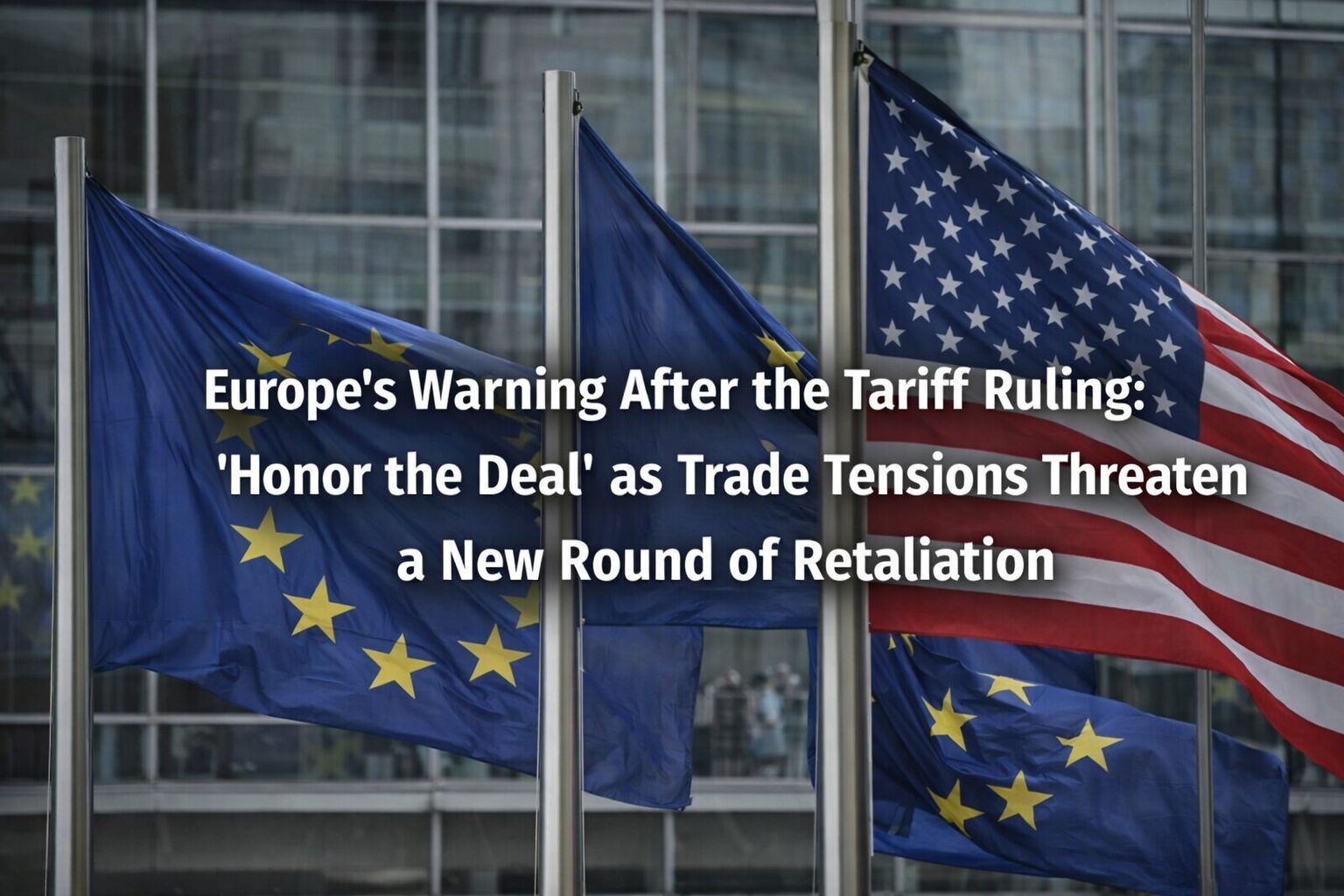
The Supreme Court’s tariff ruling didn’t stay inside U.S. borders. Almost immediately, European officials demanded clarity and consistency—arguing that the United States should honor existing trade commitments even as its domestic legal landscape shifts. The message from Europe was blunt: don’t use legal turbulence as an excuse to rewrite the rules mid‑game.
At the heart of the tension is predictability. Global trade runs on contracts and planning horizons. If governments can change tariff levels suddenly—or if courts can pull the rug out from under tariff authority—companies face uncertainty that can chill investment and raise prices. That’s why European leaders responded quickly: the longer uncertainty lasts, the more expensive it gets.
European officials referenced an existing framework and emphasized continuity, warning against chaotic swings that disrupt transatlantic commerce. In the background is a larger contest: who controls the terms of global trade when domestic politics and courts are moving fast?
The EU also has tools. European policy includes mechanisms designed to respond to economic coercion or sudden unilateral pressure. That means Europe can retaliate—through restrictions, tariffs, or market access measures—if it believes its industries are being unfairly targeted.
But the stakes aren’t only punitive. EU‑U.S. trade is massive, and both sides benefit from stable rules. A trade fight doesn’t stay on paper; it shows up in factories, ports, and consumer prices. That reality creates a push‑pull dynamic: governments talk tough to protect domestic interests, while business communities press for stability and negotiated resolution.
The weekend’s cross‑Atlantic exchange also underscored how courts can reshape geopolitics. A U.S. Supreme Court decision sets internal legal precedent—but it also alters negotiating leverage overseas. Partners may ask: if executive trade actions can be struck down, what guarantees exist for long‑term commitments?
This moment could lead to one of two paths. Path one: governments stabilize the framework, clarify legal authorities, and keep the trade relationship predictable. Path two: legal uncertainty fuels political brinkmanship, and retaliation becomes the language of leverage.
Europe’s warning—honor the deal—signals that patience is not unlimited. If the U.S. wants credibility in trade negotiations, it must show that its commitments survive domestic turbulence.
For consumers, this might sound remote. But if the trade relationship escalates, it can affect everything from vehicles to electronics to food inputs. Trade is policy, yes—but it’s also what ends up on shelves.
This weekend’s message from Europe wasn’t just diplomatic theater. It was an attempt to prevent a legal ruling from becoming the spark that ignites another round of trade war economics.


Leave an answer