
DHS Subpoenas Tech Platforms to Identify Anti-ICE Accounts: A Privacy Clash That’s Getting Louder
Question
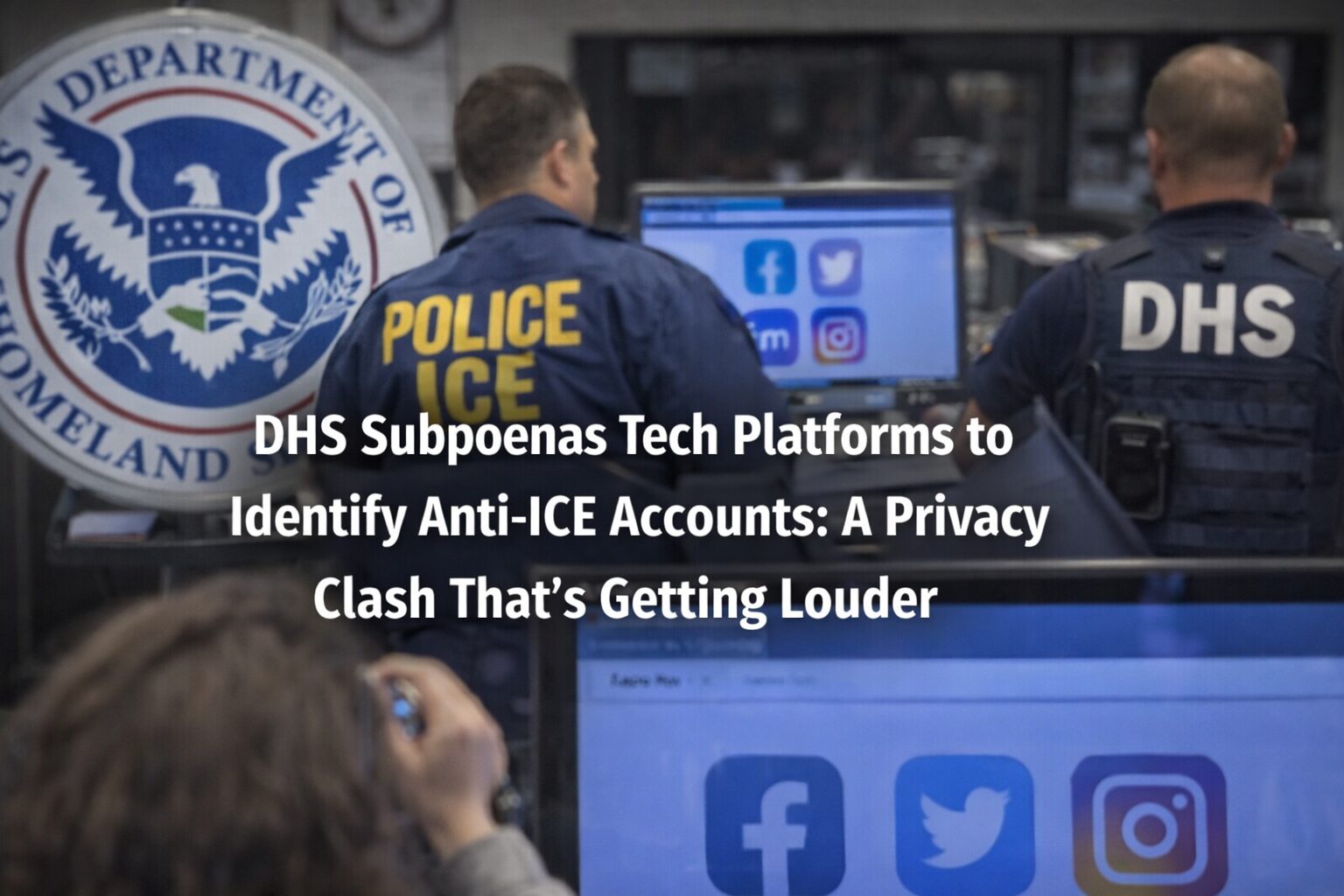
A simmering privacy controversy boiled back into the spotlight as reports described the Department of Homeland Security sending hundreds of administrative subpoenas to major tech companies—requests aimed at identifying people behind online accounts that criticize or track Immigration and Customs Enforcement operations.
The key phrase is “administrative subpoenas.” Unlike a traditional warrant, these demands can be issued without a judge signing off first. That legal shortcut is precisely why civil liberties advocates are alarmed. They argue that the power, if used aggressively, can become a tool for chilling speech—especially when the targets are critics or observers rather than clearly defined criminal actors.
Supporters of the subpoenas argue there’s a public safety angle. If accounts are posting real‑time locations of agents, that could endanger officers and operations. In a world of doxxing and targeted harassment, the state has a duty to protect personnel. But critics respond that the net can be too wide: “tracking” can be ambiguous, and criticism is protected speech.
The weekend’s attention to the story reflects how quickly modern governance collides with the digital world. Law enforcement wants visibility and control; platforms want to avoid political warfare; users want privacy and the ability to speak without fear of being unmasked by administrative paperwork.
Tech companies sit in the middle. They receive demands for names, emails, phone numbers, and other identifiers—then must decide whether to comply, contest, or narrow the requests. That decision is influenced by law, public relations, and corporate policy. And because these subpoenas often operate in a grey zone, the outcome can vary case by case.
What makes this especially sensitive is precedent. If DHS can use administrative subpoenas broadly to unmask critics in one domain, the public will reasonably ask: what stops similar strategies in other domains—protests, labor organizing, or political activism? That’s why advocates view this as a line‑drawing moment.
The real-world impact may not be immediately visible, but it’s powerful: once people believe they can be identified easily, some stop posting, stop organizing, or stop speaking. That’s the “chilling effect” civil liberties experts warn about.
In the coming weeks, the story will likely evolve through legal challenges, corporate transparency reports, and public pressure. But the core question is already clear: how much anonymous speech does a democracy protect, and under what conditions can the government pierce that anonymity?
This weekend, that question got louder—and it isn’t going away.


Leave an answer