
“Can a Nobel Prize Win Over Trump? The High-Stakes Question Hanging Over María Corina Machado’s White House Meeting”
Question
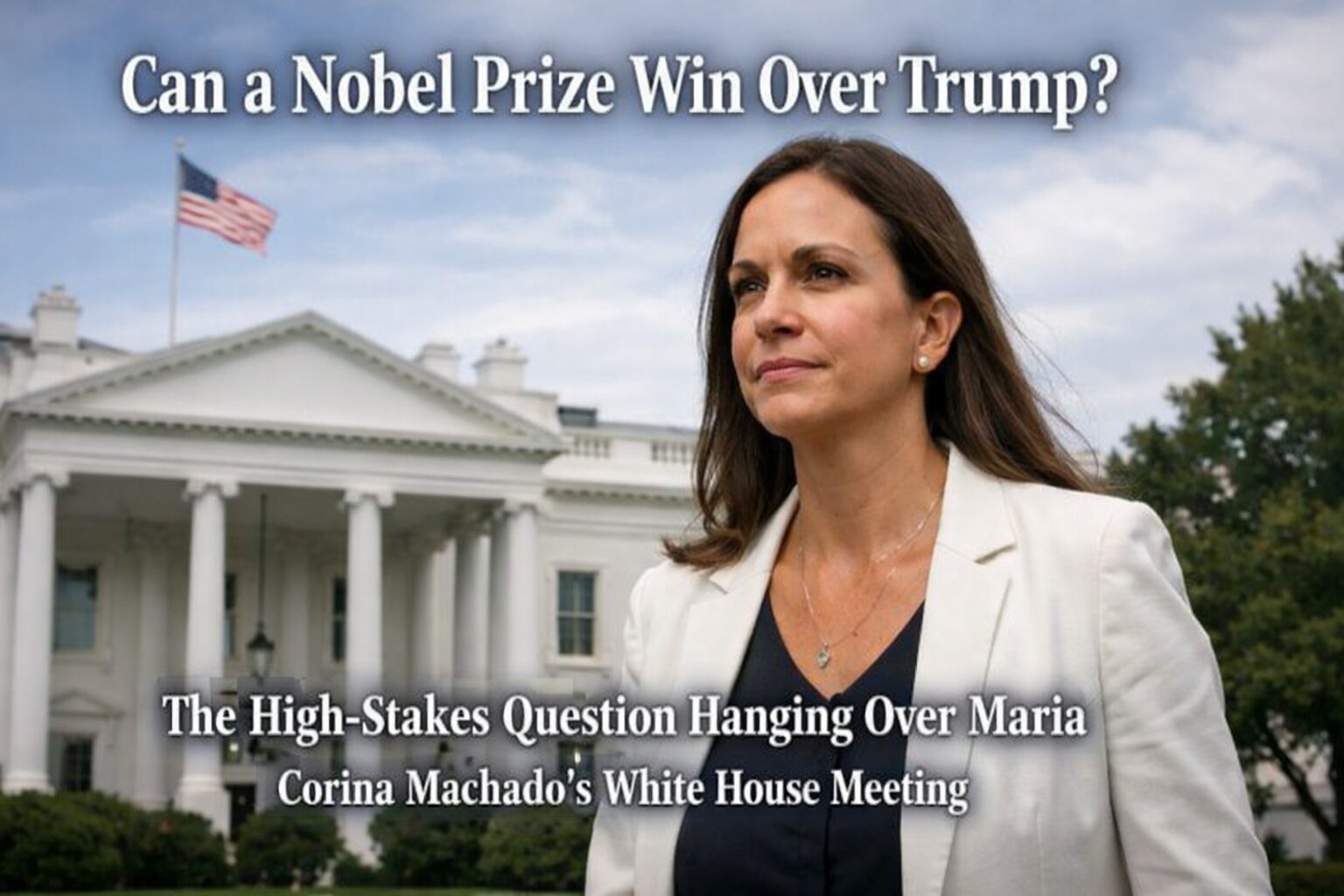
As Venezuelan opposition leader María Corina Machado prepares to sit down with President Donald Trump at the White House this Thursday, the world is asking: Can a Nobel Peace Prize—or the promise of one—bridge the gap between Washington’s pragmatism and its professed commitment to democracy?
The backdrop is a nation in turmoil. After the U.S. military’s controversial January 3 operation in Caracas, which ousted Nicolás Maduro and installed Vice President Delcy Rodríguez as acting leader, Trump has sent mixed signals. He praised Rodríguez’s cooperation in releasing political prisoners and canceled planned “second wave” attacks on Venezuela, yet he’s refused to fully endorse Machado, the 2025 Nobel laureate hailed for her “unyielding fight for freedom.”
The Nobel Question: Symbol or Strategy?
Machado’s prize, awarded for her democracy advocacy, has become the centerpiece of her diplomatic gamble. Sources close to the administration reveal she’s privately floated the idea of “loaning” her Nobel to Trump—a gesture he called “an honor” on Truth Social, despite the Norwegian Nobel Institute’s firm rejection of the concept.
But does a shiny medal matter to a president who once quipped, “I can’t think of anybody in history that should get the Nobel Prize more than me”? Trump’s team insists the meeting is about “stability,” not accolades, but critics argue the Nobel’s symbolic power could force him to confront his own contradictions.
“Trump’s Venezuela policy is a paradox,” says Dr. Elena Ríos, a Georgetown University analyst. “He wants Machado’s democratic credibility but won’t risk alienating Rodríguez’s government, which controls the oil he craves. The Nobel Prize is a wildcard—it might embarrass him into action, or it might just embarrass her.”
Oil, Allies, and Empty Promises?
Trump’s vision for Venezuela hinges on reviving its oil industry, which he claims could “rebuild the country” under U.S. oversight. During a marathon White House meeting with oil executives Friday, he urged billions in investments, calling Venezuela an “ally right now.”
The response? Crickets. ExxonMobil CEO Darren Woods reportedly dismissed the plan as “uninvestible” due to chaos on the ground, while Chevron and ConocoPhillips echoed concerns about long-term risks. Trump’s aides left empty-handed, raising questions: Is his oil gamble just a pipe dream?
The Rodríguez Factor: Compromise or Capitulation?
While Machado seeks international legitimacy, Trump has also signaled openness to meeting Rodríguez “at some point,” praising her government’s cooperation. This duality has left observers scratching their heads: Is Trump playing both sides, or is he simply unsure which faction holds the real power?
Human rights groups warn that Trump’s pragmatism could backfire. “He’s trading democratic principles for short-term gains,” argues Carlos Mendoza of Amnesty International. “Venezuela’s people deserve better than a U.S. president who changes allies based on oil deals.”
The Final Verdict: Will Trump Budge?
As Thursday’s meeting approaches, the stakes couldn’t be higher. Will Trump use the Nobel Prize as a pretext to back Machado’s democratic transition? Or will he double down on his alliance with Rodríguez, prioritizing oil contracts over human rights?
One thing is clear: In a world where geopolitics and symbolism collide, the answer to “Can a Nobel Prize win over Trump?” could reshape Venezuela’s future—and the U.S.’s reputation—for years to come.


Leave an answer